You’re standing in front of a glowing 7-Eleven shelf in Japan, surrounded by perfectly wrapped rice triangles — but which one do you pick?
They all look delicious, but the labels are in Japanese, and the packaging seems… mysterious.
Don’t worry — you’re not alone. Every traveler in Japan has faced the same delicious dilemma. 7-Eleven’s onigiri (rice balls) are one of the easiest, cheapest, and most authentic Japanese foods you can try. Once you discover your favorite flavor, you might find yourself stopping by a konbini every morning.
This guide will show you everything you need to know about 7-Eleven Japan’s onigiri — from what it is, to how to open it, which flavors to try, and why it’s so loved by locals.
By the end, you’ll walk into a 7-Eleven with confidence, ready to grab that perfect triangle of happiness — and understand why it’s more than just a snack.
So grab a green tea, find a quiet park bench, and get ready to taste a small but unforgettable piece of Japanese daily life.
Let’s start with the basics — what exactly is onigiri, and why is 7-Eleven the best place to try it?
What Is Onigiri and Why Is 7-Eleven Japan Famous for It?
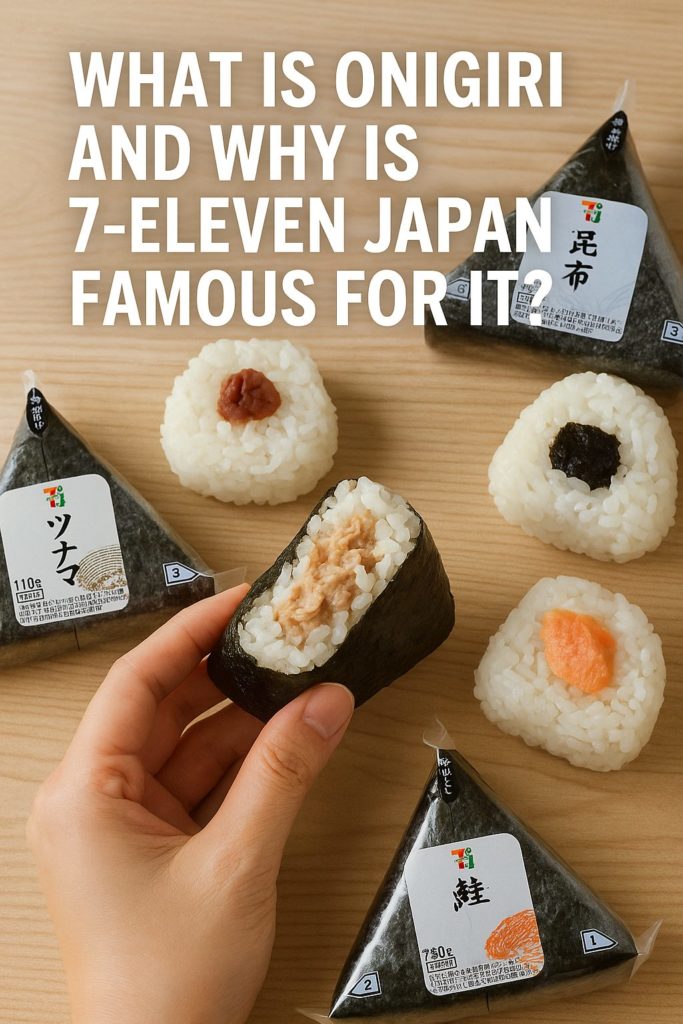
If sushi is Japan’s most famous dish, onigiri is its quiet everyday hero.
Simple, portable, and comforting, it’s the snack that fuels Japan — loved by school kids, office workers, and travelers alike.
At its core, onigiri is a ball or triangle of rice, often wrapped in a sheet of seaweed (nori) and filled with something savory inside.
But don’t mistake its simplicity for plainness. Each bite holds a balance of textures and flavors — warm rice, crisp seaweed, and a burst of salty or umami-rich filling at the center.
A Brief History of Onigiri
Onigiri has been part of Japanese life for over 1,000 years. In the Heian period (794–1185), people carried salted rice balls wrapped in bamboo leaves for picnics and travel.
Samurai warriors once tucked them into armor as battlefield rations. Over time, onigiri became a symbol of home-cooked care — something a mother might pack into her child’s lunch box.
Today, that same comfort has found a new home on convenience store shelves.
With more than 20,000 7-Eleven stores across Japan, the brand has perfected the art of the rice ball — blending traditional taste with modern freshness.
Why 7-Eleven Onigiri Stands Out
While many shops sell onigiri, 7-Eleven is often considered the best for a few key reasons:
- Freshness: Each store receives multiple deliveries a day, so the rice never tastes dry.
- Perfect texture: The rice stays soft yet slightly sticky, and the seaweed remains crisp until you open it.
- Variety: 7-Eleven offers over 30 flavors, rotating seasonally — from classic tuna mayo to spicy mentaiko and regional specialties.
- Convenience: They’re cheap (around ¥120–¥200), available 24/7, and ideal for breakfast, lunch, or a quick snack on the go.
For many travelers, the first 7-Eleven onigiri is a small cultural milestone — the moment when Japan starts to feel real, tangible, and deliciously simple.
The Heart of Japanese Convenience Culture
In Japan, the konbini (convenience store) isn’t just a place to buy snacks — it’s a daily lifeline.
People visit 7-Eleven for everything from hot meals and coffee to bill payments and concert tickets.
Among all these services, the onigiri stands out as a symbol of Japanese efficiency: fresh, portable, and crafted with care.
It’s incredible that something so small reflects so much of Japan’s food philosophy — harmony (wa), balance, and attention to detail.
The rice isn’t too salty, the seaweed not too oily, and the fillings perfectly proportioned. It’s this quiet precision that makes each bite feel like a miniature meal prepared just for you.
Beyond a Snack: A Cultural Icon
For Japanese people, onigiri represents more than food — it’s comfort in edible form.
It’s what mothers make for school trips, what travelers bring on train rides, and what busy workers grab between meetings.
For visitors, trying onigiri from 7-Eleven isn’t just about taste — it’s about experiencing a slice of Japanese daily life.
It’s the same snack that locals have eaten for generations, now sitting neatly on a glowing konbini shelf, waiting to be discovered by curious travelers.
So the next time you step into a 7-Eleven in Tokyo, Kyoto, or Okinawa, remember this:
That little rice triangle isn’t just a snack — it’s a piece of Japan’s heart, wrapped in seaweed.
The Best 7-Eleven Onigiri Flavors You Should Try in Japan
One of the joys of visiting Japan’s 7-Eleven is discovering just how many types of onigiri exist.
Each tiny triangle of rice holds a different flavor story — from nostalgic classics to exciting seasonal creations.
If you’re new to onigiri, here are the must-try flavors that locals love and travelers rave about.
Classic Favorites Loved by Locals
Tuna Mayo (ツナマヨ)
The undisputed king of 7-Eleven onigiri. Soft white rice filled with creamy tuna mixed in light Japanese mayonnaise — it’s simple, comforting, and incredibly addictive.
It’s often the first onigiri people try, and for many, it becomes their all-time favorite.
Grilled Salmon (焼き鮭 / Yaki Sake)
A true Japanese classic. The savory, flaky salmon inside gives a perfect balance of salt and richness, making it feel like a home-cooked meal in a bite.
Best enjoyed warm, or even straight from the shelf with a sip of green tea.
Pickled Plum (梅干し / Umeboshi)
For those who prefer something traditional and slightly tangy. The sourness of the pickled plum cuts through the soft rice beautifully.
It’s Japan’s answer to a healthy, refreshing snack — and it’s completely vegetarian.
Kombu Seaweed (昆布)
Thin strands of simmered seaweed cooked in soy sauce and mirin fill this simple yet flavorful onigiri.
It’s sweet, salty, and perfect for anyone who wants to experience a truly Japanese taste without fish or meat.
Bonito Flakes (おかか / Okaka)
A savory filling made from dried bonito flakes seasoned with soy sauce. It’s slightly smoky, a little salty, and pairs wonderfully with the crisp seaweed wrapping.
Unique and Seasonal Flavors
7-Eleven Japan constantly surprises customers with limited-edition flavors that change with the seasons.
These onigiri often feature ingredients inspired by regional dishes or seasonal produce.
Mentaiko (明太子 / Spicy Cod Roe)
A favorite among spice lovers. This one bursts with flavor — slightly salty, slightly spicy, and full of umami.
It’s especially popular in Kyushu, where the spicy cod roe originates.
Sukiyaki Beef (すき焼き)
A warm, hearty filling of sweet soy-simmered beef and onions, inspired by Japan’s famous sukiyaki hot pot.
The flavor feels indulgent — like a little Japanese dinner wrapped in rice.
Shrimp Tempura (天むす / Tenmusu)
A regional favorite from Nagoya, this onigiri hides a piece of shrimp tempura inside. The contrast between the crispy tempura and soft rice makes it a crowd-pleaser.
Takana Pickles (高菜)
A Kyushu specialty — rice mixed with chopped pickled mustard leaves that add crunch and gentle spice.
It’s colorful, refreshing, and often vegan-friendly.
Seasonal Specialties
Depending on the time of year, you might find flavors like sakura shrimp in spring, grilled corn in summer, or mushroom rice in autumn.
Limited-time labels often have bright colors or “新商品 (new item)” written on the packaging — if you see one, grab it before it’s gone!
Vegetarian and Halal-Friendly Options
Not all onigiri contain meat or fish — there are plenty of choices for vegetarians, vegans, and halal travelers too.
Best Safe Options:
- Pickled Plum (Umeboshi)
- Kombu Seaweed
- Plain Salted Rice (塩むすび / Shio Musubi) — simple salted rice wrapped in nori
- Takana Pickle
- Hijiki Seaweed (ひじき) — sometimes available as a mixed rice version
Tips:
- Look for labels that say “梅 (plum), 昆布 (seaweed), or 塩 (salt)” for vegetarian-friendly fillings.
- Avoid “ツナ (tuna), 鮭 (salmon), or 明太子 (mentaiko)” unless you eat fish.
- For halal travelers, these simple onigiri are ideal because they don’t contain meat or alcohol-based sauces.
Traveler Favorites and Staff Picks
If you’re overwhelmed by choice, here are some local favorites that you’ll see people buying again and again:
- Tuna Mayo – The creamy all-rounder
- Grilled Salmon – Classic and hearty
- Mentaiko – Salty, spicy, and addictively good
- Kombu Seaweed – Traditional and vegetarian
- Sukiyaki Beef – Rich and satisfying
Try two or three different ones on your trip — it’s fun to taste how the fillings and rice textures change from one to another.
The Perfect Snack for Any Time of Day
Morning, noon, or night — onigiri fits every moment of Japanese life.
Locals grab it for breakfast on the go, eat it as a light lunch, or pack it for a long train ride.
At 7-Eleven, the onigiri shelf is always full, freshly restocked several times a day.
You’ll never have to worry about getting an old one — the rice is soft, the seaweed crispy, and the flavors perfectly balanced.
So the next time you walk into a 7-Eleven, look beyond the instant noodles and sweets — the real Japanese experience might just be sitting quietly in the rice section, waiting to be unwrapped.
How to Open a 7-Eleven Onigiri (Without Breaking It!)

If you’ve ever picked up a 7-Eleven onigiri and stared at the plastic wrapper in confusion — don’t worry, you’re not alone.
For first-time visitors, the packaging looks more like a puzzle than a snack. But once you know how it works, you’ll see why this clever design is one of Japan’s quiet innovations.
Opening a 7-Eleven onigiri the right way isn’t hard — it just takes three simple steps.
Step-by-Step Guide
Step 1: Find the Number “①” on the Top.
You’ll notice three small numbers printed on the plastic wrapper: ①, ②, and ③.
Start by gently pulling down the middle strip marked with ① from the top to the bottom.
This motion separates the rice ball from the seaweed inside the wrapper.
Step 2: Pull the Side Tabs (② and ③).
Next, pull the tabs marked ② and ③ outward.
This removes the remaining plastic from both sides, allowing the seaweed to wrap perfectly around the rice.
Step 3: Enjoy!
Now you have a fresh, crispy, perfectly wrapped onigiri in your hands — no soggy seaweed, no sticky fingers.
Take a bite and enjoy that satisfying crunch as the seaweed meets the warm, soft rice.
💡 Pro Tip: Don’t squeeze the onigiri while opening — hold it gently at the edges so it keeps its shape.
Why It’s Wrapped This Way
Japanese onigiri have a special challenge: how to keep the seaweed crispy until you eat it.
7-Eleven solved this with an ingenious “no-touch seaweed system” — the plastic wrapper keeps the rice and nori completely separated until the very last moment.
When you pull down the strip, the wrapper peels off the inner barrier, allowing the seaweed to fold neatly around the rice.
It’s a tiny piece of engineering that shows just how much detail goes into everyday Japanese design.
That’s why even if you buy an onigiri in the morning and eat it in the evening, the seaweed still feels fresh and crunchy — as if it were just made.
Common Mistakes (and How to Avoid Them)
Tearing from the wrong side:
If you start from the bottom, you might accidentally rip the seaweed or rice. Always begin with the “①” at the top.
Removing all the plastic at once:
Some travelers unwrap everything immediately and end up with sticky hands and soft nori. Remember: pull in order — ① → ② → ③.
Holding too tightly:
It’s tempting to squeeze the rice triangle while opening, but that can flatten it or make the filling spill out. Handle it gently!
💡 Extra Tip: If you’re eating outdoors, bring a small napkin — it’s part of the “konbini etiquette” to keep things tidy.
When and Where to Enjoy It
You’ll see people eating onigiri almost anywhere in Japan — on park benches, bullet trains, or even outside convenience stores.
But it’s polite not to eat while walking. Instead, find a quiet spot to sit and enjoy your snack.
The combination of crisp seaweed, warm rice, and flavorful filling is surprisingly satisfying — especially after you’ve mastered the art of opening it perfectly.
So the next time you hold that mysterious plastic triangle in your hands, remember:
you’re not just unwrapping a snack — you’re unlocking a tiny piece of Japanese everyday genius.
Price, Calories, and How 7-Eleven Compares to Other Convenience Stores
One of the best things about Japan’s onigiri is how affordable and satisfying they are.
Whether you’re traveling on a budget or just need a quick snack, 7-Eleven onigiri deliver quality and flavor far beyond their price.
Typical Prices and Portion Sizes
Most onigiri at 7-Eleven cost between ¥120 and ¥200 (about $0.80 to $1.40 USD).
Even premium options — like sukiyaki beef or grilled eel — rarely go over ¥250 ($1.70).
It’s no wonder that locals and travelers alike see them as one of the best-value meals in Japan.
Each onigiri weighs around 100 to 120 grams, roughly the size of your palm.
That might sound small, but it’s surprisingly filling, especially when paired with a drink like green tea or miso soup.
💡 Tip: For a light meal, combine two onigiri and a bottle of green tea — total cost under ¥400 ($3 USD).
7-Eleven vs. FamilyMart vs. Lawson
Japan’s “konbini big three” — 7-Eleven, FamilyMart, and Lawson — all sell onigiri, but each has its own style and fan base.
7-Eleven (セブンイレブン)
- Known for perfect rice texture — soft but not sticky.
- Offers the largest variety of flavors, including regional and limited editions.
- Focuses on freshness: deliveries several times a day keep everything tasting newly made.
FamilyMart (ファミリーマート)
- Their onigiri tend to have richer seasoning and bolder flavors.
- Famous for the “Famima Premium” series — slightly pricier but with gourmet fillings like grilled mackerel and spicy pork.
Lawson (ローソン)
- Loved for its brown rice (玄米) and mixed grain onigiri — healthier, fiber-rich options.
- Often features collaborations with chefs or local farms, appealing to wellness-conscious customers.
So, which is the best?
If you’re new to Japan, 7-Eleven is the safest and most consistent choice — great taste, balanced rice, and easy availability anywhere in the country.
But true onigiri fans often try all three chains to discover subtle differences in texture and flavor.
Nutritional Facts and Healthier Choices
Despite their small size, onigiri are quite balanced — mainly rice (carbohydrates), a bit of protein from the filling, and trace minerals from the seaweed.
They’re much healthier than most fast foods or pastries.
Average Nutritional Facts (per onigiri):
- Calories: 180–250 kcal
- Protein: 3–7 g
- Fat: 3–8 g
- Carbohydrates: 35–45 g
Here are some healthy choices if you’re watching your diet:
Low-Calorie Options
- Salted Rice (塩むすび / Shio Musubi) — about 180 kcal
- Pickled Plum (梅 / Umeboshi) — about 190 kcal
- Kombu Seaweed (昆布) — about 200 kcal
High-Protein Choices
- Grilled Salmon (鮭 / Sake) — about 250 kcal
- Tuna Mayo (ツナマヨ) — about 240 kcal
- Mentaiko (明太子) — about 230 kcal
💡 Tip: If you want a balanced travel meal, pair one savory onigiri with a bottle of unsweetened green tea — it aids digestion and cuts excess oil.
Why Onigiri Are a Smart Traveler’s Choice
Compared to a sandwich, burger, or bento box, onigiri offer:
- Portion control: You can eat one or two depending on hunger.
- No utensils required: Perfect for trains, parks, or road trips.
- Affordable nutrition: Balanced carbs and protein under ¥200.
- Local flavor: Every filling tells a small part of Japan’s food culture.
They’re the perfect mix of convenience and authenticity — a quick bite that feels like real Japanese home cooking.
Final Thoughts on Konbini Onigiri
While FamilyMart and Lawson each have their strengths, 7-Eleven remains the gold standard for most travelers.
The combination of freshness, variety, and accessibility makes it unbeatable for first-time visitors.
So next time you pass a 7-Eleven sign glowing in the night, step inside and head straight for the rice section.
There’s a tiny triangle waiting for you — delicious, healthy, and unmistakably Japanese.
Why You Shouldn’t Leave Japan Without Trying a 7-Eleven Onigiri
It might sound simple — a triangle of rice wrapped in seaweed — but a 7-Eleven onigiri is much more than that.
It’s a symbol of how Japan turns even the smallest, most ordinary things into something special.
When you peel back that thin strip of plastic and hear the soft crackle of the seaweed, you’re experiencing a moment of everyday Japanese design genius.
It’s fresh, efficient, and quietly beautiful — the essence of omotenashi, Japan’s spirit of thoughtful hospitality.
A Cultural Experience in Every Bite
Eating an onigiri from 7-Eleven is like tasting the rhythm of Japanese life.
It’s what students grab before class, what salarymen eat between trains, what travelers pack for a day of sightseeing.
No matter who you are or where you come from, that little rice triangle connects you to something deeply local — the daily heartbeat of Japan.
Each flavor tells a story: the salty tang of grilled salmon recalls seaside towns, the sour umeboshi evokes memories of grandmother’s bento, and the comforting tuna mayo reflects modern Japan’s love for convenience and comfort.
It’s food as memory, folded into a perfect shape.
The Beauty of Simplicity
In a world full of complicated food trends and oversized portions, onigiri remains humble — just rice, seaweed, and a bit of filling.
Yet it satisfies in a way that feels honest and grounding.
There’s something deeply calming about holding one in your hand.
It’s warm, familiar, and real — a reminder that true comfort often comes from the simplest things.
That simplicity is part of Japan’s philosophy: finding balance, appreciating detail, and valuing care even in the everyday.
7-Eleven manages to preserve that feeling in every single onigiri it sells.
A Small Memory That Lasts
Ask anyone who has visited Japan what they remember most, and many will say, “The convenience stores!”
Not because of luxury or novelty, but because of the quiet perfection of ordinary moments — the smell of rice, the neat packaging, the friendly irasshaimase greeting.
An onigiri might cost only a few coins, but it captures the warmth of a culture where care, efficiency, and joy come together in a single bite.
When you take your first bite of a 7-Eleven onigiri, you’re not just eating — you’re participating in a tiny Japanese ritual, one shared by millions every day.
Before You Go
So before you leave Japan, make sure to stop by a 7-Eleven.
Pick a flavor that catches your eye — maybe the classic tuna mayo, the simple salted rice, or the adventurous mentaiko.
Find a quiet spot, unwrap it carefully, and take that first bite.
You’ll discover that it’s not just a snack — it’s a story of Japan itself: small, humble, and made with extraordinary care.
And once you’ve had one, you’ll understand why travelers all over the world say the same thing —
you haven’t truly experienced Japan until you’ve eaten an onigiri from 7-Eleven.