When people hear “Genghis Khan,” they often think of the Mongolian conqueror. But in Japan, Genghis Khan (ジンギスカン) means something completely different: a sizzling lamb BBQ dish, most famously enjoyed in Hokkaido. Cooked on a dome-shaped grill with fresh vegetables, this hearty meal is both a local specialty and a must-try experience for visitors. In this guide, we’ll explore why it’s called “Genghis Khan,” what it tastes like, how to eat it, where to try it in Japan, and why it holds a special place in Japanese food culture.
What Is Genghis Khan in Japanese Food Culture?

A Brief Introduction to the Dish
In Japan, Genghis Khan (ジンギスカン, pronounced “Jingisukan”) refers to a grilled lamb and mutton dish, not the historical Mongolian leader. It is a type of Japanese barbecue where thin slices of lamb are cooked on a special dome-shaped grill along with vegetables such as onions, bean sprouts, pumpkins, and bell peppers. The result is a savory, slightly smoky flavor that has become one of Hokkaido’s signature foods.
Why It Is Called “Genghis Khan”
The name “Genghis Khan” has an interesting origin. In the early 20th century, lamb was associated with Mongolia, and Japanese people imagined Mongolian soldiers eating grilled lamb. When the dish became popular in Japan, especially in northern regions, it was nicknamed “Genghis Khan.” Although it has no direct link to Mongolian cuisine, the name stuck and became the official term for this unique Japanese dish.
The Hokkaido Connection
Hokkaido, Japan’s northernmost island, is the true home of Genghis Khan. Lamb was more common there because of large-scale sheep farming in the early 1900s. Over time, locals developed a fondness for the dish, making it a highlight of Hokkaido’s food culture. Today, Genghis Khan is often enjoyed at specialty restaurants, beer gardens, and festivals across the island. For many travelers, it is considered a must-try experience when visiting Hokkaido.
Ingredients and Flavors of Genghis Khan
Lamb and Mutton – The Star of the Dish
The main ingredient of Genghis Khan is lamb or mutton. Lamb offers a tender texture and mild flavor, while mutton has a stronger, richer taste. In Japan, both cuts are used depending on the restaurant and region. The slightly gamey taste of lamb is loved by locals, and many places marinate the meat beforehand to enhance its flavor and tenderness.
Fresh Vegetables and Their Role
Vegetables play an important role in balancing the dish. Common choices include bean sprouts, onions, pumpkin, cabbage, and bell peppers. These vegetables are cooked together with the lamb on the dome-shaped grill. As the meat cooks, its juices drip down, flavoring the vegetables and giving them a savory, smoky taste. The combination of juicy lamb and sweet vegetables creates the unique appeal of Genghis Khan.
Sauces and Seasonings – Tare vs. Salt Style
There are two main styles of enjoying Genghis Khan:
- Tare style (sauce-based): The meat is either marinated in a soy sauce-based tare before cooking or dipped into it after grilling. This style has a sweet-salty flavor with hints of garlic and ginger.
- Salt style: In this simpler method, the lamb is seasoned lightly with salt and pepper, allowing the natural flavor of the meat to stand out.
Both styles are popular, and many restaurants let you choose. Paired with rice, beer, or sake, the flavors are hearty and satisfying.
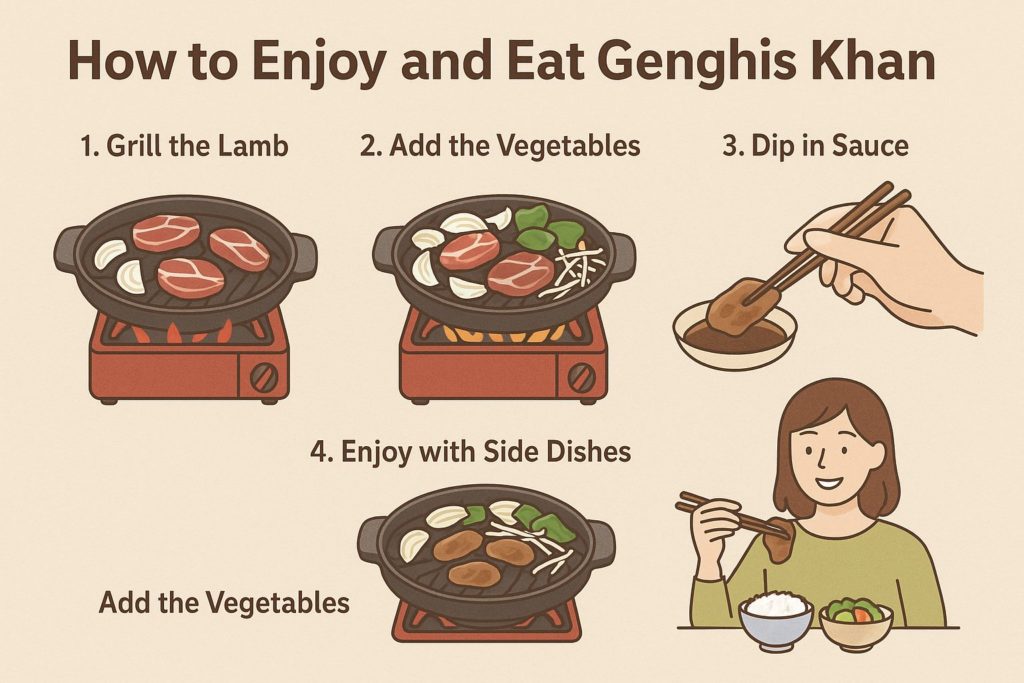
How to Enjoy and Eat Genghis Khan
The Dome-Shaped Grill and Its Unique Design
Genghis Khan is traditionally cooked on a special dome-shaped iron grill. The raised center is where the lamb is placed, while vegetables are arranged around the sloping sides. As the meat cooks, its juices and fat flow down onto the vegetables, seasoning them naturally. This unique grill design makes the dish both practical and flavorful, ensuring nothing goes to waste.
Cooking Meat and Vegetables Together
The fun of Genghis Khan lies in cooking together at the table. Thin slices of lamb are placed in the center, while bean sprouts, onions, and other vegetables cook alongside. Diners take turns grilling and serving, making it a social and interactive experience. The sizzling sound and smoky aroma create an atmosphere similar to Japanese yakiniku, but with its own distinctive character.
Eating Styles – Dipping Sauces and Pairings
Once cooked, the lamb and vegetables can be enjoyed in different ways:
- With dipping sauce: A soy sauce-based tare adds a sweet and savory kick.
- Simply salted: Highlighting the natural flavor of the lamb.
Many people pair the dish with rice, beer, or sake, which complement the rich taste. In summer, Genghis Khan is especially popular at outdoor beer gardens, where the combination of cold drinks and smoky grilled lamb creates a festive experience.
Where to Try Genghis Khan in Japan
Famous Restaurants in Sapporo and Asahikawa
The best place to experience authentic Genghis Khan is Hokkaido, especially in Sapporo and Asahikawa. Sapporo is home to many specialty restaurants serving lamb in both tare and salt styles. Asahikawa, another major city in Hokkaido, is equally famous for its unique local variations. Visitors can easily find well-known shops near train stations and popular tourist areas.
Beer Gardens and the Sapporo Beer Museum Experience
One of the most iconic ways to enjoy Genghis Khan is at the Sapporo Beer Garden, located next to the Sapporo Beer Museum. Here, guests can enjoy an all-you-can-eat-and-drink experience, pairing freshly grilled lamb with Sapporo Beer. The lively atmosphere, with long tables and groups cooking together, makes it a must-visit spot for both locals and tourists.
Other Regions and Tokyo Spots Offering the Dish
Although Genghis Khan is most strongly associated with Hokkaido, the dish has spread across Japan. In Tokyo, several restaurants in Shinjuku, Ikebukuro, and Ueno specialize in Hokkaido-style lamb BBQ. Regional food festivals and department store events also sometimes feature Genghis Khan. For travelers unable to visit Hokkaido, these urban options provide a convenient way to taste the dish without leaving the capital.
Genghis Khan as a Symbol of Local Japanese Cuisine
Comparing It with Yakiniku and Other Japanese Foods
While Genghis Khan may look similar to yakiniku (Japanese-style grilled meat), it holds a unique place in Japanese cuisine. Unlike beef-focused yakiniku, Genghis Khan highlights lamb, a meat not commonly eaten elsewhere in Japan. Its dome-shaped grill and shared cooking style also make it distinct. Alongside sushi, ramen, and tempura, Genghis Khan represents a regional specialty that shows the diversity of Japanese food culture.
From Local Specialty to National Recognition
Originally popular only in Hokkaido, Genghis Khan has grown into a dish recognized throughout Japan. Food festivals, tourism promotions, and nationwide restaurant chains have helped spread its reputation. For many Japanese, eating Genghis Khan is strongly tied to memories of Hokkaido trips, making it both a nostalgic and iconic experience.
How to Recreate Genghis Khan at Home
For those curious about trying it outside Japan, Genghis Khan can also be recreated at home. A special dome-shaped grill is ideal, but a standard skillet or grill pan works too. Marinate lamb slices in soy sauce, garlic, and ginger for the tare style, or simply season with salt and pepper for the salt style. Add vegetables such as bean sprouts and onions, and cook everything together for an easy yet authentic experience. Pair it with cold beer for the full effect.