You’ve landed in Fukuoka, hungry and excited. You’ve heard about the legendary “yatai” – small food stalls that light up the night streets. But when you finally walk up to one, you freeze. Do you just sit down? Should you wait to be invited? What if it’s full of locals staring at you? That confusion turns excitement into anxiety.
You’re not alone. Many first-time visitors feel lost at Fukuoka’s yatai. Without knowing the rules, you might sit at the wrong place, offend someone with your camera, or unknowingly break a social custom. Worse – you might walk away without tasting the real yatai magic.
I remember my first time. I waited 20 minutes, then left because I didn’t understand the system. It wasn’t until a local friend showed me how it works that I realized: yatai is not just about food. It’s a shared experience. But it comes with quiet rules.
Once I learned those rules, everything changed. I knew when to approach, how to order, when to leave, and how to enjoy every second.
I’ve spent the last 10 years visiting over 50 yatai in Fukuoka, talking to owners, and watching tourists succeed (and fail). Now I’m sharing everything I’ve learned.
In this complete guide, you’ll get easy-to-understand, local-approved tips. No more fear, no more awkwardness. Just amazing food and new memories.
Here’s Why Yatai Rules Matter More Than You Think

Why Are Yatai Rules Important for First-Timers?
Yatai rules are not about being strict—they’re about making sure everyone feels comfortable, welcomed, and safe.
The Real Reason Behind These Unspoken Rules
These rules help keep the small, cozy, and very public space of a yatai running smoothly. Imagine a tiny room with strangers: rules help keep things kind and fair.
5 Key Situations Where Rules Matter Most
Let’s break this down into a few parts:
- Respecting Space
Yatai are small. Sometimes they have only 6–10 seats. So if you take a seat for an hour without ordering much, someone else may miss their chance. The rule? Be mindful of your time. - Noise Control
These are outdoor stalls, often close to neighborhoods. Shouting, loud phone calls, or drunk yelling disturb others. Fukuoka locals value quiet enjoyment. That’s why “speak gently” is an unwritten rule. - Line Etiquette
Most yatai don’t take reservations. That means lines form naturally. Don’t cut, don’t hover too close to others. Just wait your turn. Locals will appreciate your patience. - Ordering Mindfully
These stalls work with limited staff and ingredients. Order what you’re going to eat. It’s not a buffet. If you’re in doubt, just ask, “What do you recommend tonight?” - No Outside Food or Drink
It might seem okay to bring your own soda or snacks, but it’s considered rude. Yatai are businesses. Support them by enjoying what they offer.
Respect Is the Real Secret Ingredient
Point (Restated): Knowing the rules shows respect. It’s not about being perfect. It’s about trying. And when you try, locals will often respond with kindness, extra care, or even a conversation.
What You Gain by Following the Rules
And here’s something many travelers don’t expect: the more you respect the unspoken rules, the more enjoyable your experience becomes. Yatai owners and nearby customers often open up, offering stories, recommendations, or free samples. It’s a reward system built on respect.
These Rules Aren’t Official—But They Matter
Now, you might ask: Are these rules official? No. But they are cultural—and they matter.
One tourist I met, John from Canada, told me:
“Once I understood the etiquette, I felt like I belonged. I wasn’t just eating in Japan—I was part of something.”
Final Message Before You Dive In
So before you go, remember: yatai rules aren’t walls. They’re bridges.
Next, we’ll dive into the specific do’s and don’ts that will make your visit smooth, respectful, and fun.
The Unwritten Rules of Yatai: Simple Manners That Make You a Local
To truly enjoy yatai in Fukuoka, you don’t just eat the food—you live the culture. And culture is built on manners.
Yatai are not restaurants. They’re more like someone’s kitchen, open to the public. That means your behavior matters even more. These simple, unspoken rules help you blend in and show respect.
1. Greet the Owner When You Sit Down
Always say “Konnichiwa” (Hello) or even just nod and smile. It makes a huge difference. Yatai chefs often remember faces and return friendliness.
2. Don’t Sit Until Invited
Even if there’s an empty seat, wait to be waved in or acknowledged. Some seats may be held for regulars, or the chef may be prepping the spot.
3. Don’t Linger After Eating
Yatai have limited seats. Once you’re done eating and drinking, it’s polite to free the space. Others are waiting.
4. Keep Belongings Small and Neat
Avoid placing bags on seats or spreading things out. Bring a small bag if you can. Some yatai have hooks under the counter.
5. Watch Your Voice and Actions
Speak softly. Don’t block walkways. Don’t shout across the street. Enjoy the cozy vibe by keeping things gentle.
6. Ask Before Taking Photos
Many people want to snap that perfect Instagram shot. But yatai are small spaces. Ask first, especially if people’s faces are in the frame.
7. Don’t Be a Menu Hog
Pass the menu after you’re done. If it’s a chalkboard, don’t block it. Share the space visually too.
8. Praise the Food
Simple words like “Oishii!” (Delicious!) or a thumbs-up are very welcome. It shows appreciation and builds warmth.
9. Avoid Sensitive Topics
This isn’t the place for loud debates. Keep the mood light, warm, and friendly.
10. Use Chopsticks Properly
Don’t stick them upright in rice. Don’t point with them. If you drop them, ask kindly for a new pair.
These aren’t rules to trap you—they’re clues to connect you.
When you follow them, you stop being a tourist. You become part of the scene. You get smiles, extra noodles, good chats. One small kindness often gets returned.
One night, I saw a woman from Thailand share a seat with a salaryman. They didn’t speak the same language, but they smiled, took turns with the menu, and toasted quietly. That’s the magic of yatai. But it started with manners.
These unspoken rules are your secret map. Follow them, and you’ll find a richer, warmer world.
In the next section, I’ll show you the little signals—how to sit, when to order, and how to pay—without ever feeling lost.
The Silent Signals: Seating, Ordering, Paying Without Looking Clueless
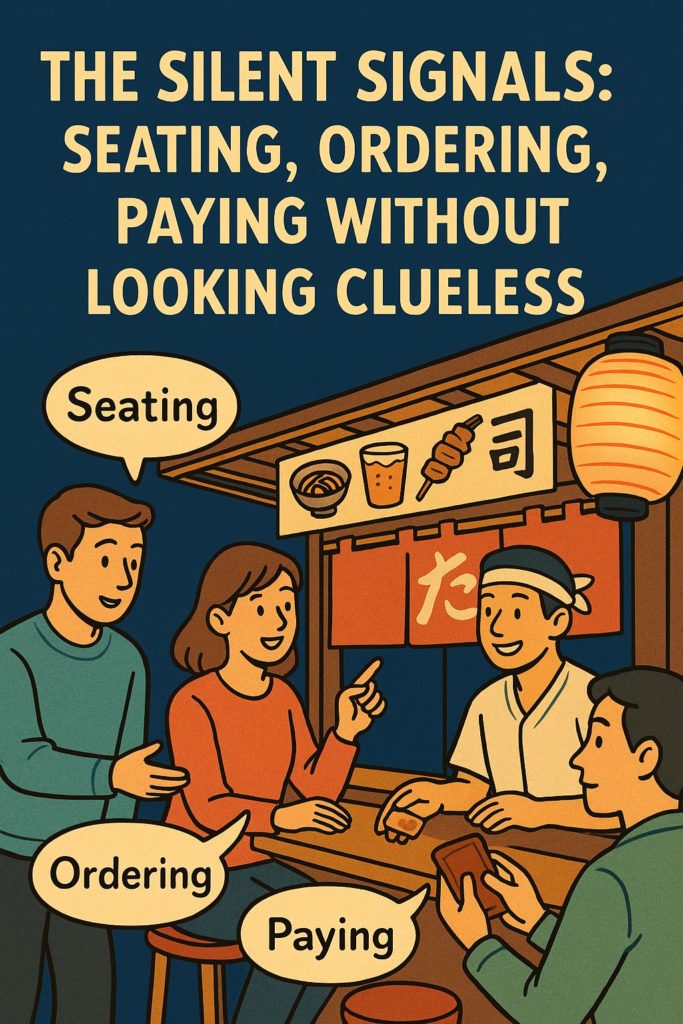
In a yatai, you don’t always get a menu or a waiter. Everything runs on quiet signals. Learning to read them makes you look confident and respectful.
These small stalls are fast, informal, and often busy. There’s no time for confusion. Locals watch and wait for the right moments. When you do too, things go smoothly.
1. Seating: Don’t Just Sit. Wait for a Nod.
Even if you see an empty stool, don’t plop down. Catch the chef’s eye first. If they nod, wave, or say “Irasshaimase” (Welcome), that’s your green light.
If there’s a line, quietly stand behind it. If there’s no line but it seems full, ask politely, “Aiteimasu ka?” (Is there space?)
Bonus tip: some yatai hold seats for regulars. That’s why empty seats don’t always mean available ones.
2. Ordering: Keep It Simple. One Dish First.
Most people order 1–2 dishes at a time. Start with a drink and one food item. Say “Osusume wa?” (What do you recommend?) if you’re unsure.
Avoid ordering many things at once. These stalls often cook one thing at a time. Respect the flow.
Use pointing or gesture if needed. Many chefs understand basic English food words like “ramen,” “pork,” or “beer.”
3. Reordering: Raise a Hand Gently
When you want another drink or dish, catch the chef’s attention with a small hand wave or polite “Sumimasen.” Don’t shout.
Bonus tip: If you hear others using local dialect, don’t worry. Your friendly effort in standard Japanese or English is always welcome.
4. Paying: Don’t Rush. Wait for the Right Time.
At most yatai, you pay when you’re done—not after each dish.
When you’re finished, make eye contact, nod, and say “Okaikei onegaishimasu” (Check, please).
Some places have a small dish or tray where they give you the bill. Others may tell you the total directly.
Always pay in cash. Most yatai don’t take cards or mobile payment.
5. Leaving: Thank and Bow
Say “Gochisousama deshita” (Thank you for the meal) as you leave. A smile or small bow adds to your respect.
If you had a great time, tell them “Totemo oishikatta!” (It was very delicious!). They’ll appreciate it.
Yatai have no host, no waiters, no table numbers. But they run like clockwork—because people understand the signals.
Once you learn them, you stop feeling like a confused guest. You move with confidence. You even get noticed.
I once watched a tourist from Italy try to wave over the chef with two big arms in the air. It startled everyone. But later that night, I saw her gently mimic locals. The chef smiled more. Her food came faster. And she was offered a special dish not on the menu.
That’s the power of reading the room.
So when you visit a yatai, look, listen, smile, and follow the flow. It will open doors—and dishes—you didn’t know were waiting.
In the next section, I’ll help you find the best yatai for you: tourist-friendly, tasty, and welcoming.
How to Choose the Right Yatai: Friendly, Tourist-Welcome, and Delicious
Not all yatai are the same. Some welcome tourists with open arms. Others prefer quiet locals. Knowing how to choose the right one will help you feel comfortable and have a delicious time.
Because yatai vary in style, vibe, and food. Some specialize in ramen, some in yakitori, some in oden. Some are very local, with no English and tight customs. Others are open, welcoming, and even have menus with pictures. Picking the wrong one can lead to confusion—or even rejection. But picking the right one? Pure magic.
1. Start with the Location
There are three main areas for yatai in Fukuoka:
- Nakasu: Most famous, lively, and filled with tourists. A great place to try your first yatai. But can be crowded.
- Tenjin: A nice mix of locals and visitors. More relaxed. Good for couples or solo travelers.
- Nagahama: Known for cheap and tasty ramen. More local vibe. Not all stalls are tourist-friendly.
If you’re new to yatai, start with Tenjin or the edge of Nakasu. They balance authenticity and friendliness.
2. Look for Visual Clues
How can you tell if a yatai welcomes tourists?
- Menus with photos
- English signs or translations
- A laminated menu passed around
- Friendly staff waving people in
If the stall has only a chalkboard in kanji and everyone looks like regulars? It may not be best for your first time.
3. Check the Crowd (But Don’t Judge Too Fast)
If a yatai is full of salarymen in suits chatting with the chef, it might be a regulars-only vibe. But if the group includes young people, travelers, and laughter, chances are you’ll fit in.
Also, a mixed crowd usually means more flexible behavior and more English-friendly ordering.
4. Ask for Help or Recommendations
Locals are friendly. If you’re not sure where to go, ask someone near a yatai area, “Osusume no yatai wa arimasu ka?” (Do you recommend a yatai?)
Many hotel staff and taxi drivers in Fukuoka are also yatai experts. They’ll tell you where tourists are welcome.
5. Use Online Tools (But Don’t Trust Ratings Alone)
TripAdvisor, Google Maps, and local blogs often list popular yatai. Look for recent reviews from foreign tourists.
But don’t rely only on stars. Some of the best experiences come from small, under-the-radar stalls with a big heart.
Bonus tip: Look for stalls with long lines—but check what kind of people are waiting. Tourists? Locals? Both?
6. Go Early or Go Late
Some yatai open around 6–7 PM and close by midnight or 1 AM. Go early to avoid crowds and secure a seat.
Late-night stalls often have a looser, friendlier vibe. Great for solo travelers or late snackers.
7. Follow Your Nose
It sounds simple, but if something smells amazing, it probably is. Yakitori smoke, ramen broth steam—let your senses guide you.
Choosing the right yatai is part of the adventure. And with a little observation and friendliness, you’ll land at the perfect one.
One evening, I was walking along the Nakasu riverside. Two stalls were side by side. One was packed with businessmen, the other had two empty seats, some lights, and a smiling lady chef. I chose the second one. She greeted me warmly, recommended her best oden, and we ended up chatting (in mixed English-Japanese) for an hour. She even gave me a free dessert.
I’ve returned three times since.
That’s the kind of magic you find—not from stars on a map, but from human connection.
Next, I’ll show you what not to do once you sit down—so you don’t ruin the moment you worked so hard to find.
Bonus Guide: What NOT to Do at Fukuoka’s Yatai (And Why Locals Hate It)

Yatai culture is about harmony, respect, and shared joy. But certain behaviors—often unintentional—can disrupt this balance. Avoiding these mistakes will keep your experience fun, respectful, and truly memorable.
Because yatai aren’t just food stands. They’re tightly-knit social spaces. Everyone shares the same air, the same bench, and often the same mood. When one person breaks the code, the whole vibe suffers.
1. Don’t Take Photos Without Permission
Imagine eating dinner and someone stands up, camera in your face. Annoying, right? Always ask before snapping. Especially if other people are visible. Chefs often don’t mind food photos, but flashing lights and close-ups without a word? Big no-no.
2. Don’t Talk Loudly or Dominate Conversations
Yatai is not a karaoke room. Keep your voice low. Don’t yell at your friend across the counter. And avoid monopolizing the chef’s attention. It’s not about being quiet—it’s about sharing the space.
3. Don’t Bring Outside Food or Drink
This isn’t a park bench. It’s a business. Bringing a Starbucks or convenience store snack into a yatai is seen as disrespectful to the chef who prepared fresh dishes.
4. Don’t Stay Too Long Without Ordering More
Seats are limited. If you finish eating and just sit, you’re blocking the next customer. Order a second drink, or say thank you and make space for others.
5. Don’t Get Drunk and Rowdy
Alcohol is common. Over-drinking is not. Loud laughter, stumbling, or bothering others kills the atmosphere. Know your limit—and respect others’ enjoyment.
6. Don’t Smoke Without Checking First
Some yatai allow smoking. Others don’t. Always ask. And never blow smoke toward others or the chef.
7. Don’t Skip the Greeting or Thanks
In Japan, entering quietly and leaving without saying anything is rude. “Irasshaimase” (Welcome) and “Gochisousama” (Thanks for the meal) are more than words—they’re signs of respect.
8. Don’t Treat Yatai Like a Tourist Gimmick
This isn’t a novelty show. It’s someone’s livelihood. Treat it with care. Ask questions, show interest, and don’t just take a selfie and go.
9. Don’t Assume Everyone Speaks English
Some chefs speak a little English. Many don’t. Speak slowly, politely. Use gestures or translation apps if needed. A little effort goes a long way.
10. Don’t Haggle or Complain Loudly
Prices are set. This isn’t a street market. If something is wrong, ask kindly. Don’t argue over small issues.
Avoiding these common mistakes isn’t about following rules—it’s about showing respect. When you do, the whole yatai world opens up to you.
A real story: I once saw a group of tourists take over a yatai, filming everything, talking loudly in English, ignoring the chef’s suggestions. One local couple quietly left. The mood sank. The chef smiled politely, but the magic was gone.
Later that night, a solo traveler from Australia came in. She greeted gently, tried a few Japanese phrases, asked about the menu. The same chef lit up, offered her a seat, and even taught her how to eat the local specialty. I watched the moment shift.
Respect builds bridges. And in a small space like yatai, every action echoes.
In the final section, I’ll give you a quick recap and a checklist—so you’re 100% ready to enjoy Fukuoka’s night food scene.
Final Thoughts – Fukuoka Yatai Rules Summary for Easy Travel
You don’t need to be perfect. But a little effort in understanding the culture will bring big rewards. Yatai is not just about eating—it’s about sharing space, smiles, and stories.
Yatai culture is a beautiful reflection of Fukuoka’s heart. It’s welcoming, but delicate. When you respect it, you’re not just a visitor—you become part of something timeless.
Let’s wrap it all up with a quick and friendly checklist:
✅ Yatai Rules Quick Checklist for First-Time Visitors
- ☐ Wait for the chef’s signal before sitting
- ☐ Say “Konnichiwa” and smile when entering
- ☐ Order 1–2 items first, keep it simple
- ☐ Speak quietly and respect the shared space
- ☐ Don’t take photos without permission
- ☐ Don’t stay too long if others are waiting
- ☐ Pay in cash at the end, not after each dish
- ☐ Say “Gochisousama” when you leave
- ☐ Avoid loud phone use or smoking without asking
- ☐ Treat the chef and space with kindness
🌟 Emotional Close: Why It Matters
One bowl of ramen, one grilled skewer, one soft conversation under lantern light—these moments stay with you. Yatai isn’t just food. It’s feeling. The hum of laughter, the clink of glasses, the warmth of steam in night air. It’s community.
And by learning the simple rules, you open the door to that world.
I’ve seen people come as strangers and leave with new friends. I’ve watched chefs tear up at kind words from tourists who made the effort to say just one sentence in Japanese. Respect and joy go hand in hand in a yatai.
So go. Be curious. Be kind. Be part of it.
Because in Fukuoka, the best stories don’t happen inside buildings. They happen at a yatai, on a stool, with a smile.
Step beyond the guidebook. Explore Japan’s best tours and activities with Rakuten Travel Experiences.