

You may have heard the word wabi-sabi in design, art, or lifestyle discussions, but its meaning is not always easy to understand. Wabi-sabi is a Japanese concept that does not have a direct English translation, and that can make it confusing for many people.
In simple terms, wabi-sabi is about finding beauty in imperfection, simplicity, and the natural passage of time. This article explains what wabi-sabi means, where it comes from, and how it appears in everyday life in Japan. By the end, you will have a clear and practical understanding of this unique way of seeing the world.
What Does Wabi-Sabi Mean? A Simple Explanation
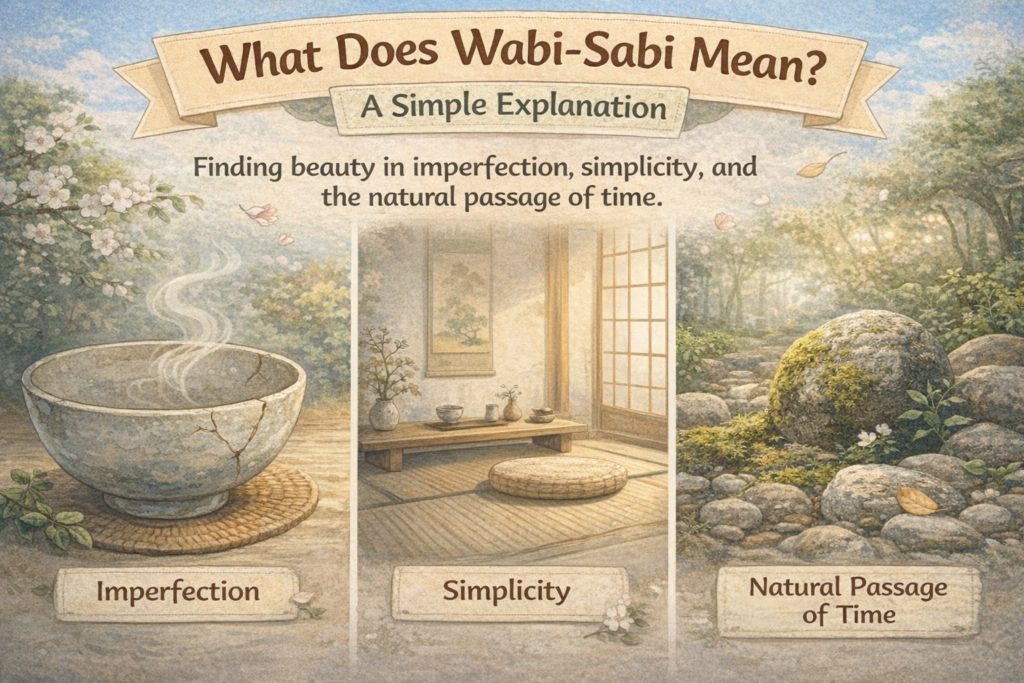
Wabi-sabi is a Japanese way of thinking about beauty and life. It teaches us that things do not need to be perfect to be beautiful. In fact, small flaws, changes over time, and simplicity can make something more meaningful.
There is no single English word that fully explains wabi-sabi. In simple terms, it means finding beauty in imperfection, simplicity, and the natural aging of things. A cracked bowl, a weathered wooden door, or a quiet, empty space can all express wabi-sabi.
Many people misunderstand wabi-sabi as something sad or broken. However, it is not about loss. It is about acceptance—accepting that nothing lasts forever and that change is a natural part of life.
The Difference Between “Wabi” and “Sabi”
Originally, wabi and sabi were two separate ideas.
Wabi referred to a simple, quiet life, often away from luxury or excess. It was connected to living with less and finding peace in simplicity.
Sabi, on the other hand, focused on time and aging. It described the beauty that comes with age, such as rust, fading colors, or worn surfaces. Sabi teaches us that age and use can add value, not reduce it.
Over time, these two ideas came together. When combined, wabi-sabi became a deeper philosophy that values simplicity, imperfection, and the passage of time as beautiful and meaningful.
Examples of Wabi-Sabi in Japanese Culture
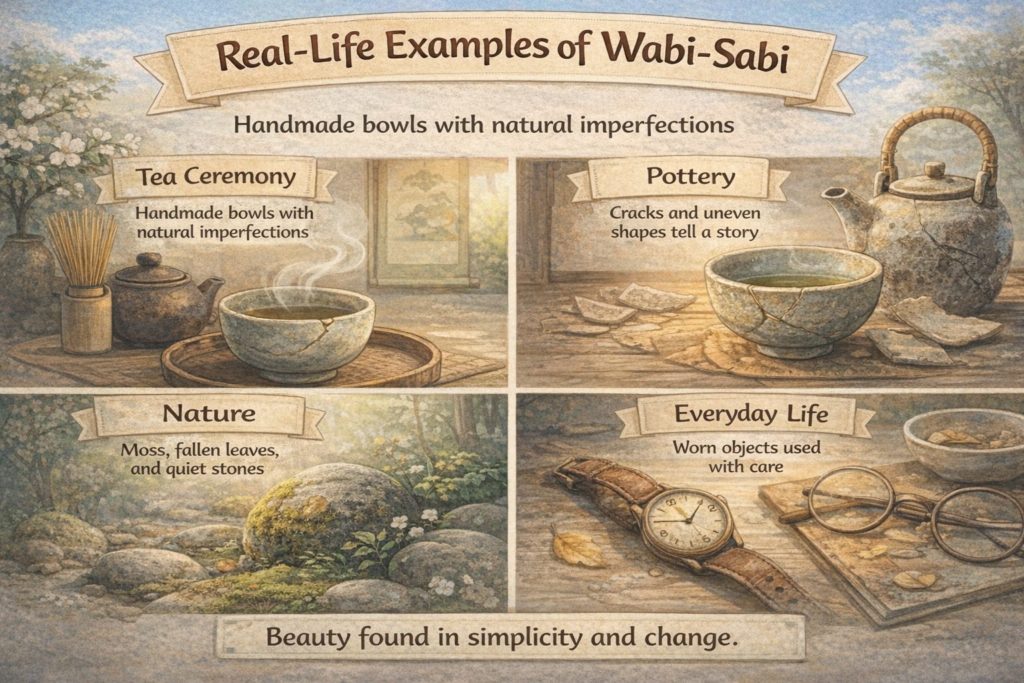
One of the best places to see wabi-sabi is in the Japanese tea ceremony. Tea bowls are often handmade and slightly uneven. Small cracks or rough textures are not hidden—they are appreciated.
Nature is another strong example. Falling leaves, fading flowers, or moss growing on old stones all show wabi-sabi. These scenes remind people that beauty is temporary and always changing.
Wabi-sabi also appears in everyday life. An old notebook with worn pages, a wooden table with scratches, or a quiet room with little decoration can all express this idea.
Wabi-Sabi vs Western Ideas of Beauty
In many Western cultures, beauty is often linked to perfection. New items, smooth surfaces, and symmetry are seen as ideal. Things that are broken or old are usually replaced.
Wabi-sabi offers a different view. Instead of hiding flaws, it accepts them. Instead of chasing perfection, it values honesty and naturalness. Something imperfect feels more real and more human.
This difference is one reason why many people today find wabi-sabi refreshing. In a fast and perfect-looking world, wabi-sabi reminds us to slow down and appreciate what already exists.
Why Wabi-Sabi Still Matters Today
Wabi-sabi is still important in modern life. Many people feel stressed by perfection, competition, and constant change. Wabi-sabi offers a calmer way of thinking.
In design and lifestyle, wabi-sabi appears in simple homes, natural materials, and handmade objects. It also connects closely to ideas like mindfulness, sustainability, and minimalism.
More than anything, wabi-sabi teaches us to accept ourselves and our lives as they are. By understanding wabi-sabi, we can learn to see beauty not only in objects, but also in everyday moments and in ourselves.


