


Understanding the difference between a daimyo and a shogun is one of the keys to learning about Japanese history. Both were powerful leaders, but they held very different roles. The shogun served as the top military ruler of Japan, while the daimyo were regional lords who controlled large territories and armies. Their relationship—built on loyalty, authority, and sometimes tension—shaped the political structure of Japan for centuries.
By looking at how each leader lived, what responsibilities they held, and how they balanced power, we can better understand how Japan’s feudal system worked. This guide explains their roles in simple terms, shows how their power changed over time, and explores why the daimyo–shogun relationship remains important even today for anyone curious about Japanese culture and history.
Who Were the Daimyo and the Shogun? A Simple Introduction
Understanding Japan’s Feudal Leaders
In Japan’s feudal era, political power was not held by the emperor, but by two main types of leaders: the shogun and the daimyo. These two groups shaped the country’s history for centuries, and their roles are important for understanding Japanese culture, warfare, and society. Even though both held influence, their positions were very different.
The Shogun: Japan’s Military Ruler
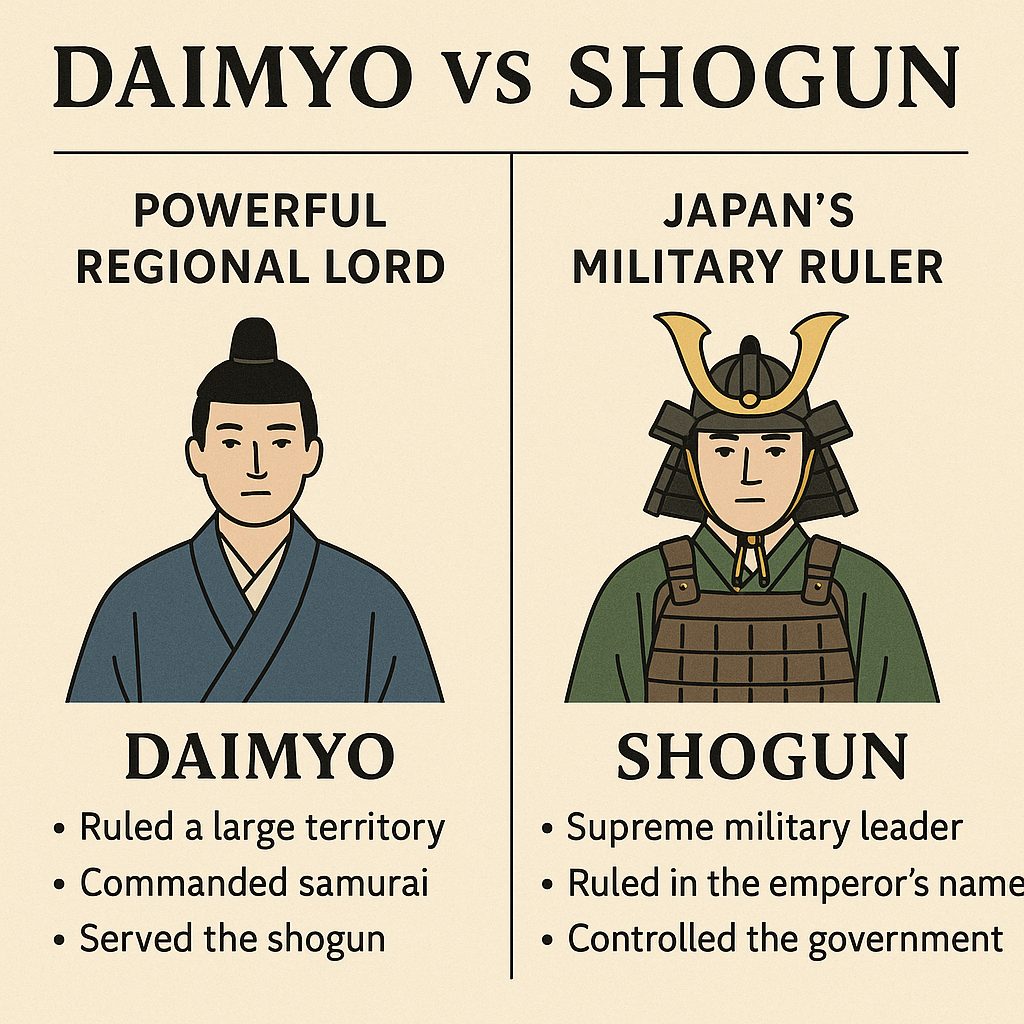
The shogun was the highest military leader in Japan and the true ruler of the country. While the emperor existed as a symbolic figure, the shogun controlled the government, the military, and major political decisions. The most famous shogun families were the Minamoto, the Ashikaga, and the Tokugawa, with the Tokugawa shogunate ruling for more than 250 years. In simple terms, the shogun was like the “top commander” of Japan.
The Daimyo: Powerful Regional Lords
The daimyo were local lords who ruled their own territories, known as domains. They controlled land, collected taxes, and commanded their own armies of samurai. While they had great power within their regions, they were still expected to follow the shogun’s authority. Their loyalty—and sometimes their rebellion—played a huge role in shaping Japan’s political structure.
How Their Roles Connected
The relationship between the shogun and the daimyo was built on power, loyalty, and responsibility. The shogun needed the daimyo to keep order across Japan, while the daimyo needed the shogun to maintain national stability and legitimacy. This balance sometimes worked smoothly, but at other times it led to conflict, war, and political change.
Why These Roles Still Matter Today
Even though the feudal system ended in the 1800s, the stories of the shogun and daimyo continue to influence Japanese culture, films, games, and world history education. Understanding who they were provides an easy entry point into Japan’s rich past.
What Was a Daimyo?
Powerful Lords Who Controlled Large Regions
A daimyo was a powerful feudal lord who ruled a specific territory in Japan. Each daimyo controlled large areas of land, which could include towns, villages, farmland, and forests. Their power came mainly from the amount of land they owned and the number of people living under their rule. Because of this, some daimyo were extremely wealthy and influential.
Leaders of Samurai and Local Governments
Every daimyo commanded a group of samurai warriors who served as soldiers, advisors, and administrators. These samurai helped protect the territory, collect taxes, and maintain order. Daimyo also made decisions about local laws, agriculture, and trade. In many ways, they acted like the “governors” of their regions, responsible for keeping life stable and productive.
Independent but Still Under the Shogun
Although daimyo had a great deal of power, they were not completely independent. They had to follow the rules set by the shogun, who was the highest military leader in Japan. Daimyo were often required to show loyalty through military support, taxes, and political obedience. The shogun could even remove a daimyo from power if they broke important rules.
A Diverse Group With Different Levels of Power
Not all daimyo were equally strong. Some controlled huge and wealthy domains, while others ruled smaller areas. Their influence depended on the size of their land, the strength of their armies, and their relationship with the shogun. This created a complex political landscape where daimyo constantly balanced loyalty, ambition, and strategy.
How Daimyo and Shogun Used Power in Different Ways

Political Power vs. Military Control
The shogun held the highest military authority in Japan, meaning he controlled national security, foreign policy, and major political decisions. Daimyo, on the other hand, ruled their own domains and managed local affairs. While the shogun decided the overall direction of the country, daimyo made day-to-day decisions within their territories. This created a layered political system where national and regional powers existed side by side.
Land, Wealth, and Responsibility
Daimyo controlled large amounts of land, which made them wealthy and influential. Their income came from the farmers living on their estates, and this wealth allowed them to maintain armies, build castles, and support cultural activities. The shogun controlled Japan as a whole, but the size and strength of the daimyo’s landholdings meant they also held significant power. In many ways, the relationship between shogun and daimyo depended on land management and economic strength.
Military Forces and Loyalty
Both shogun and daimyo commanded samurai, but on different scales. The shogun had authority over the country’s main military forces, while daimyo kept their own samurai armies to protect their domains. This system required loyalty: daimyo were expected to serve the shogun, and in return, they were allowed to rule their territories. However, if a daimyo became too powerful or disloyal, the shogun could punish them, reduce their land, or even remove them from their position.
Maintaining Balance and Order
The Tokugawa shogunate introduced strict rules to maintain balance among the daimyo. One of the most famous policies was sankin-kōtai, which required daimyo to spend every other year in Edo and leave their families there as hostages. This system prevented rebellions and ensured loyalty. It also helped create economic growth, as daimyo traveled frequently and spent money on transportation, lodging, and gifts. Through policies like this, the shogun used authority to maintain stability across Japan.
Power, Lands, and Political Influence: How the Shogun Controlled the Daimyo
A System Built to Maintain Stability
During the Edo period, the shogun needed a way to keep over 250 daimyo peaceful and loyal. To achieve this, the Tokugawa government created a carefully designed political system. It limited the power of the daimyo while allowing them to rule their own lands. The goal was simple: prevent rebellion, reduce conflict, and maintain long-term stability across Japan.
Land Distribution and Strategic Territories
The shogun controlled the most valuable territories, such as major cities, important ports, and rich agricultural areas. Daimyo were given domains in different parts of Japan, but their locations were not random. Powerful clans were placed far from Edo, while more trusted families were placed closer to the capital. This arrangement created a balance in which daimyo held local authority but could not easily gather enough power to challenge the shogun.
The Sankin-Kotai System (Alternate Attendance)
One of the most effective tools of control was sankin-kotai, the system that required daimyo to travel to Edo every other year and maintain a residence there. While in Edo, they attended official duties and lived under the watch of the shogunate. Their families often stayed in Edo full-time, which further encouraged loyalty. This system was expensive, and the financial burden made it difficult for daimyo to build military strength back home.
Political Rules and Limited Autonomy
The shogunate also placed strict limits on what daimyo could do without permission. They could not build large castles, form alliances, or engage in private diplomacy. Even marriage between clans often required approval. These rules prevented powerful families from forming dangerous partnerships and ensured that ultimate control remained with the shogun.
A Network of Surveillance and Loyalty
Officials, spies, and informants quietly monitored daimyo activities, reporting suspicious behavior to the central government. At the same time, the shogun rewarded loyal clans with greater privileges or prestige. Through a mix of encouragement and surveillance, the Tokugawa regime maintained a stable political order for more than 250 years.
Why the Relationship Between Daimyo and Shogun Matters Today
A Foundation for Understanding Japanese History
The connection between daimyo and shogun is more than just a story from the past. Their relationship shaped how Japan was governed for hundreds of years, influencing politics, social structure, and regional culture. When people study Japanese history today, learning about how daimyo supported—or challenged—the shogun helps them understand why certain events happened and how Japan developed into a unified nation.
A Lens for Exploring Power and Authority
The daimyo–shogun relationship also offers a useful way to think about power. The shogun held national authority, but daimyo ruled their own lands with considerable independence. This balance between central control and local leadership still influences how historians and political scientists view government systems. It shows how cooperation and conflict between different levels of authority can shape a country’s future.
Cultural Legacy in Modern Japan
Many traditions from the samurai era continue to influence Japanese culture today. Castles, festivals, family crests, and regional identities often trace their roots to daimyo domains. Meanwhile, stories about famous shoguns like Tokugawa Ieyasu remain popular in dramas, books, and tourism. Understanding the relationship between daimyo and shogun helps modern visitors appreciate why different regions of Japan have distinct histories and cultural styles.
A Source of Inspiration for Pop Culture and Worldbuilding
The dynamics between local lords and a military ruler also inspire creators around the world. Movies, anime, video games, and novels often draw from the daimyo–shogun system to build fictional worlds, political drama, and character relationships. Many international fans search for information about the real history behind these stories, and learning about daimyo and shogun gives them deeper appreciation for the themes they encounter.
Why the Past Still Matters
Even though the samurai era ended long ago, the relationship between daimyo and shogun continues to help people understand leadership, loyalty, and conflict. It reminds us how societies organize power, how cultures preserve tradition, and how history influences daily life even centuries later. By exploring their roles, modern readers and travelers gain a clearer sense of Japan’s identity—past, present, and future.


