The world of sumo is full of power, tradition, and excitement—but many fans are surprised to learn how big the income gap is between wrestlers. Unlike other sports, sumo uses a strict ranking system to decide how much each wrestler earns. Top-ranked rikishi receive monthly salaries, bonuses, and sponsorships, while lower-division wrestlers earn little and rely on their stables for daily support.
Understanding how sumo wrestlers are paid helps explain the challenges they face, the pressure to rise in rank, and the value of every tournament victory. This guide offers a simple look at base salaries, prize money, living costs, and even what happens after retirement. Whether you’re a casual fan or someone deeply interested in Japanese culture, this overview will help you see the sport in a whole new way.
How Much Do Sumo Wrestlers Earn? A Simple Overview of the Salary System
A Salary Structure Based on Rank
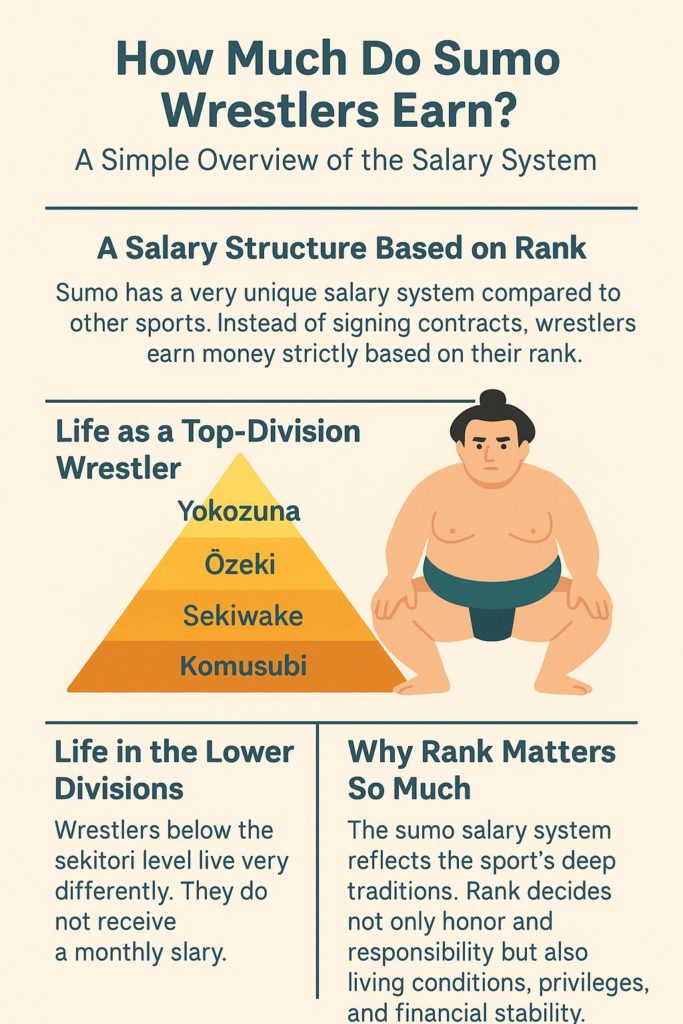
Sumo has a very unique salary system compared to other sports. Instead of signing contracts, wrestlers earn money strictly based on their rank. Because of this, a wrestler’s financial situation can change dramatically depending on where they stand on the official list. Understanding this ranking system helps explain why income differences in sumo are so large.
Life as a Top-Division Wrestler
The highest-paid wrestlers are called sekitori, a group that includes the Makuuchi and Jūryō divisions. These athletes receive a monthly salary from the Japan Sumo Association, and their income increases as they rise through the ranks. A Yokozuna, the top position in sumo, earns the most and also receives bonuses, gifts, and support from sponsors. Sekitori enjoy a more comfortable lifestyle with private rooms, personal attendants, and greater freedom.
Life in the Lower Divisions
Wrestlers below the sekitori level live very differently. They do not receive a monthly salary. Instead, their stable provides housing, food, and basic daily needs. Their schedule is filled with hard training and chores, and their spending money is often limited. For these wrestlers, being promoted to Jūryō is a major turning point because it is the moment they begin earning real income from sumo.
Why Rank Matters So Much
The sumo salary system reflects the sport’s deep traditions. Rank decides not only honor and responsibility but also living conditions, privileges, and financial stability. For many wrestlers, reaching the sekitori level is more than just a competitive achievement—it is the doorway to independence, better opportunities, and a more secure future.
Rank and Income: The Huge Gap Between Yokozuna and Lower Divisions
A Sport Where Rank Shapes Daily Life
In sumo, rank affects much more than a wrestler’s reputation. It determines how they live, how they train, and how much they can earn. While fans often focus on wins and losses, the difference between being a top-division wrestler and a lower-division wrestler is enormous, both financially and socially.
The Lifestyle of the Top Divisions
Wrestlers in the Makuuchi and Jūryō divisions enjoy privileges that come with being sekitori. They have private rooms, higher-quality meals, and assistants who help with daily tasks. Their income allows them to buy personal items, save money, and support their families. For these wrestlers, life is more comfortable, and their status earns them respect inside and outside the ring.
Life Below the Sekitori Line
Wrestlers in Makushita and the divisions below face a very different reality. Without a monthly salary, they share living spaces with other junior wrestlers and follow strict schedules filled with chores and long training sessions. Their limited financial resources mean they rely heavily on their stable for food, clothing, and basic needs. Even though they work just as hard as top wrestlers, their lifestyle is much more modest.
Why Promotion to Jūryō Changes Everything
Moving up to Jūryō is often described as a turning point in a wrestler’s career. The promotion brings a steady salary, more freedom, and a dramatic improvement in daily life. Many wrestlers spend years trying to reach this level because the difference between being in Makushita and Jūryō is not just symbolic—it is life-changing.
A Sharp Gap Built Into Tradition
The gap between the top and lower divisions may seem surprising, but it reflects the traditional values of sumo. Rank is a sign of achievement, discipline, and skill, and the rewards grow as a wrestler climbs higher. This structure creates strong motivation, but it also shows the harsh reality of the sport, where only a small group reaches financial stability.
Beyond Salary: Prize Money, Sponsorships, and Other Income Sources
More Than Just a Monthly Salary
While a wrestler’s base salary depends on rank, many sumo wrestlers earn additional income from other sources. These earnings can make a big difference, especially for top wrestlers who appear often on TV or in major tournaments. Understanding these extra income streams helps paint a fuller picture of how rikishi support their careers and lifestyles.
Prize Money Earned During Tournaments
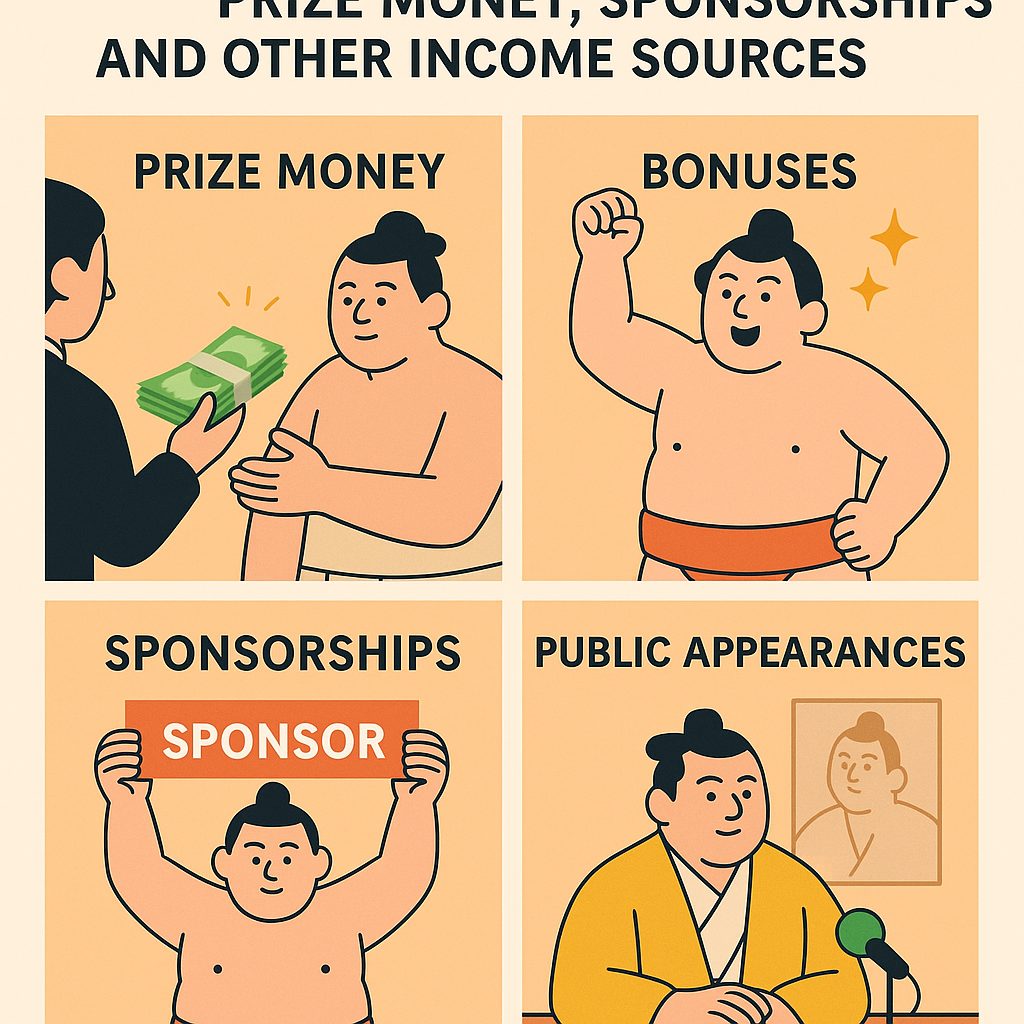
One of the most visible forms of extra income is kenshō, the prize money banners carried around the ring before important matches. When a sponsored bout takes place, the winner receives a cash prize after the match. Popular wrestlers or those competing in high-stakes bouts often earn more because fans and companies want to support matches that draw attention. Over time, these prizes can add up to significant earnings for successful competitors.
Bonuses and Special Rewards
In addition to prize money, wrestlers can receive special bonuses from the Japan Sumo Association. These are awarded for outstanding performance, such as winning a tournament or showing exceptional technique. Sanyaku wrestlers and champions often receive larger seasonal or yearly bonuses, reflecting their achievements and contribution to the sport.
Sponsorships and Public Appearances
Top wrestlers also have opportunities to earn money outside the ring. Sponsorship deals, magazine interviews, television appearances, and product promotions can all provide extra income. Popular rikishi with strong fan followings are especially likely to receive these offers. These activities not only increase their earnings but also help build their public image.
Why Income Differences Grow Over Time
Because prize money and sponsorships depend heavily on visibility and performance, successful rikishi can earn far more than their base salary. Meanwhile, wrestlers lower in the rankings rarely receive such opportunities. This creates a widening financial gap that continues as wrestlers climb the ranks. For the top stars, sumo can be quite lucrative, while for others it remains a financial challenge.
Living Costs and Financial Reality: Is Sumo a Profitable Career?
The Hidden Costs Behind Sumo Life
From the outside, the life of a sumo wrestler may seem simple, but the financial reality is more complicated. Wrestlers live in training stables, where the stablemaster covers most basic needs such as food, housing, and uniforms. However, as wrestlers grow older or rise in rank, additional personal expenses begin to appear. These include travel, medical care, clothing, and sometimes even supporting family members. The cost of maintaining the lifestyle of a professional athlete can be higher than many fans expect.
How Much Money Wrestlers Actually Keep
Even for wrestlers who receive a salary, the amount they can save varies widely. Top-division rikishi generally have more freedom to manage their money, but they also spend more on appearances, transportation, and participation in regional tours. Young or lower-division wrestlers often have very little spending money because they do not earn a monthly salary at all. This creates a situation where two wrestlers in the same stable may live completely different economic lives.
Misconceptions About “Rich” Sumo Wrestlers
Because Yokozuna and other high-ranking wrestlers appear frequently on TV and receive gifts from supporters, people sometimes assume that all wrestlers earn a lot. In reality, only a small percentage reach the level where they enjoy true financial comfort. Most wrestlers live modestly, and many face uncertainty as they try to climb the rankings. The sport demands great physical effort, yet stable financial security comes only to those who achieve success at the very top.
Challenges Faced by Lower-Division Wrestlers
For wrestlers below Jūryō, financial challenges are a constant part of daily life. They must follow strict routines, train intensively each day, and take on chores around the stable, all while earning little or no salary. Their opportunities to earn extra income are extremely limited, which means promotion to the higher divisions is not only a competitive goal but also a financial lifeline. For many, the struggle continues for years, and not everyone reaches the level where income becomes stable.
After Retirement: What Happens to a Sumo Wrestler’s Income?
A New Life After the Ring
Retirement is a major turning point for every sumo wrestler. Because the sport is physically demanding, most rikishi retire relatively young, often in their 30s. When that moment comes, their financial situation changes completely. Some wrestlers move smoothly into new careers, while others face uncertainty. Understanding what happens after retirement helps explain why financial stability during their active years is so important.
Becoming a Stablemaster or Coach
One of the most respected paths after retirement is becoming an oyakata, or stablemaster. However, this career requires purchasing or securing a share of elder stock within the Japan Sumo Association. These shares can be extremely expensive, meaning only certain wrestlers—usually successful sekitori—are able to pursue this route. Those who do become oyakata receive a stable salary and play an important role in training the next generation of rikishi.
Media, Entertainment, and Public Roles
Some former wrestlers move into television, radio, or commentary work. Their strong personalities and recognizability make them popular guests on talk shows or sports programs. Others take part in commercial advertising or event appearances. For particularly well-known wrestlers, this kind of work can provide a stable income and allow them to stay connected to the public.
New Careers Outside the Sumo World
Not all retired wrestlers remain in the sumo community. Many open restaurants, gyms, or training studios, using their fame to attract customers. Others take on completely different jobs, such as teaching or working in business. Their success depends on their personal interests, savings, and the support network they built during their active years. For wrestlers who did not reach high ranks, transitioning into a new career can be challenging, but many find meaningful paths outside the ring.
Why Planning for the Future Matters
Life after sumo can be rewarding, but it also requires preparation. Because only a small percentage of wrestlers retire with significant savings or secure jobs, financial planning is essential. The sport brings honor and pride, but it does not guarantee long-term income for everyone. That is why understanding the financial side of sumo—both during a career and after retirement—is important for fans who want to appreciate the full journey of a rikishi.