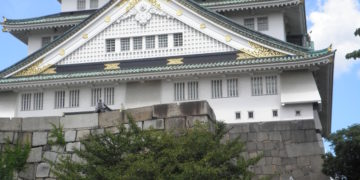
In the heart of Osaka, just a short walk from the city’s bustling streets, stands a quiet museum filled with the echoes of the past — the Osaka Peace Museum, also known as Peace Osaka.
Here, history is not just displayed but felt: through haunting photos, survivors’ stories, and the remnants of a city once consumed by war.
Many travelers come to Osaka for food, nightlife, and neon lights — but few know that this small, serene museum holds one of the most powerful lessons Japan has to offer: the importance of peace.
For just a few hundred yen, you can walk through the halls where stories of loss turn into messages of hope.
This guide will help you discover what makes Peace Osaka so meaningful — from its exhibits on the Osaka air raids to the heartfelt messages from children imagining a world without war.
You’ll also find all the practical details you need — admission fees, hours, and how to get there easily from Osaka Castle.
By the end, you’ll understand that this museum is more than a historical stop — it’s a reminder of humanity’s strength and a quiet place where peace begins, one visitor at a time.
What Is Osaka Peace Museum? A Place to Reflect and Remember
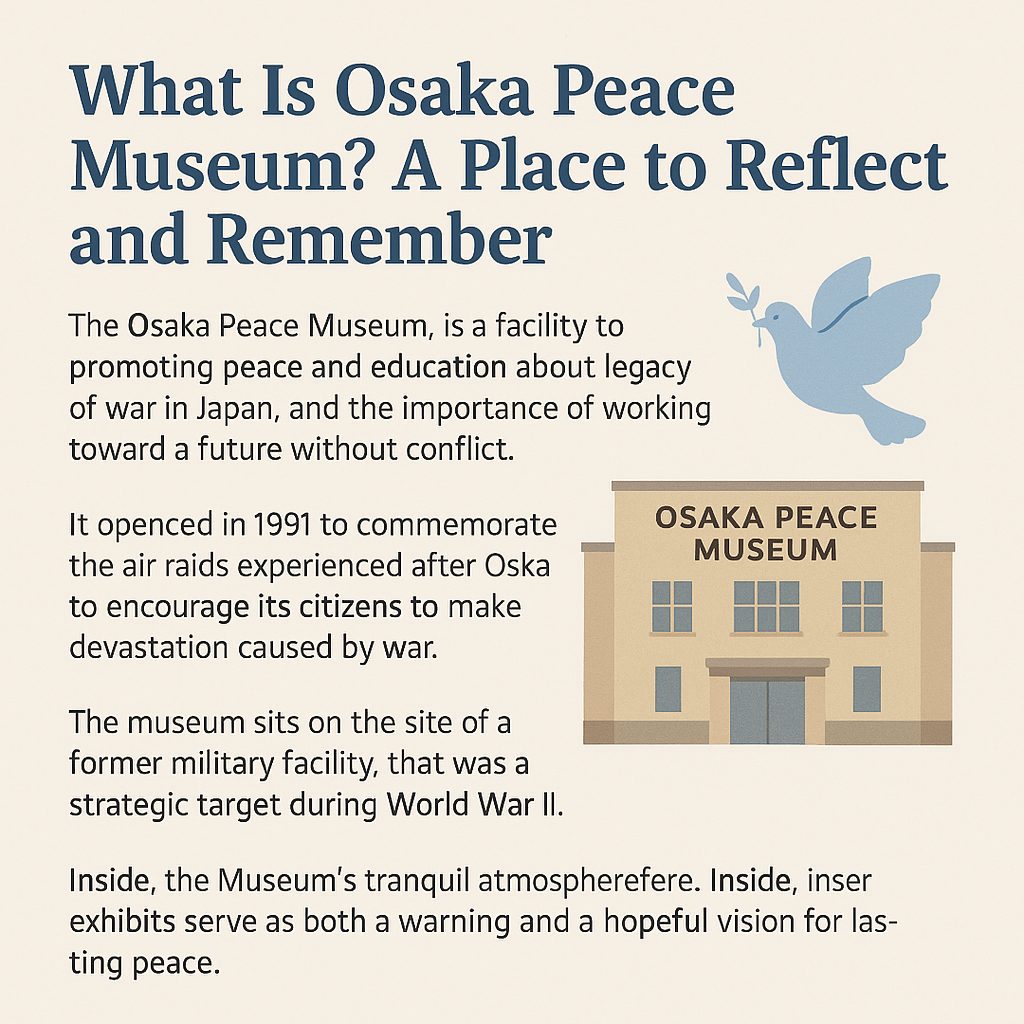
Tucked away in the peaceful greenery of Osaka Castle Park, the Osaka Peace Museum — officially known as the Osaka International Peace Center or Peace Osaka — is a place where the past whispers to those willing to listen.
Unlike many large war museums that focus on military history, Peace Osaka was created with a different purpose:
to remind people of the devastating effects of war and to encourage the pursuit of lasting peace.
The Origins of Peace Osaka
The museum opened its doors in 1991, nearly half a century after World War II.
At the time, Osaka’s citizens and city officials wanted to build a place that would preserve the memories of those who suffered during the Osaka air raids — one of the most destructive bombings in Japan’s history.
These raids killed tens of thousands of civilians and left much of the city in ruins.
The museum’s founders believed that such tragedies must never be forgotten.
Peace Osaka was established not only to document the destruction but to serve as a space for reflection, education, and hope.
Its mission was — and still is — to ensure that younger generations understand the cost of war and the value of peace.
The Meaning Behind “Peace Osaka”
The name “Peace Osaka” reflects the museum’s role as a bridge between memory and future.
Through its exhibitions, it connects Japan’s wartime experiences with today’s global discussions on peace, human rights, and coexistence.
The museum invites visitors — regardless of nationality — to think deeply about how individuals and societies can prevent history from repeating itself.
The facility is managed by the Osaka Foundation of International Exchange and supported by local citizens, volunteers, and educators who believe that peace education must go beyond textbooks.
As a result, Peace Osaka is not just a museum — it’s a living classroom, where students, travelers, and families can share the same quiet realization:
that peace is fragile, and that understanding the past is the first step to protecting it.
A Space for Everyone
Inside, you won’t find glorified depictions of battle.
Instead, you’ll see the faces of ordinary people — children, parents, workers — whose lives were changed forever by war.
Through photos, letters, and interactive displays, the museum tells their stories with honesty and empathy.
Many visitors describe Peace Osaka as small but powerful.
Its calm atmosphere and clear English explanations make it approachable even for those who know little about Japan’s wartime history.
The tone is neither political nor accusatory — it simply asks each visitor to think, feel, and remember.
Why It Matters Today
In a world still struggling with conflict and division, the message of Peace Osaka feels more relevant than ever.
It stands as a gentle reminder that peace is not guaranteed — it’s something that must be learned, practiced, and protected.
Whether you are a student, a traveler, or simply someone curious about Japan’s history, a visit to the Osaka Peace Museum offers more than information.
It offers perspective — a moment to pause and realize how far humanity has come, and how much further we still have to go.
💡 Tip: After exploring the museum, step outside to the quiet park surrounding it. The sound of birds and distant city life creates the perfect setting for reflection — a moment of peace after learning about the cost of its absence.
Admission Fees, Opening Hours, and Access (2025 Updated)
Before visiting Osaka Peace Museum, it’s helpful to know a few practical details — how much it costs, when it’s open, and the easiest ways to get there.
Thankfully, the museum is both affordable and accessible, making it a simple yet meaningful stop on any Osaka itinerary.
Admission Fees (2025)
The Osaka Peace Museum remains one of the most budget-friendly museums in the city.
Here are the updated ticket prices for 2025:
| Category | Admission Fee | Approx. (USD) |
|---|---|---|
| Adults (Age 16 and over) | ¥250 | $1.70 |
| High School Students | ¥150 | $1.00 |
| Junior High / Elementary Students | Free | — |
| Groups (30+ people) | ¥200 per person | $1.40 |
| Seniors (65 and over) | ¥150 | $1.00 |
💡 Good to Know:
- Admission is free for children and school trips organized by educational institutions.
- The museum occasionally offers free-entry days, especially on August 6 (Hiroshima Peace Day) and August 15 (End of WWII Memorial Day).
- Donations are welcome to support peace education programs and exhibitions.
Opening Hours and Holidays
The museum’s schedule is straightforward and easy to plan around:
- 🕙 Opening Hours: 9:30 AM – 5:00 PM
- 🚪 Last Admission: 4:30 PM
- ❌ Closed Days: Mondays (or the next day if Monday is a national holiday), and New Year holidays (Dec 28 – Jan 4)
💡 Pro Tip:
The museum is usually quiet in the morning hours (9:30–11:00 AM) and on weekdays, making it the perfect time to visit for peaceful reflection.
If you go in the afternoon, combine your trip with a walk to nearby Osaka Castle for a scenic half-day plan.
Estimated Visit Duration
Most visitors spend about 1 to 1.5 hours inside the museum.
If you take time to read the displays and watch the short documentary videos (with English subtitles), plan for around two hours total.
The museum is compact but full of emotional depth — don’t rush your visit.
How to Get to Osaka Peace Museum
The museum is located in Morinomiya, on the southeastern side of Osaka Castle Park, making it easy to reach by public transportation.
📍 Address:
Osaka International Peace Center (Peace Osaka)
2-1 Osakajo, Chuo-ku, Osaka 540-0002, Japan
🚆 By Train or Subway
From Osaka Station (Umeda area):
- Take the JR Osaka Loop Line to Morinomiya Station (約15 minutes, ¥190).
- From the station’s Exit 1, walk about 10 minutes through Osaka Castle Park.
You’ll see signs leading directly to “Peace Osaka” in English.
From Namba or Shinsaibashi:
- Take the Osaka Metro Chuo Line or Nagahori Tsurumi-Ryokuchi Line to Morinomiya Station (約15 minutes, ¥230).
- The museum is about a 7–10 minute walk from Exit 2.
From Kansai International Airport (KIX):
- Take the JR Kansai Airport Rapid Service to Osaka Station, then transfer to the JR Loop Line to Morinomiya.
- Total travel time: 約65–75 minutes.
💡 Tip:
You can also stop by Osaka Castle Park Station (on the JR Loop Line) and enjoy a scenic 20-minute walk through the park to the museum.
The route passes ponds, cherry trees, and beautiful stone walls — a peaceful transition before entering the exhibits.
🚌 By Bus
Osaka City Bus routes also stop near the museum, but trains are generally faster and easier for first-time visitors.
If you prefer a direct route, use the “Osaka Loop Bus” or local taxi from Osaka Castle or Morinomiya area (5–7 minutes ride).
Accessibility and Facilities
The Osaka Peace Museum is fully wheelchair-accessible and provides several helpful services:
- Elevators and accessible restrooms
- English, Chinese, and Korean guide pamphlets
- Air conditioning and benches throughout the exhibits
- Small shop selling educational books and postcards
Photography is generally allowed in most areas (except certain exhibits), but please be respectful — this is a place of remembrance.
Nearby Landmarks for Combined Visits
Because the museum is located inside Osaka Castle Park, it’s easy to pair it with nearby attractions:
- 🏯 Osaka Castle Main Tower – 10-minute walk
- 🏛️ Osaka Museum of History – 15-minute walk
- ☕ Miraiza Café & Terrace – for coffee or lunch with a castle view
💡 Half-Day Plan Suggestion:
- Morning – Visit Osaka Peace Museum (9:30–11:00 AM)
- Late Morning – Walk through Osaka Castle Park
- Afternoon – Explore Osaka Castle or enjoy lunch nearby
Final Note
The Osaka Peace Museum is simple to reach, inexpensive to visit, and rich in meaning.
For travelers exploring the Osaka Castle area, it’s an ideal stop — not only for learning history, but also for pausing to think about the world we live in today.
Whether you arrive by train, on foot, or by curiosity alone, you’ll find that this quiet corner of Osaka holds a message that transcends language: peace is everyone’s responsibility.
Inside Osaka Peace Museum: Exhibits That Tell the Story of War and Hope
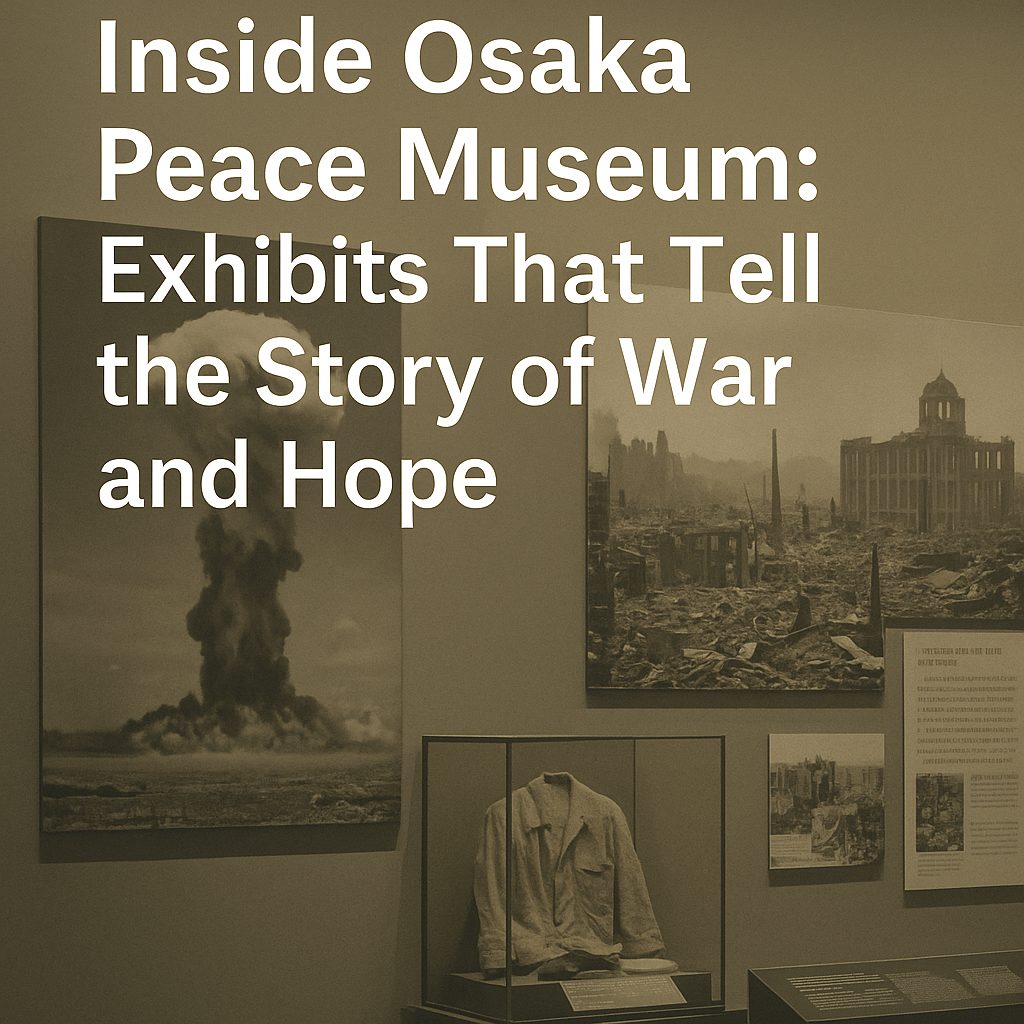
Stepping inside Osaka Peace Museum feels like entering a quiet time capsule — a place where silence speaks louder than words.
The exhibits are carefully arranged to guide visitors through the devastation of war, the pain of loss, and ultimately, the power of peace.
Every display has a human story behind it, and even without knowing Japanese, you can feel the emotion in every corner.
The Osaka Air Raids: A City in Flames
The first gallery immerses you in one of Osaka’s darkest moments — the air raids of World War II.
Through photographs, personal diaries, and fragments of everyday life — a child’s shoe, a burned lunch box, a melted clock — the reality of war becomes painfully real.
A large-scale 3D model of wartime Osaka shows how the once-vibrant city was reduced to ashes during the bombings of 1945.
You can hear survivor testimonies in Japanese with English subtitles, describing what it was like to lose their homes, families, and dreams overnight.
The purpose is not to shock, but to remind — that war spares no one.
💡 Tip: Don’t rush this section. The ambient sound of air-raid sirens and the faint flicker of reconstructed fire projections create an atmosphere that’s emotional but deeply educational.
Learning From the Past: The Human Cost of War
Moving to the next hall, the tone shifts from destruction to reflection.
This section focuses on how Osaka and Japan rebuilt themselves after the war.
Panels and videos explain the economic hardship, food shortages, and daily challenges people faced in the years that followed.
There’s also an interactive map showing Japan’s wartime expansion and its impact on neighboring countries, encouraging visitors to consider the global consequences of conflict.
English captions provide context for how these events shaped modern Japan’s peace-oriented constitution.
A small theater plays a short documentary every 30 minutes, featuring interviews with both Japanese citizens and international peace activists.
It’s an inspiring reminder that peace is a shared effort across borders.
The Path to Peace: From Memory to Action
The final exhibit hall is brighter, filled with art, hope, and color.
Here, children’s drawings, peace messages from around the world, and global anti-war campaigns show how the next generation envisions a world without violence.
You’ll find displays dedicated to nuclear disarmament, human rights, and international cooperation.
Visitors are encouraged to write their own “Message for Peace” on cards provided by the museum — many are displayed on a wall, forming a mosaic of voices in different languages.
There’s also an interactive digital screen where you can browse messages from past visitors, from Osaka to New York to Nairobi.
💡 Don’t miss: The “Peace Bell” installation near the exit.
Visitors are invited to ring it once — not for noise, but as a silent promise to remember what they’ve learned.
For Families and Students
The museum welcomes visitors of all ages.
Educational panels use simple language and illustrations to help children understand the meaning of peace without showing graphic images.
There are also guided programs for schools, available in Japanese and occasionally in English upon request.
Teachers and parents often describe the experience as “gentle but unforgettable” — an introduction to history that speaks to both the heart and the mind.
Emotional Takeaway
What makes Osaka Peace Museum stand out is its balance of realism and hope.
It doesn’t aim to blame or frighten.
Instead, it quietly asks visitors to imagine a world where war is not an option.
The combination of historical truth, personal stories, and peaceful presentation makes this museum a profound experience — one that lingers long after you leave.
When you step back into the sunlight of Osaka Castle Park, you’ll carry with you more than just knowledge.
You’ll carry a renewed awareness of how precious peace really is.
Why Osaka Peace Museum Matters: More Than Just a War Exhibit
Many visitors describe Osaka Peace Museum as small compared to Hiroshima’s Peace Memorial Museum or Nagasaki’s Atomic Bomb Museum.
And yet, what it lacks in size, it more than makes up for in emotional depth and perspective.
This museum isn’t about war itself — it’s about the people who lived through it, and what we can learn from their resilience and humanity.
A Different Kind of War Museum
Unlike traditional war museums that focus on military history, strategy, or weaponry, Peace Osaka focuses on the everyday lives of ordinary citizens.
It tells the story of Osaka’s air raids — one of the most devastating in Japan — and how the city rebuilt itself from the ashes.
Rather than glorifying battles, the exhibits highlight small personal artifacts — a child’s notebook, a mother’s kimono, a burned letter — that make the experience deeply human.
These items remind visitors that behind every headline and statistic, there are individuals whose dreams were interrupted by war.
The tone of the museum is gentle, reflective, and human-centered.
It doesn’t seek to assign blame or spark guilt; instead, it invites dialogue about compassion, coexistence, and understanding across nations.
💬 As one visitor wrote in the guestbook:
“Peace Osaka made me think about how war affects not just soldiers, but everyone — and how peace begins in our daily lives.”
The Power of Osaka’s Perspective
What makes this museum unique is its regional focus.
While Hiroshima and Nagasaki emphasize the horror of nuclear attacks, Osaka tells a story of urban destruction and recovery.
It shows how industrial cities — the economic engines of Japan — became primary targets during WWII and how ordinary citizens bore the cost of war.
Through this lens, Peace Osaka connects visitors to a universal truth:
war doesn’t only destroy armies or governments — it destroys communities, livelihoods, and hope.
This local narrative gives the museum a distinctive identity.
It reminds visitors that peace education isn’t only about preventing atomic war, but also about protecting human dignity in all forms of conflict.
Education That Transcends Borders
Since its opening, Peace Osaka has played a central role in peace education programs for schools in Kansai and beyond.
Every year, thousands of students participate in field trips, workshops, and volunteer programs that teach them how to think critically about history and responsibility.
The museum’s staff and volunteers often say their goal is not to “teach history,” but to “create empathy.”
By presenting war through personal stories, the museum encourages students — and visitors from abroad — to connect emotionally and intellectually with the concept of peace.
💡 Did you know?
Peace Osaka regularly collaborates with international NGOs, artists, and educators, hosting temporary exhibits on topics like nuclear disarmament, refugees, and peace-building in modern times.
Through these efforts, it becomes not just a Japanese museum, but a global conversation space.
A Place for Quiet Reflection
The architecture itself contributes to the museum’s message.
Natural light filters softly through the windows, and the halls are designed to feel calm, encouraging visitors to move slowly and think deeply.
Benches are placed throughout, allowing time for quiet contemplation.
The overall experience is not overwhelming but profoundly human.
You may not shed tears here — instead, you’ll likely walk away with a quiet ache in your heart and a new appreciation for peace as something fragile yet powerful.
The Museum’s Message Today
In a time when the world still faces division, violence, and misinformation, Osaka Peace Museum’s mission feels more urgent than ever.
Its message transcends history:
peace isn’t an abstract dream — it’s a daily act of understanding, kindness, and awareness.
The museum reminds us that the past is not over; it lives on in the lessons we choose to remember.
And every visitor, regardless of nationality or belief, becomes part of that mission simply by listening, learning, and caring.
💡 Reflection Tip:
Before leaving, take a moment to stand outside the entrance and look back at the museum’s name: “Peace Osaka.”
It’s more than a title — it’s a promise that peace, once learned, can be carried into the future by each of us.
Visitor Tips and Nearby Attractions
Visiting the Osaka Peace Museum is not just about learning history — it’s about taking a quiet pause amid the city’s energy.
Whether you plan a short stop or a reflective half-day visit, a few simple tips can help you make the most of this meaningful experience.
Helpful Visitor Tips
1. Plan for a Peaceful Morning Visit
The museum opens at 9:30 AM, and mornings are typically quiet with few visitors.
If you arrive right after opening, you’ll have plenty of time to explore the exhibits at your own pace without interruption.
The calm atmosphere enhances the reflective experience, especially in the first gallery about the Osaka air raids.
2. Combine It with Osaka Castle
Because the museum is located in Osaka Castle Park, it pairs perfectly with a visit to Osaka Castle — one of Japan’s most famous landmarks.
Start at Peace Osaka in the morning, then stroll through the park to the castle in the afternoon.
This route naturally moves from reflection to admiration — from history’s sorrow to Japan’s strength and beauty.
3. Bring an Open Mind (and Tissues, Maybe)
The exhibits are moving, but not graphic.
They focus on humanity and hope rather than horror.
Take your time reading personal letters and watching the survivor testimonies.
You may find yourself unexpectedly emotional — and that’s part of the museum’s quiet power.
4. Check for Temporary Exhibits and Events
Peace Osaka regularly hosts special exhibitions and educational programs on global peace, art, and humanitarian themes.
Topics often include nuclear disarmament, children’s drawings for peace, and refugee stories.
Check the official website or on-site notice board for updates during your visit.
5. Respect the Space
Photography is allowed in most areas, but please avoid flash and loud conversations.
This is a place of remembrance — small acts of respect make a big difference.
6. Multilingual Support
English, Chinese, and Korean pamphlets are available at the entrance.
Some video exhibits include English subtitles, and staff are friendly and willing to help with directions.
If you’re visiting as a group or with students, you can request an English explanation session in advance via email.
7. Time Needed
Allocate about 1–2 hours for the museum, plus extra time if you plan to visit nearby attractions.
It’s compact enough to fit into a morning schedule but powerful enough to stay in your mind all day.
Nearby Attractions to Explore
After visiting Peace Osaka, take advantage of the surrounding area — Osaka Castle Park is one of the most scenic spots in the city, blending nature, history, and modern charm.
🏯 Osaka Castle (10-minute walk)
A beautifully reconstructed 16th-century castle with a panoramic observation deck.
Inside, you’ll find interactive exhibits about Toyotomi Hideyoshi and the unification of Japan.
The park around the castle is stunning year-round, especially during cherry blossom season.
🏛️ Osaka Museum of History (15-minute walk)
Located near Tanimachi 4-chome Station, this museum offers a timeline of Osaka’s development from ancient to modern times.
The upper floors provide one of the best skyline views of Osaka Castle.
☕ Miraiza Osaka-Jo (Café & Shopping Complex)
Housed in a historic Western-style building near the castle, Miraiza features cafés, restaurants, and souvenir shops.
It’s the perfect place to rest after a morning of learning and walking.
🌳 Osaka Castle Park
Take a slow stroll around the moat, rent a bicycle, or simply sit under a cherry tree.
The park is a peaceful transition after your museum visit — a living reminder that life continues and peace can bloom again.
🕊️ Peace Monuments Around the Park
Don’t miss the Osaka Air Raid Memorial Monument near the museum, dedicated to the victims of the bombings.
Nearby plaques share survivor messages and historical photos.
It’s a fitting stop to complete your reflection before returning to the city’s bustle.
Recommended Half-Day Itinerary
If you’re planning your day around the museum, here’s a suggested itinerary:
9:30 AM – 11:00 AM: Visit Osaka Peace Museum
11:00 AM – 12:00 PM: Stroll through Osaka Castle Park
12:00 PM – 1:30 PM: Lunch or coffee at Miraiza Osaka-Jo
1:30 PM – 3:00 PM: Explore Osaka Castle or the Museum of History
This route blends history, culture, and relaxation — perfect for travelers who want a meaningful yet balanced day in central Osaka.
Final Thoughts
The Osaka Peace Museum may not be as large or famous as other attractions, but it offers something rare:
a quiet space that stays with you long after you leave.
In a world that often rushes forward, this museum asks you to slow down, to listen, and to remember.
It doesn’t seek to entertain; it seeks to enlighten.
When you step back outside, the sound of birds in Osaka Castle Park feels different — softer, almost sacred.
And perhaps, like many visitors before you, you’ll realize that peace isn’t just something we hope for.
It’s something we create — moment by moment, choice by choice.