Planning a trip to Kyoto?
Then Nijo Castle is probably already on your list — a magnificent UNESCO World Heritage Site where Japan’s samurai history and elegant art come alive.
But before you go, you might be wondering: How much is the Nijo Castle entrance fee?
Do you need to buy tickets online? What’s included in the ticket price — the palace, the gardens, or both?
Many travelers have these same questions when planning their Kyoto itinerary. Ticket systems in Japan can sometimes be confusing, and Nijo Castle has several types depending on what you want to see.
In this complete guide, we’ll explain everything clearly — from entrance fees and ticket types to opening hours, access, and must-see highlights.
By the end, you’ll know exactly how to plan your visit smoothly, save time at the gate, and make the most of your trip inside one of Kyoto’s most treasured landmarks.
Let’s step through the gates of Nijo Castle and discover its beauty, history, and practical travel tips together.
What Is Nijo Castle? A Short Introduction Before Your Visit

A Brief History of Nijo Castle
Nijo Castle (二条城, Nijō-jō) is one of Kyoto’s most important historical sites and a masterpiece of early Edo-period architecture. It was built in 1603 by Tokugawa Ieyasu, the first shogun of the Tokugawa Shogunate, as his official residence in Kyoto.
Unlike the defensive castles of earlier eras, Nijo Castle was designed not for battle but for displaying power and prestige. It served as a political base where the shogun could host imperial envoys, demonstrate his authority, and manage affairs between the military government and the imperial court.
In 1867, the castle became the stage for a turning point in Japanese history: Tokugawa Yoshinobu, the last shogun, returned his political power to the Emperor inside the palace walls — a moment known as Taisei Hōkan (the Restoration of Imperial Rule).
Today, Nijo Castle stands as a symbol of the beginning and end of the shogunate, a place where Japan’s feudal history meets modern heritage. In 1994, it was designated a UNESCO World Heritage Site as part of the “Historic Monuments of Ancient Kyoto.”
Why It’s a Must-Visit UNESCO World Heritage Site
Walking through Nijo Castle is like stepping back into a world of quiet elegance and hidden power. The site is surrounded by massive stone walls and wide moats, giving it an air of authority. But inside, you’ll find one of Japan’s finest examples of samurai-era luxury.
The highlight of the visit is the Ninomaru Palace, a wooden complex famous for its gold leaf paintings, sliding doors, and “nightingale floors” — floorboards that chirp softly when walked upon, designed to alert guards of intruders. As you stroll through the corridors, you can almost hear the whispers of samurai officials who once discussed politics and strategy here.
Beyond the palace lies the Ninomaru Garden, designed by master gardener Kobori Enshū. This classic Japanese garden combines water, stones, and pine trees to create a landscape that changes beautifully with the seasons — from pink cherry blossoms in spring to fiery maples in autumn.
Visitors also enjoy exploring the Honmaru area, the castle’s inner fortress, which includes a secondary palace and viewing platform with panoramic views of Kyoto city. The mix of architecture, art, and natural scenery makes Nijo Castle an unforgettable experience for both history lovers and casual travelers.
What Makes It Special for First-Time Visitors
What truly makes Nijo Castle stand out among Kyoto’s many temples and shrines is its perfect balance between strength and serenity. Unlike religious sites like Kiyomizu-dera or Fushimi Inari Taisha, Nijo Castle reflects Japan’s political and artistic power during the Edo period.
It’s a place where you can see, hear, and feel history — the creak of the nightingale floors, the shimmer of golden walls, the calm of the mossy gardens. Every corner tells a story, from samurai pride to peaceful transition.
For many foreign visitors, Nijo Castle is also surprisingly accessible and relaxing compared to more crowded spots in Kyoto. The spacious grounds allow you to wander freely, take photos, and enjoy the atmosphere without rush. It’s ideal for travelers who want to understand Japanese history in a tangible and sensory way, not just through museums or books.
If it’s your first time in Kyoto, visiting Nijo Castle at the start of your trip helps you grasp the spirit of the city — a harmony of tradition, power, and elegance. Once you walk through the Karamon Gate, with its beautifully carved details and golden decorations, you’ll feel transported to another era.
A Living Connection Between Past and Present
Nijo Castle is not only a preserved monument but a living cultural space. Throughout the year, it hosts special events such as night illuminations, seasonal light displays, and art exhibitions that blend modern creativity with traditional aesthetics.
Even today, the castle continues to serve as a venue for cultural exchange, welcoming visitors from all over the world. Each season brings something unique — cherry blossoms in spring, lush greenery in summer, colorful leaves in autumn, and serene beauty under the winter sky.
Visiting Nijo Castle is more than sightseeing; it’s an invitation to experience how Japan cherishes its history while embracing the present. Before you start checking entrance fees or planning routes, take a moment to imagine what these walls have witnessed for over four centuries — the rise and fall of leaders, the quiet steps of samurai, and the enduring elegance of Kyoto’s heart.
Nijo Castle Entrance Fee and Ticket Types
Latest Entrance Fee (Adults, Students, Children)
As of 2025, the Nijo Castle entrance fee is very reasonable considering the site’s historical value.
The standard prices are:
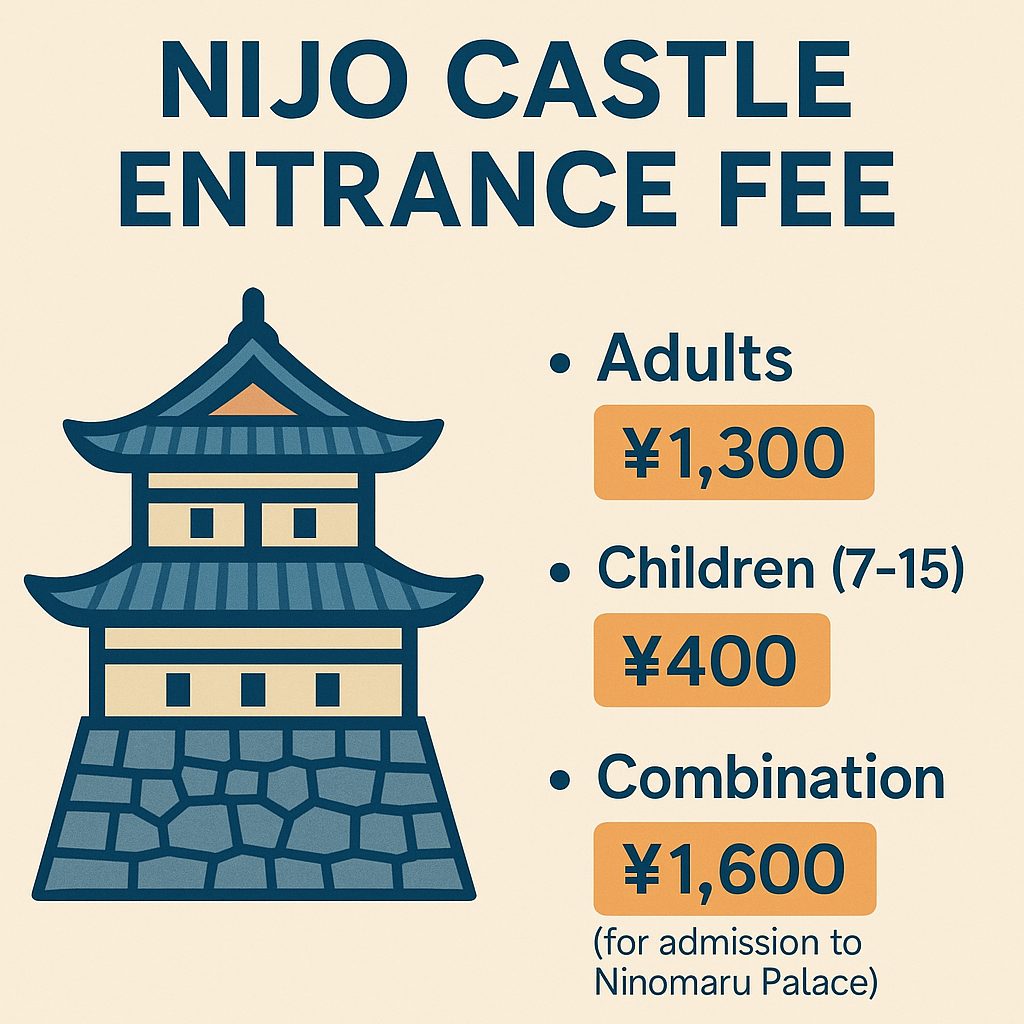
- Adults: ¥1,300 (includes admission to Ninomaru Palace and gardens)
- Junior & High School Students: ¥400
- Elementary School Students: ¥300
- Children under Elementary Age: Free
This ticket allows access to both the Ninomaru Palace, where the shoguns once lived, and the Ninomaru Garden. If you only wish to visit the outer gardens, a separate “Garden-Only Ticket” may be available at a lower price (around ¥500–¥800 depending on the season).
These fees sometimes change during special exhibitions or light-up events, so it’s always a good idea to check the official website before your visit.
Discount Information for Students, Groups, and Foreign Tourists
Nijo Castle offers a few discounts that can make your visit even more affordable.
- Student Discounts: Available with a valid student ID at the ticket counter.
- Group Discounts: If you’re visiting with more than 30 people, you can often get a small discount per ticket.
- Kyoto Sightseeing Pass Holders: While the entrance itself may not be discounted, the pass provides free or discounted transportation to reach the castle conveniently.
- Senior Citizens (Japanese Residents): Some local discounts apply for residents aged 65 and above, but usually not for foreign visitors.
Currently, there are no special “foreigner-only” tickets, but online platforms sometimes offer small package deals that include entrance plus a guided tour or combined ticket with Kyoto Imperial Palace.
Additional Fees for Special Exhibitions or Events
Nijo Castle regularly hosts limited-time exhibitions, especially inside the Ninomaru Palace and Honmaru Palace. These events may require an additional fee of ¥200–¥500 depending on the exhibition’s scale.
During spring and autumn, the castle grounds are illuminated at night for the famous Nijo-jo Light-up. These tickets are sold separately (usually ¥1,000–¥1,400) and provide access to breathtaking night views of cherry blossoms or autumn foliage under colorful lighting.
If you’re planning your visit around these events, it’s best to check the castle’s official event calendar in advance, as hours and entry conditions can differ from regular daytime tickets.
Payment Methods: Cash, Credit Card, or Online
Japan is increasingly card-friendly, and Nijo Castle accepts several payment options.
At the entrance gate, you can usually pay by:
- Cash (Japanese yen)
- Major credit cards (Visa, Mastercard, JCB, etc.)
- E-payment systems such as Suica, PASMO, or PayPay
However, during busy seasons or special events, it’s faster and easier to book your ticket online in advance.
Buying Tickets Online: Recommended for Travelers
If you prefer a smoother experience, consider booking your tickets online. Trusted platforms such as Klook, GetYourGuide, or Trip.com often sell official Nijo Castle tickets with instant confirmation.
The benefits of booking online include:
- Avoiding ticket counter lines
- Securing entry during peak seasons
- Paying with your local currency or credit card
- Occasionally getting combo deals with other Kyoto attractions
Once you buy your ticket online, you’ll receive a QR code or digital voucher, which can be scanned directly at the gate. It’s perfect for travelers who want to save time and avoid language barriers.
Tips for Choosing the Right Ticket
If you’re visiting Nijo Castle for the first time, the “Full Admission Ticket” (Palace + Gardens) is absolutely worth it. The Ninomaru Palace is the heart of the experience — you’ll miss half the magic if you only visit the gardens.
For repeat visitors or those who want a short stroll, the Garden-Only Ticket is a peaceful and budget-friendly choice. It’s also great if you’re traveling with small children or have limited time.
If you’re planning to attend a special night illumination, remember that you’ll need a separate ticket even if you already entered earlier in the day. The atmosphere transforms completely at night, so many travelers visit twice — once during the day for the history, and again in the evening for the lights.
Traveler’s Tip: Always Keep a Small Amount of Cash
While Kyoto is becoming more digital, smaller attractions and souvenir stalls around the castle still prefer cash. Having a few ¥1,000 notes and coins handy can make things easier, especially if you decide to buy snacks, drinks, or souvenirs near the entrance.
Many visitors also enjoy purchasing the Nijo Castle Goshuin (御朱印) — a traditional temple-style stamp booklet — as a unique memory of their visit. It costs around ¥300–¥500, and you’ll need cash for it.
Why the Entrance Fee Is Worth It
Some travelers might hesitate at paying more than ¥1,000 for entry, but Nijo Castle offers more than just a quick sightseeing stop. The fee supports preservation of historical structures, restoration of centuries-old paintings, and maintenance of the gardens that reflect Kyoto’s spirit.
When you walk through the wooden corridors, listening to the “nightingale floors” sing under your feet, you’ll understand the value immediately. The Nijo Castle entrance fee isn’t just a ticket — it’s a contribution to keeping Japan’s living history alive for future generations.
How to Buy Tickets: Online, On-Site, and Travel Apps
Buying Tickets at the Entrance
If you prefer the traditional way, you can easily buy Nijo Castle tickets at the main entrance gate on the day of your visit. The ticket counter is located near the East Otemon Gate, which is the main entrance used by most visitors.
The process is simple — you line up, choose your ticket type (Palace + Gardens or Gardens Only), and pay by cash or card. The staff usually speak basic English, and signs are clearly written in English, Chinese, and Korean, so you won’t have trouble understanding.
During weekdays and off-season months, the line moves quickly, usually within a few minutes. However, during cherry blossom season (late March–April) and autumn foliage season (November), the ticket counter can get very crowded, especially between 9:00 and 11:00 a.m.
If you visit during these popular times, it’s best to arrive early in the morning (around 8:30–8:45 a.m.) or later in the afternoon (after 3:00 p.m.) to avoid long waits.
For families or group travelers, remember that one person can purchase multiple tickets — no need for everyone to queue up. Just let the staff know how many you need.
Buying Tickets Online (Recommended Option)
The easiest and most time-saving method is to book your Nijo Castle tickets online in advance. This ensures a smooth entry and allows you to skip the ticket line entirely.
You can buy official or authorized tickets from several trusted platforms:
- Official Nijo Castle Website (Kyoto City-managed site)
- Klook – Great for international users; supports multiple languages and currencies.
- GetYourGuide – Offers combo tickets and guided tour options.
- Trip.com – Convenient for travelers booking multiple Kyoto attractions.
After booking, you’ll receive a QR code or digital voucher via email. You can show this code at the entrance gate on your smartphone — no need to print it out.
Online booking is especially useful if you’re visiting during high season or special light-up events, when entry slots may sell out. Some online platforms even allow free cancellation up to 24 hours before your visit, making it safe for flexible travelers.
Benefits of Booking Online
Booking online not only saves time but also reduces stress during your trip. Here are the main benefits:
- Skip the Line: Go straight to the entrance without waiting at the ticket counter.
- Pay in Your Currency: Most platforms accept foreign credit cards and display prices in USD, EUR, etc.
- Plan Ahead: Secure your preferred date and avoid the “sold out” situation during peak seasons.
- Mobile Convenience: Keep your digital ticket on your phone — perfect for minimalists who travel light.
- Bundle Options: Some websites offer discounted combo tickets that include other Kyoto attractions or transportation passes.
For example, GetYourGuide occasionally sells a Kyoto Historical Pass, which covers Nijo Castle, Kyoto Imperial Palace, and Kiyomizu-dera with an English-speaking guide. These bundle deals are ideal for travelers who want a complete experience without booking each site separately.
Buying Through Travel Apps and Passes
If you already use Japan travel apps, Nijo Castle tickets can also be purchased through platforms such as:
- Japan Travel by NAVITIME
- Klook Mobile App
- TripAdvisor Experiences
- Rakuten Travel Experiences
These apps often include user reviews, photos, and instant confirmation, making them convenient for travelers already on the go.
If you have a Kyoto City Bus & Subway Pass, note that the pass itself doesn’t include Nijo Castle admission, but it makes traveling to the castle cheaper and easier. Many travelers use this pass to visit multiple attractions in one day — for example, Kinkaku-ji → Nijo Castle → Nishiki Market.
Tips for Avoiding Long Queues
Here are some insider tips to help you save time and enjoy a smoother experience:
- Arrive Early: The castle opens around 8:45–9:00 a.m. Being among the first visitors means fewer crowds in the Ninomaru Palace.
- Avoid Weekends and National Holidays: Kyoto attractions get especially busy on Saturdays and during Golden Week.
- Visit on Rainy Days: The castle is less crowded, and the gardens look beautiful in the rain.
- Use Online Tickets: Skip the counter completely and head straight to the gate with your QR code.
- Evening Events: For special night illuminations, arrive 15–20 minutes before opening time, as night tickets are sold separately.
By following these small tips, you’ll have more time to explore the palace and gardens peacefully — without feeling rushed or stuck in lines.
What to Expect at the Entrance
After buying your ticket, you’ll pass through the Karamon Gate, one of Kyoto’s most beautifully decorated gates with gold and detailed carvings. Security staff may check your bag lightly, especially during large events. Inside, you’ll find clear directional signs leading to Ninomaru Palace and the gardens.
There are also restrooms, vending machines, and a small souvenir shop near the entrance area. If you booked online, the staff will scan your digital code and give you a small paper stub — keep it with you, as you may need it to re-enter certain areas.
From there, you’re free to wander through the castle grounds at your own pace. Most visitors spend about 1.5 to 2 hours exploring, taking photos, and enjoying the historical atmosphere.
Travel Tip: Combine with Nearby Attractions
If you plan your day efficiently, Nijo Castle can easily be combined with nearby sights. After your visit, you can take a short subway ride to the Kyoto Imperial Palace, or explore the Nishiki Market for lunch. Both are within 15–20 minutes.
You can also walk to Nijo Station (JR Line) or Nijojo-mae Station (Subway Tozai Line) — both are very close — and continue to other attractions like Kinkaku-ji or Arashiyama.
Using apps like Google Maps or NAVITIME Japan will make your route planning much easier, especially if you’re using public transportation.
A Smooth Start to a Memorable Visit
Buying your Nijo Castle ticket is the first step to entering a world of history, beauty, and calm. Whether you purchase online for convenience or in person for spontaneity, the process is simple and welcoming.
For most travelers, booking online is the best choice — it saves time, avoids stress, and ensures your visit starts smoothly. But no matter how you buy your ticket, once you walk through those ancient gates, the real journey begins — one that connects you with Kyoto’s timeless past.
Opening Hours, Access, and How to Get There
Opening Hours and Closing Days
Nijo Castle is open almost all year, but the hours vary slightly depending on the season.
Here are the general opening times:
- Opening Hours: 8:45 a.m. – 5:00 p.m.
- Last Admission: 4:00 p.m.
- Ninomaru Palace Hours: Usually closes at 4:10 p.m. (entry until 4:00 p.m.)
The castle grounds close promptly at 5:00 p.m., so visitors are encouraged to arrive well before 4:00 p.m. to fully enjoy the palace and gardens.
Closed Days:
- Tuesdays in January, July, August, and December (or the following day if Tuesday is a national holiday)
- December 26 – January 4 (New Year holidays)
During special illumination or evening events, separate hours apply — typically from 6:00 p.m. to 9:00 p.m., with last entry around 8:00 p.m.
If you’re visiting during a national holiday or festival season, it’s always best to double-check the official Nijo Castle website for the most current schedule, as opening times may change for maintenance or weather.
How to Get to Nijo Castle from Kyoto Station
Nijo Castle is located in the heart of Kyoto, making it one of the easiest major attractions to reach by public transportation. From Kyoto Station, you have three main options:
- By Subway (Fastest Route)
- Take the Karasuma Line from Kyoto Station to Karasuma-Oike Station.
- Transfer to the Tozai Line and get off at Nijojo-mae Station.
- Exit from Exit 2 — the castle gate is directly in front of you.
- Total travel time: About 15 minutes.
- By JR Train
- Take the JR Sagano Line (Sanin Line) from Kyoto Station to Nijo Station.
- From there, it’s about a 10-minute walk to the castle entrance.
- Total travel time: About 20 minutes.
- By City Bus
- From Kyoto Station Bus Terminal, take Bus No. 9, 50, or 101.
- Get off at Nijojo-mae bus stop.
- Total travel time: About 25 minutes (longer during peak hours).
If you’re visiting multiple Kyoto attractions in one day, the Kyoto City Bus & Subway One-Day Pass (¥1,100) is a great deal. It allows unlimited rides on buses and subways for a full day, covering Nijo Castle, Kinkaku-ji, Gion, and more.
Map and Nearby Attractions
Nijo Castle is centrally located and surrounded by several other cultural spots worth visiting.
Here are a few you can easily combine in your itinerary:
- Kyoto Imperial Palace (15 min by subway or taxi): The former residence of the Imperial family, surrounded by peaceful gardens.
- Nishiki Market (10 min by subway): A lively food market with hundreds of local stalls — perfect for lunch after your castle visit.
- Kinkaku-ji (Golden Pavilion) (20 min by bus): One of Kyoto’s most famous temples, glowing with gold leaf beside a reflective pond.
- Kyoto International Manga Museum (10 min walk): Great for manga fans and families.
- Shinsen-en Garden (5 min walk): A quiet, lesser-known oasis near the castle.
If you’re using Google Maps, simply type “Nijo Castle Kyoto”, and it will show detailed transit options with accurate schedules and walking routes. The castle is also clearly marked on local English maps provided at hotels and tourist centers.
Best Time to Visit (Seasonal Tips)
Nijo Castle is beautiful in every season, but each one offers a different charm.
- Spring (March–April):
The best time for cherry blossoms. The castle’s cherry trees bloom slightly later than those at Maruyama Park, making it a perfect spot to catch the late bloom. The Nijo-jo Sakura Festival features evening illuminations and food stalls. - Summer (June–August):
The gardens are lush and green, though it can be hot and humid. Morning visits are recommended to avoid the midday heat. - Autumn (October–November):
The maple leaves turn brilliant shades of red and gold. The autumn Light-up Event transforms the castle into a magical world of color at night. - Winter (December–February):
Quiet and peaceful, with fewer tourists. If you’re lucky, you might see the castle covered in a gentle layer of snow — a rare and beautiful sight.
To avoid crowds, the best visiting times are weekday mornings (before 10 a.m.) or late afternoons (after 3 p.m.). Most group tours visit around noon, so plan your trip around them for a more relaxing experience.
Accessibility and Facilities
Nijo Castle is fairly easy to navigate, though the Ninomaru Palace has traditional wooden flooring and raised thresholds. For those with mobility challenges, there are wheelchair-accessible paths around the gardens and ramp access at several key points.
Other useful facilities include:
- Restrooms (including accessible restrooms)
- Coin lockers near the entrance
- Vending machines and benches throughout the grounds
- Souvenir shop and small café inside the visitor center
Free Wi-Fi is also available near the entrance, making it easy to check maps or post your visit photos online.
Travel Tip: Visit Early and Stay Flexible
Kyoto’s weather can change quickly, and some parts of Nijo Castle — especially the gardens — are best enjoyed in pleasant conditions. If possible, keep your schedule flexible. Visiting early in the morning not only helps avoid crowds but also gives you softer light for photography.
If you’re staying nearby, you can even take a peaceful morning walk around the outer moat before the gates open. The reflections of trees and the stone walls in the water are stunning — a calm moment before the city wakes up.
The Perfect Stop in Central Kyoto
Because of its convenient location, Nijo Castle is often the first or second stop in a Kyoto sightseeing day. You can easily pair it with historical spots in the north (like Kinkaku-ji) or cultural streets in the east (like Gion).
Its central position, short travel time, and clear signage make it one of the most tourist-friendly spots in Kyoto — ideal for both first-time visitors and returning travelers who want to rediscover Kyoto’s samurai past.
What to Expect Inside: Must-See Highlights and Travel Tips
Ninomaru Palace (The Shogun’s Residence)
The centerpiece of Nijo Castle is the Ninomaru Palace, one of the most beautifully preserved wooden palaces in Japan. Inside, visitors can walk through a series of grand halls once used by Tokugawa Ieyasu and his successors to meet lords, host ceremonies, and conduct official business.
The palace consists of more than 30 rooms connected by long corridors built in a zigzag layout — a security design that allowed guards to monitor guests closely. The floors are famous for their “nightingale sound” (called uguisu-bari), which chirps softly as you walk. This wasn’t just decorative — it was an early form of security to warn of intruders.
The walls and sliding doors are adorned with gold-leaf paintings of tigers, cranes, and pine trees, all painted by the prestigious Kano School, one of Japan’s most renowned art families. Each motif carries meaning: tigers represent strength, while cranes symbolize longevity and peace.
Photography is not allowed inside the palace to preserve these centuries-old artworks, but the atmosphere itself feels like stepping into another era. You can almost imagine the shogun sitting in the audience hall while samurai officials bow before him on the tatami floor.
Honmaru Palace and Garden
Beyond Ninomaru lies the Honmaru (Inner Palace), a separate fortified area that once housed a secondary residence. Although the original Honmaru Palace was destroyed by fire, it was rebuilt in the 19th century using parts of the Imperial Palace in Kyoto.
The Honmaru area is slightly elevated, giving panoramic views of the surrounding city and mountains. It’s an ideal photo spot, especially in the late afternoon when the sunlight softens. The Honmaru Garden combines both Edo-period and Meiji-era designs, featuring carefully shaped pines, stone bridges, and calm ponds.
The atmosphere here is quieter than in Ninomaru Palace — a perfect place to take a short rest and reflect on the history you’ve just experienced.
Ninomaru Garden and Seasonal Beauty
The Ninomaru Garden, designed by the landscape master Kobori Enshū, is one of Kyoto’s finest examples of shoin-style garden design. It features a central pond surrounded by stones representing islands, with stepping paths and miniature bridges that create depth and harmony.
Each season transforms the scenery:
- Spring: Cherry blossoms bloom around the moat, creating a pink reflection in the water.
- Summer: Deep green pines and moss bring freshness and calm.
- Autumn: The red and gold leaves create a warm, glowing landscape.
- Winter: The stillness and occasional snow make the garden feel timeless.
There are several benches and photo spots where you can pause to appreciate the design from different angles. Don’t rush — the more you observe, the more subtle details you’ll notice in the arrangement of stones, trees, and light.
English Audio Guide and Multilingual Support
For international visitors, Nijo Castle provides excellent multilingual support. You can rent an audio guide (available in English, Chinese, Korean, and French) near the entrance for a small fee of around ¥600.
The guide leads you through the palace and gardens, explaining the history, art, and architecture in an easy-to-follow format. Alternatively, you can download the “Nijo Castle Official Audio Guide” app on your smartphone. It’s convenient and lets you explore at your own pace.
Information boards throughout the castle are also written in English, with QR codes that link to digital maps and explanations — making it very foreigner-friendly even without a guide.
How Long to Spend at Nijo Castle
Most visitors spend around 1.5 to 2 hours exploring Nijo Castle comfortably. Here’s a suggested route:
- Enter through the East Otemon Gate and admire the Karamon Gate, known for its ornate gold decorations.
- Proceed to Ninomaru Palace (30–40 minutes) — walk through the main halls and corridors.
- Step into Ninomaru Garden and take a short break by the pond (15–20 minutes).
- Continue to Honmaru Garden and Viewpoint (20–30 minutes).
- Finish by visiting the souvenir shop near the exit, where you can find local sweets, postcards, and miniature samurai figures.
If you plan to take photos, attend a guided tour, or join a seasonal event, consider allowing up to 2.5 hours.
Local Tips from Japanese Visitors
Here are a few local insights that can make your visit even more enjoyable:
- Wear easy-to-remove shoes. You’ll need to take them off before entering Ninomaru Palace, so slip-ons are convenient.
- Bring socks. The wooden floors inside the palace can feel cold in winter.
- Don’t rush through the corridors. Walk slowly to fully hear the “nightingale song” of the floors — it’s one of the castle’s most charming experiences.
- Visit early morning or late afternoon. The lighting in the gardens is softer, perfect for photos.
- Explore the souvenir shop. They sell exclusive goods featuring the palace’s gold-leaf motifs and elegant cranes.
If you’re visiting during special illumination events, check out the evening programs — the castle transforms with artistic light projections that highlight its beauty in a completely different way.
Experiencing the Spirit of Kyoto
Inside Nijo Castle, time seems to slow down. The air smells faintly of cedar wood, the sound of your footsteps blends with the nightingale floors, and the golden paintings shimmer softly in the light. It’s not just a sightseeing spot — it’s an experience that connects you to centuries of Japanese art, design, and philosophy.
Whether you come for history, architecture, or simple beauty, Nijo Castle offers a deeper kind of Kyoto experience — one that stays with you long after you leave its gates. The entrance fee might get you through the door, but what you take home is something priceless: a glimpse of Japan’s heart, preserved in wood, gold, and silence.