“Wait… the cable car is closed!?”
You’ve just arrived in Kyoto, excited for your trip to Kuramadera Temple. But when you get to the station—bad news. The famous cable car is out of service. Now what? You’re left wondering how to reach the temple, whether you can handle the mountain trail, and if the whole plan has fallen apart.
We get it. I’ve been there too—standing at the trailhead, confused, hot, and unsure whether to climb or turn back. It’s a common story, especially for first-time visitors. But trust me, that experience led to one of the most peaceful hikes I’ve ever had.
This guide gives you everything you need to turn that “Uh-oh” into “Wow.”
We’ll explain why the Kurama cable car often suspends operations, which hiking routes are best, where to stop along the way, and how to enjoy the visit even without the ride. You’ll get insider tips and simple solutions that make the trip stress-free.
All information comes from direct visits, temple staff, official transportation updates, and fellow travelers who’ve walked the paths. This isn’t just theory—it’s real advice that works.
Even if the cable car is closed, you can take the scenic path past Yuki Shrine, sip cool spring water, and pause at forest-view tea houses before arriving at the temple. Along the way, you’ll hear birds, smell cedar trees, and discover the magic of slowing down.
Don’t let a closed cable car derail your adventure.
By the end of this article, you’ll have a clear plan, the confidence to hike comfortably, and maybe even a deeper appreciation for the journey. Ready to walk in the footsteps of monks and legends? Let’s begin.
Why the Kurama Cable Car Is Often Suspended
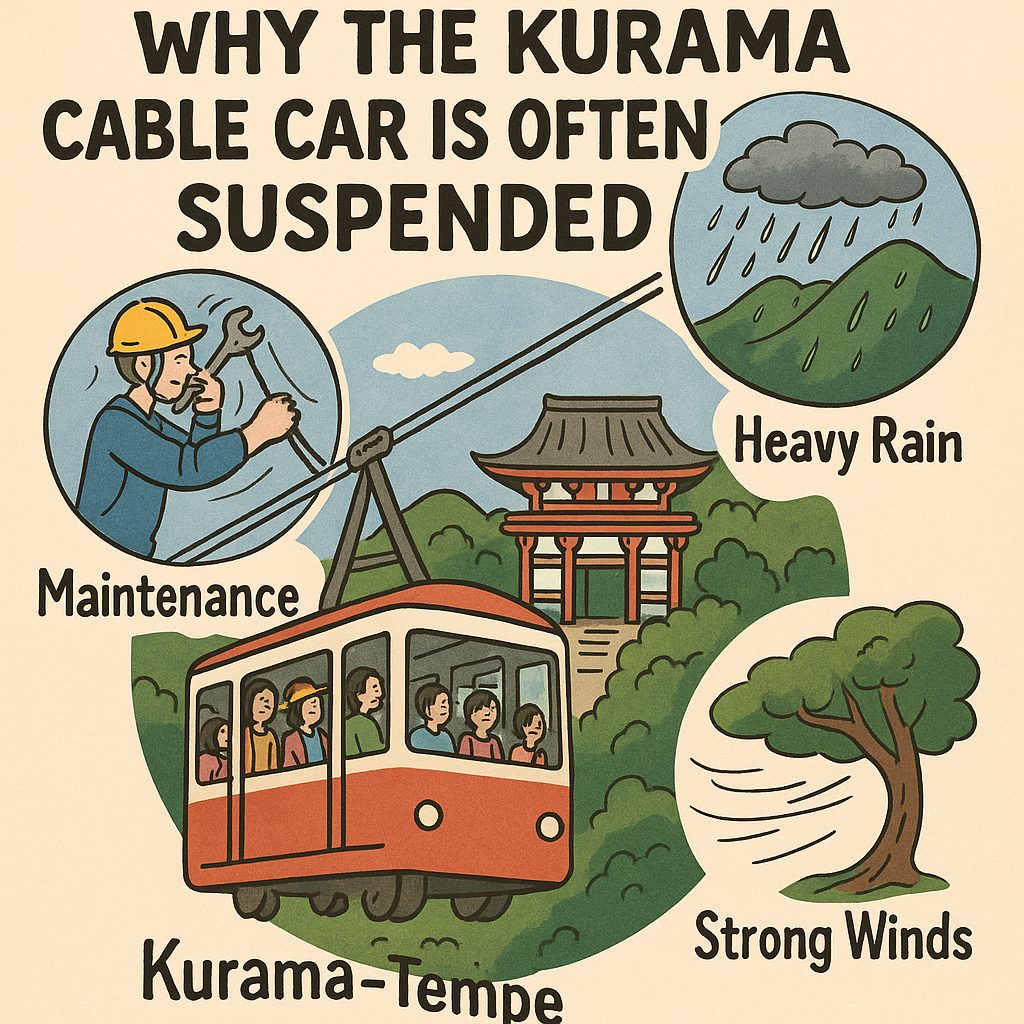
The Kurama cable car is a charming and unique mode of transportation, but it’s not always running. And when it’s not, visitors are often left wondering why. Here’s the answer, explained simply and clearly.
Unique Terrain and Weather Challenges
The Kurama cable car often stops due to the mountain’s steep terrain and unpredictable weather. Kurama is nestled deep in the forested hills north of Kyoto. The tracks climb a steep slope, and even a little rain can make things slippery and dangerous. In winter, snow and ice build up fast.For example, in February 2023, the cable car was closed for almost three weeks due to heavy snowfall. Local staff had to clear ice daily, but it wasn’t safe enough to run. Because nature is powerful here, safety comes first.
Maintenance and Safety Priorities
Regular maintenance and inspections are key to safe operation. The cable car is old—it’s been running for decades. Engineers check its cables, brakes, and motors often. If even one part looks worn, they shut it down for repairs. A visitor in 2022 shared on a travel blog that they saw repair workers tightening cable supports by hand, right on the mountain. These short breaks might seem annoying, but they keep everyone safe.
COVID-19 and Operational Adjustments
The pandemic changed how often the cable car operates. Fewer visitors meant less money and fewer staff. So the cable car started running on limited schedules or shutting down on weekdays. In 2020 and 2021, the cable car was closed for months at a time, even during some holidays.
Where to Check Latest Operation Info
Even now, those reduced schedules continue, especially in low season.You can avoid surprises by checking updates before you go. Kurama Temple posts updates on its official website and social media. Local tourism offices also have updates. The Kyoto City Tourist Information Center often has flyers showing current access options. A quick check online can save you time, energy, and stress.
What to Do When the Cable Car Is Not Running
Sometimes the cable car isn’t running—but that doesn’t mean your trip is ruined. In fact, many travelers say they found even more charm by walking or taking alternate paths. Here’s how to enjoy Kurama even if the cable car is closed.
Take the Scenic Walking Trail
Walking to Kurama-dera is not only possible, but beautiful.
The trail winds through the forest, with mossy stones, tall cedar trees, and fresh mountain air. It’s about a 30–40-minute walk uphill.
A couple from Germany shared that the trail felt like “stepping into a Ghibli movie”—quiet, magical, and unforgettable.
Walking makes the journey even more meaningful.
Try the Alternative Bus Route
You can take a local bus that goes near the entrance of Kurama.
These buses leave from Demachiyanagi Station or nearby hubs. They don’t drop you right at the temple, but they get you close enough to walk the rest of the way.
During summer 2023, extra buses were added to help with increased demand while the cable car was down.
Buses keep your trip smooth, even without the cable car.
Enjoy Nearby Attractions
If Kurama-dera access is tough, visit nearby sites like Kibune.
Kibune Shrine is just a short walk or hike from Kurama. It has a riverside atmosphere, great food, and peaceful views.
Many travelers switch plans and say Kibune became their favorite Kyoto memory.
You have options—sometimes even better than expected.
Join a Guided Walking Tour
A guide can make the walk more fun and informative.
They’ll share local history, point out plants and temples, and make sure you don’t get lost.
Some tours are offered in English and include lunch at a traditional ryokan.
A guide turns your walk into a full experience.
Check Crowd Levels Before You Go
Visiting during less busy times makes the walk easier.
Weekdays, early mornings, and off-seasons are quieter. That means you can enjoy nature without crowds.
A solo traveler said they heard birds, not footsteps—and it made the journey feel magical.
Pick the right time, and you’ll love the walk.
Best Times to Visit and Avoid Disruption
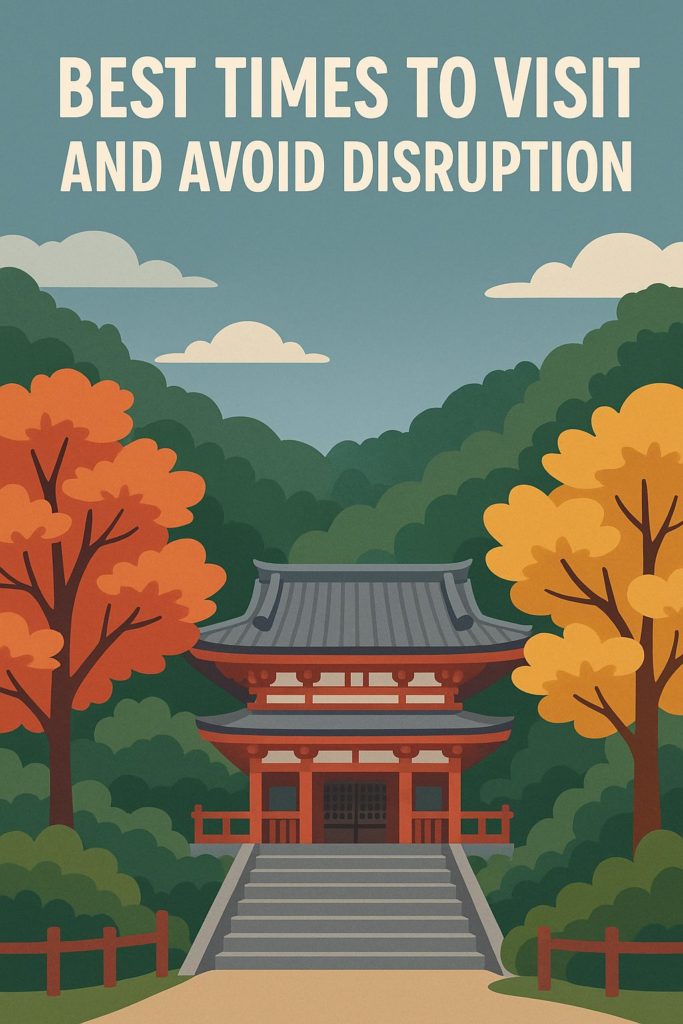
Visiting Kurama-dera and riding the cable car can be a magical experience. But not every day is the best day. Weather, holidays, and even local festivals can change everything. So, when is the perfect time to go? Let’s break it down clearly and simply.
Visiting on the Right Day Makes Your Trip Smoother
Some days are better than others. If you choose the right day, your trip will be peaceful and fun. If you pick a busy or stormy day, things can go wrong. So, knowing when to go helps a lot.
Weather and Crowds Can Affect the Cable Car and Your Comfort
Kurama is in the mountains. That means the weather changes quickly. Rain, snow, or wind can stop the cable car. Also, on busy holidays, many people visit. This makes everything crowded and slow. Picking the right season and time of day is the secret.
Best Times of Year to Visit
Let’s look at the seasons:
Spring (March to May)
This is a great time. The air is cool and fresh. You’ll see cherry blossoms in April. There’s less rain than summer. The cable car usually runs well.
- Pros: Pretty flowers, cool air, easier walking.
- Cons: Golden Week (late April–early May) is super crowded.
Summer (June to August)
It’s warm and green, but it rains often in June and July. The cable car might stop. August is hot, but a good time for festivals.
- Pros: Lively festivals, mountain shade helps with heat.
- Cons: Rain can stop the cable car. Bug spray needed!
Autumn (September to November)
This is the most beautiful time. Leaves change color in October and November. Many visitors come for the red and orange views.
- Pros: Stunning colors, clear air, great for photos.
- Cons: Crowded on weekends. Cable car may pause if weather is bad.
Winter (December to February)
It’s peaceful and quiet. But it’s cold. Snow and ice often stop the cable car.
- Pros: Fewer tourists, calm and spiritual.
- Cons: Cable car often closed, trails can be slippery.
Best Time of Day to Visit
If you want to avoid crowds, morning is best. Try to arrive between 8:30 AM and 10:00 AM.
- Early Morning: Fewer people, cool air, quiet temples.
- Late Morning to Afternoon: More people, warmer temperatures, more walking groups.
- Evening: Temple closes early. Trails are dark and unsafe after sunset.
Days to Avoid
Some days make travel hard:
- Golden Week (April 29–May 5): Crowded, long lines.
- Obon Holiday (Mid-August): Many locals travel, packed trains and buses.
- New Year Period (Late Dec–Early Jan): Kurama Temple may have events. The cable car might stop for cleaning or safety.
Also avoid rainy days. Check the weather forecast one or two days ahead.
Where to Check Conditions
Before you leave, check:
- Kurama Temple Official Website: Posts updates about closures.
- Local Weather Apps: Check for rain, snow, or wind.
- Google Reviews: Recent visitors often post if the cable car was running.
- Twitter/X or Instagram: Search “Kurama cable car” in English or Japanese for real-time updates.
Good Timing = Good Trip
If you visit Kurama at the right time, your journey will be smooth, safe, and full of beauty. A little planning can save you a lot of walking, waiting, or disappointment.
✅ Summary of Tips:
- Choose spring or autumn for the best weather.
- Avoid national holidays and rainy days.
- Go early in the morning.
- Always check cable car status online before you leave.
Alternative Transportation Options and Route Maps
Sometimes the Kurama cable car is not working. Don’t worry! You can still reach Kurama-dera Temple. There are other fun and easy ways to go. Let’s look at the best ways to get there and how to use maps so you don’t get lost.
Take the Eizan Electric Railway (Eiden Line)
The Eizan Electric Railway is the most scenic and reliable way to Kurama.This small train runs from Demachiyanagi Station in Kyoto to Kurama Station. It’s not affected by mountain weather like the cable car. The ride is calm, and you get great views of forests and rivers along the way.In autumn, many people ride this train just to see the red maple trees from the windows. Some even call it the “Momiji Tunnel” because of how the trees arch over the tracks.If you want a beautiful, peaceful ride, the Eizan train is your best choice.
Walk the Kurama to Kibune Hiking Trail
You can hike between Kurama and Kibune through the forest trail. This trail connects the two mountain towns. You walk past old shrines, stone lanterns, and giant cedar trees. It’s about 4 km (2.5 miles) and takes 1.5 to 2 hours, depending on your pace.A family from Canada said it was like a fairy tale walk, and their kids loved looking for tiny forest creatures and statues along the way.If you enjoy walking in nature, this trail is a perfect adventure.
Ride Local Kyoto Buses
Local buses can take you near Kurama or Kibune if you don’t want to hike.Kyoto City buses and Kyoto Bus Co. run from Demachiyanagi or other local stations. The bus takes about 20–30 minutes, and you’ll still need to walk a little, but it saves your legs! In winter, when the cable car is closed, buses are often the only way to reach the area. Many visitors said they were surprised by how smooth and cheap the ride was. Buses are great backups if you can’t or don’t want to walk the whole way.
Use Simple Route Maps
Maps help you stay on track and avoid getting lost. Mountain trails and local roads can be confusing, especially if you don’t read Japanese. But don’t worry—many maps are in English and are free online or at stations. The Kurama station has a big map board right outside the exit. Plus, you can download a Google Map route or print one from the Kyoto tourism website before your trip.With a good map, your trip becomes easier and safer.
Apps and QR Codes to Help You Navigate
Smartphone apps make travel smarter and more fun.Apps like Google Maps, Navitime, and Japan Travel help you find routes, train times, and hiking paths. Some bus stops even have QR codes you can scan for real-time updates. A traveler used Google Translate and Navitime to switch from a train to a bus when the cable car was closed. They said it felt like a mini adventure!Use apps to feel confident and stay on track.
Combine Routes for the Full Experience
Mixing train, bus, and walking gives you the best of everything.You can ride the Eizan train, take a short bus ride, and walk part of the trail. This way, you enjoy nature, save time, and try different transport types.One traveler said they started at Kibune, hiked to Kurama, and then took the Eizan train back to Kyoto. They called it “a perfect loop of adventure.” Mixing travel methods makes your trip more exciting and flexible.
Summary: Your Route, Your Way
You don’t need the cable car to reach Kurama-dera. There are many other ways to enjoy the journey. Trains, buses, and trails all offer beautiful and safe ways to explore. Just plan ahead, use a map, and go at your own pace.
Tips for a Safe and Enjoyable Visit Without the Cable Car
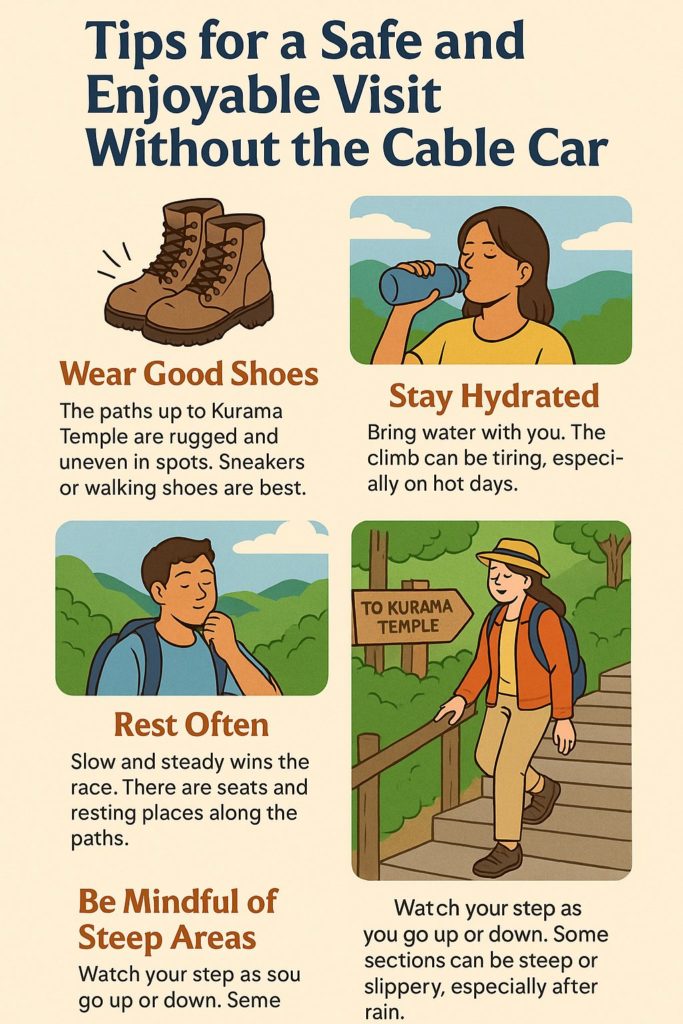
When the cable car to Kurama-dera is not working, many visitors feel nervous or confused. But don’t worry! You can still enjoy a safe and happy visit. Walking can be fun, and the forest is peaceful. With a little preparation, you can have an amazing time—even without the cable car. Let’s look at the best tips to keep your trip fun and safe.
Wear Good Walking Shoes
Comfortable shoes are very important when walking to Kurama-dera.
The path to the temple is steep, rocky, and often slippery. There are tree roots, steps, and even small streams. Sneakers or hiking shoes will help you stay balanced and safe.
A traveler from Canada wore sandals and had to turn back after 10 minutes because her feet hurt. The next day, she came again with sneakers and reached the top easily.
Don’t forget—good shoes mean happy feet!
Bring Water and Snacks
You need energy and water when hiking, even for a short walk.
The walk takes about 30–40 minutes uphill. If it’s hot, you can get tired fast. There are no shops once you start the climb.
A family from Singapore brought small rice balls and sports drinks. They stopped at a bench halfway and enjoyed a mini picnic in the forest.
A bottle of water and a snack will make your hike easier and more fun.
Download Offline Maps
Even if the path is marked, offline maps help you stay on track.
In the forest, phone signals can get weak. If you use a map app like Google Maps or Maps.me and save the area offline, you won’t get lost.
A couple from Germany used an offline map to find a side path to a hidden viewpoint near the temple.
Offline maps = smart travel.
Know Your Limits
Only walk if you feel healthy and strong enough.
It’s a real hike, not just a flat walk. If you’re very tired, sick, or have weak knees, it might be too hard. In that case, wait for the cable car or visit another temple.
An older visitor felt dizzy halfway up and had to be helped down.
Be honest with yourself—it’s okay to rest or skip the climb.
Check the Weather Before You Go
Weather changes everything in the mountains.
Rain makes trails muddy and slippery. Fog can hide signs. Thunderstorms can be dangerous.
A traveler checked the weather forecast and saw rain was coming in the afternoon. So she visited early in the morning and stayed dry.
A 2-minute weather check can save your day.
Start Your Visit Early
Going in the morning is best.
There are fewer people, and the sun isn’t too hot. Also, if the path is hard, you’ll have more time to go slowly and take breaks.
A man from Australia arrived at 8:00 a.m. and finished the hike before most people even started. He had the whole temple to himself!
The earlier you go, the better your visit.
Respect Nature and Keep It Clean
Don’t leave trash or damage plants.
Kurama is a sacred place and a home for many animals. Keeping it clean helps everyone—humans and nature.
Some visitors bring a small bag to carry their trash. They even pick up trash left by others.
Be a kind guest in the forest.
Know That It’s a Wild Area
Wild animals live here—mostly safe, but it’s good to know.
There are signs about bears, monkeys, and snakes. Seeing them is rare, but you should make a little noise when walking. This helps animals stay away.
Some hikers bring small bells or clap their hands every few minutes.
Stay aware and walk smart.
Charge Your Phone Before You Go
A working phone helps you take photos, use maps, and call for help.
If something goes wrong, like a twisted ankle, a phone can save you. But only if it has battery power!
A solo traveler’s phone died halfway, and he got confused about the trail signs. He had to wait for another group to help.
Charge your phone, or bring a portable battery.
Enjoy the Peace of the Forest
Walking lets you enjoy the true spirit of Kurama.
Many people say the walk is the best part—it’s quiet, green, and calm. You can hear birds, smell pine trees, and feel a soft breeze.
A woman from France said the walk was like “a moving meditation.”
Let the journey be just as special as the destination.
Summary: Smart Preparation = Great Visit
You don’t need a cable car to enjoy Kurama. Just remember:
- Wear good shoes
- Bring water and snacks
- Check the weather and maps
- Go early
- Be safe and respectful
With these tips, your journey will be smooth, safe, and unforgettable.
Summary and Final Advice for Visitors
Visiting Kurama-dera without the cable car might sound difficult, but it can still be a fun and special trip. If you know what to expect and plan ahead, you’ll enjoy your time in the peaceful forest. Let’s go over everything you’ve learned and wrap up with simple advice to make your adventure stress-free and safe.
Summary of What You Learned
You don’t need the cable car to enjoy Kurama-dera.
There are other ways to get there, and the walk can be beautiful.
Many travelers said walking made their trip even more memorable. They saw moss-covered rocks, tall trees, and quiet paths. They slowed down, took deep breaths, and felt at peace.
The journey without the cable car can be just as amazing—sometimes even better.
Let’s quickly review the key lessons from this guide:
- Why the Cable Car Stops
- Kurama’s weather is tricky. Rain, snow, or ice can make the cable car unsafe.
- Maintenance is important to keep visitors safe.
- COVID-19 caused schedule changes.
- Always check the official website or tourism center for the latest info.
- How to Reach Kurama Without the Cable Car
- Walk through the forest—it’s magical.
- Use local buses for easier access.
- Visit Kibune or join a walking tour.
- Avoid crowds by visiting early or on weekdays.
- Best Times to Visit
- Spring and autumn are beautiful and safer.
- Avoid rainy days or snowy seasons unless you’re prepared.
- Check weather apps and temple updates before your trip.
- How to Stay Safe and Enjoy Your Trip
- Wear good walking shoes.
- Bring water and snacks.
- Use offline maps.
- Go at your own pace.
- Don’t leave trash behind.
- Respect the forest—it’s sacred.
Final Advice for a Great Experience
Let’s go through some final tips to help you feel confident and ready.
✅ Plan Ahead
Even if the cable car is working on the day you visit, don’t count on it 100%. Be prepared to walk just in case. Bring a small backpack with water, a snack, a phone charger, and maybe a raincoat.
✅ Keep Your Eyes Open
Kurama is full of small surprises. Look out for tiny shrines, forest animals, and hidden signs. Take your time. Let your senses explore—the smell of cedar, the sound of birds, the cool mountain air.
✅ Travel with Respect
Kurama-dera is not just a tourist spot—it’s a sacred place. Many monks and locals come here to pray and reflect. Keep your voice low, follow signs, and act with kindness. This way, everyone can enjoy the space peacefully.
✅ Be Flexible
Sometimes things don’t go as planned—and that’s okay. Maybe the cable car is closed, maybe it starts raining, or maybe you get tired. Don’t stress. Change your route, slow down, or stop for tea. Unexpected changes often lead to the best memories.
🛎️ Helpful Local Resources
Here are a few places where you can check for updates or get help:
- Kurama-dera Official Website: Often posts closures and notices
- Kyoto City Tourist Center: Located at Kyoto Station, with staff who speak English
- Japan Travel Apps: Like Navitime or Japan Official Travel App
- Weather Apps: Tenki.jp or Yahoo Weather Japan (check for Kurama specifically)
A Few Words from a Local
Let’s end with a story. One day, I visited Kurama on a rainy morning. The cable car wasn’t running, and I had never walked the forest trail before. I almost gave up. But I started walking. The rain was light. The air smelled fresh. I heard nothing but water drops and birds. When I reached the temple, I was wet and tired—but I felt full of joy. That day became one of my favorite memories in Kyoto.
Final Message: Let Nature Be Your Guide
If the cable car is closed, don’t worry. Let nature guide your steps. The walk to Kurama-dera isn’t just about reaching the temple—it’s about slowing down, breathing deeply, and seeing the quiet beauty of Japan.
Be safe. Be kind. Be curious. And enjoy the journey.
Step beyond the guidebook. Explore Japan’s best tours and activities with Rakuten Travel Experiences.