Nanzen-ji Temple is one of Kyoto’s most historic Zen temples, and within its peaceful grounds lies the Suirokaku Aqueduct, a stunning red-brick structure built in the Meiji era. The aqueduct’s European-style arches create a unique contrast against traditional Japanese gardens, making it one of Kyoto’s most photogenic spots.
If you’re planning to visit, this guide will show you exactly how to get there—from Kyoto Station to Nanzen-ji, and then to the Suirokaku Aqueduct itself. We’ll also share travel tips, the best visiting times, and photo ideas to make your trip unforgettable.
What Are Nanzen-ji Temple and the Suirokaku Aqueduct?
The Historical Significance of Nanzen-ji Temple
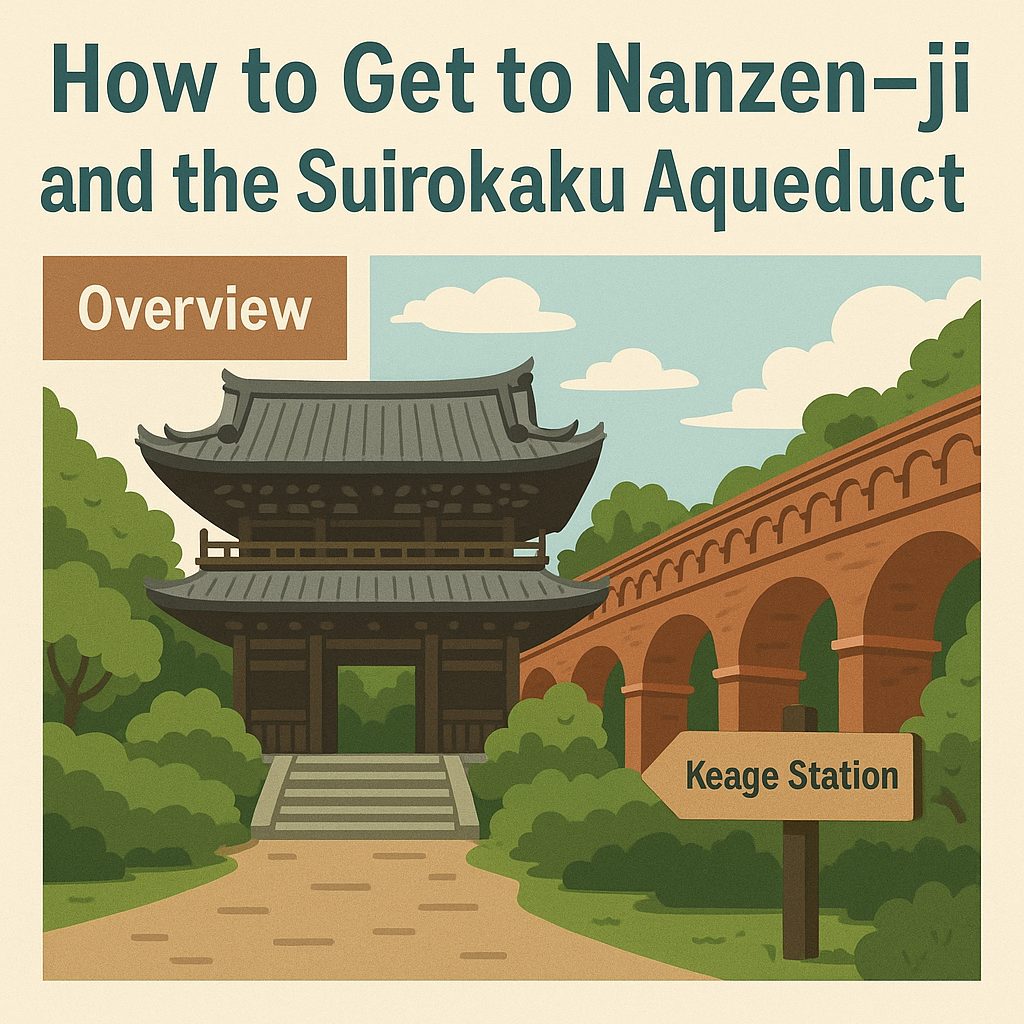
Located at the base of Kyoto’s eastern mountains, Nanzen-ji Temple (南禅寺) is one of Japan’s most important Zen Buddhist temples. It was originally built in the 13th century and later became the head temple of the Rinzai sect of Zen Buddhism. Over the centuries, it has been a center of spiritual practice, culture, and architecture, attracting monks, artists, and travelers alike. The temple grounds are vast, filled with gardens, sub-temples, and gates that represent traditional Japanese aesthetics.
The Beauty and Architecture of Suirokaku
Inside the temple grounds, you’ll find the Suirokaku Aqueduct (水路閣), a striking red-brick structure built in the late 19th century during the Meiji era. The aqueduct was originally constructed to carry water from Lake Biwa to Kyoto, part of Japan’s first modern engineering project. Its arched design is inspired by Roman aqueducts, blending Western and Japanese styles in a way that feels both historic and surreal. Today, it has become one of Kyoto’s most photographed landmarks.
Why It’s One of Kyoto’s Must-Visit Spots
The combination of ancient Zen architecture and modern Meiji engineering makes Nanzen-ji and Suirokaku a truly unique destination. Visitors can experience the quiet beauty of temple gardens, hear the sound of running water beneath the aqueduct, and capture unforgettable photos framed by the arches. It’s a peaceful yet fascinating glimpse into how Japan harmonizes tradition and progress.
How to Get to Nanzen-ji Temple from Kyoto Station
By Subway – The Fastest and Easiest Route
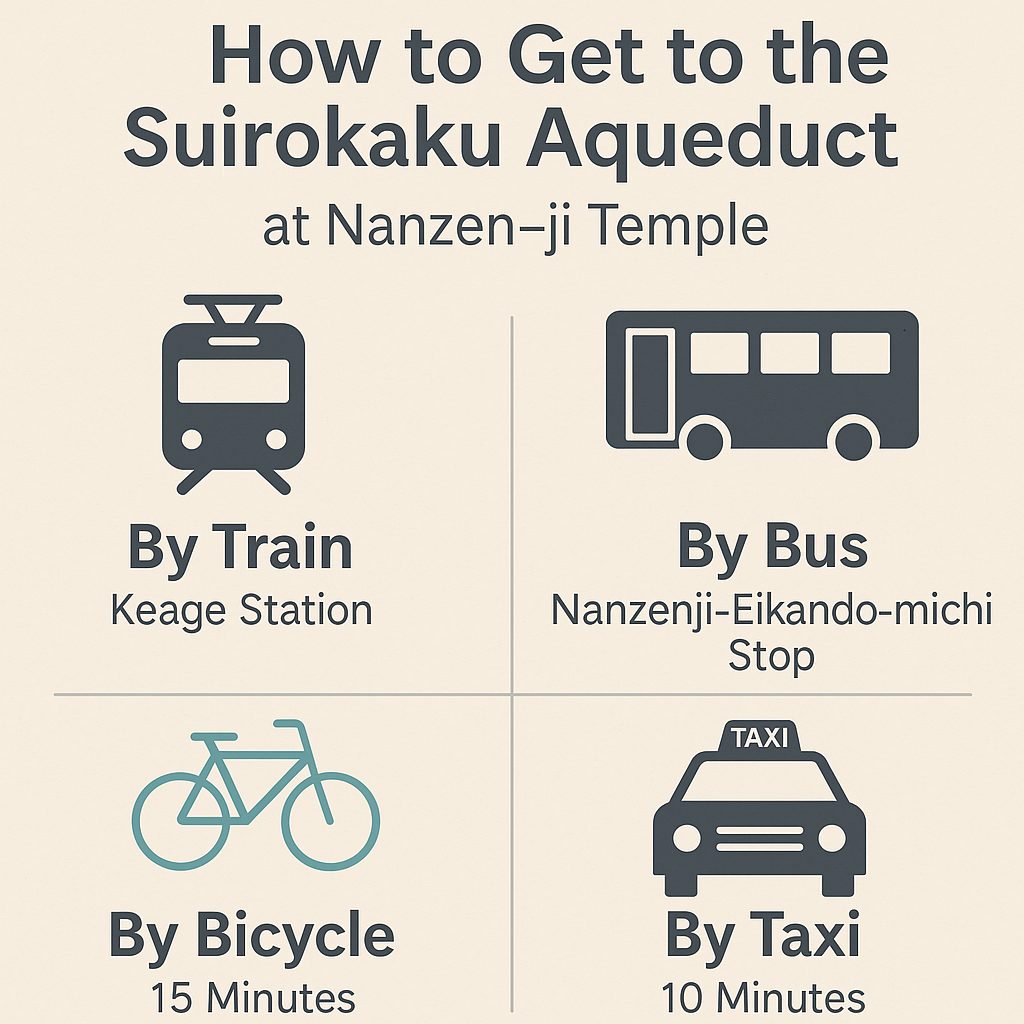
The easiest way to reach Nanzen-ji from Kyoto Station is by subway.
- Take the Karasuma Line from Kyoto Station to Karasuma Oike Station.
- Transfer to the Tozai Line and ride to Keage Station (蹴上駅).
- From Keage Station, it’s about a 7–10 minute walk to Nanzen-ji Temple.
The route is well-marked with signs in both Japanese and English. When you exit Keage Station, follow the signs toward Nanzen-ji or the “Suirokaku Aqueduct.” You’ll walk through a quiet residential area and reach the temple’s Sanmon Gate, one of Kyoto’s most iconic wooden gates.
By Bus – Budget-Friendly but Scenic Option
If you prefer traveling by bus, take the Kyoto City Bus No. 5 from Kyoto Station (platform A1) to the Nanzen-ji / Eikando-michi stop (南禅寺・永観堂道).
The ride takes around 30–35 minutes and costs about ¥230 one way. From the bus stop, it’s a 5-minute walk to the temple entrance.
The bus ride offers beautiful city views along the way, especially during cherry blossom or autumn leaf seasons. However, note that buses can be crowded during peak tourist times.
By Taxi or Car – Convenient for Groups and Families
A taxi ride from Kyoto Station to Nanzen-ji takes about 20 minutes, depending on traffic, and costs around ¥2,000–¥2,500. This option is ideal for families, travelers with luggage, or those visiting multiple temples in one day.
Parking is available near the temple, but spots can fill up quickly, especially on weekends or during autumn foliage season. If you’re driving, consider arriving early in the morning or using nearby paid parking lots.
Finding the Suirokaku Aqueduct Within Nanzen-ji
Step-by-Step Walking Directions from Keage Station
Once you arrive at Keage Station, take Exit 1 and follow the signs toward Nanzen-ji Temple. You’ll walk along a peaceful, tree-lined street with small cafes and traditional houses. After about 7 minutes on foot, you’ll reach the Sanmon Gate, the massive wooden gate that marks the entrance to Nanzen-ji.
From there, walk straight along the main temple path. Pass through the gate, and you’ll see smaller temple buildings and stone pathways leading further inside. Continue walking for another 3–5 minutes, and soon you’ll spot the brick arches of the Suirokaku Aqueduct hidden among the trees.
Signs and Landmarks Inside the Temple Grounds
Finding Suirokaku is easier than it seems—just look for the brown “Suirokaku” direction signs posted along the main paths. The aqueduct is located behind the main temple complex, near the sub-temple Nanzen-in. You may hear the gentle sound of flowing water as you approach. The path leading there is quiet and scenic, with mossy stones and traditional wooden fences creating a perfect photo opportunity along the way.
How Long It Takes and What You’ll See Along the Way
It takes about 10–15 minutes in total to walk from Keage Station to the aqueduct. On the way, you can enjoy sights like:
- The Sanmon Gate, which you can climb for panoramic views of Kyoto (for a small fee).
- The Hojo Garden, famous for its Zen rock layout and calm atmosphere.
- Seasonal views of cherry blossoms in spring and red maple leaves in autumn.
Reaching the Suirokaku feels like stepping into another world—where history, architecture, and nature blend harmoniously.
Best Time to Visit and Photography Tips
Seasonal Highlights – Cherry Blossoms and Autumn Leaves
Nanzen-ji and the Suirokaku Aqueduct are beautiful year-round, but the scenery changes dramatically with each season:
- Spring (March–April): The path from Keage Station to the temple is lined with cherry blossoms. The soft pink petals contrast beautifully with the red bricks of the aqueduct—perfect for romantic photos.
- Summer (June–August): Lush green foliage surrounds the aqueduct, creating a cool and refreshing atmosphere. It’s a quiet season with fewer tourists.
- Autumn (November): The most popular time of year. The entire area glows with shades of red and gold, making it one of Kyoto’s top fall foliage spots.
- Winter (December–February): The aqueduct under light snow feels peaceful and almost mystical. It’s also the least crowded season.
Each season offers a different charm, but early mornings or weekdays are best to avoid crowds, especially during cherry blossom and autumn seasons.
Recommended Visiting Hours to Avoid Crowds
Nanzen-ji Temple is open from 8:40 a.m. to 5:00 p.m. (last entry around 4:30 p.m.).
However, the temple grounds and the Suirokaku Aqueduct area are open to the public at any time, free of charge.
For photographers, visiting around 8:00–9:00 a.m. or just before sunset provides soft natural light that enhances the texture of the red bricks and surrounding greenery.
Top Photo Spots and Composition Ideas
- Under the Arches: Stand beneath the aqueduct’s central arch to capture the repeating curves in perspective—it’s the most iconic shot.
- Side Angle: From the path leading to Nanzen-in Temple, you can frame the aqueduct with trees and sunlight filtering through.
- Close-Up Details: Focus on the moss, bricks, or flowing water to capture the serene, timeless atmosphere.
Tripods are not allowed in some areas, so be respectful of other visitors and use handheld photography where necessary.
Nearby Attractions and Travel Tips
Philosophers’ Path and Eikando Temple
After visiting the Suirokaku Aqueduct, continue walking north to explore the Philosophers’ Path (哲学の道), one of Kyoto’s most scenic walking trails. The path follows a canal lined with cherry trees and small shops, stretching all the way to Ginkaku-ji (the Silver Pavilion).
Along the way, don’t miss Eikando Temple (永観堂), just a 5-minute walk from Nanzen-ji. Eikando is famous for its stunning autumn leaves and elegant pagoda views over the city. Visiting both Nanzen-ji and Eikando makes for a perfect half-day Kyoto itinerary.
Local Cafes and Restaurants Near Nanzen-ji
If you need a break after sightseeing, there are several charming cafes and restaurants near the temple entrance.
- Okutan Nanzen-ji (おくたん南禅寺店): A historic tofu restaurant serving traditional yudofu (boiled tofu set meal).
- Nanzenji Junsei (順正): Another well-known tofu restaurant located in a preserved Kyoto-style building.
- Blue Bottle Coffee Kyoto (Keage): A modern café inside a renovated Meiji-era brick building—perfect for coffee lovers and photographers alike.
These spots let you enjoy Kyoto’s culinary traditions while staying close to the temple grounds.
Practical Tips – Admission, Dress Code, and Etiquette
- Admission: The temple grounds and Suirokaku Aqueduct are free to enter, but some areas like the Hojo Garden and Sanmon Gate require a small fee (around ¥600–¥1,000).
- Dress Comfortably: Wear comfortable walking shoes—the temple paths are stone and uneven in some areas.
- Respect the Atmosphere: Nanzen-ji is an active temple. Keep noise to a minimum, avoid climbing or sitting on the aqueduct structure, and be mindful when taking photos.
- Best Timing for a Visit: Early morning or late afternoon provides the calmest and most atmospheric experience.