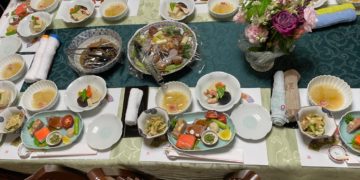
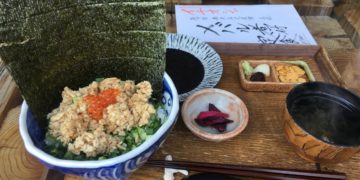
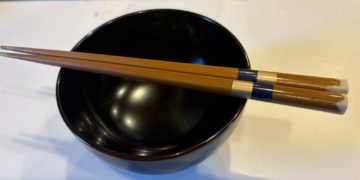
Learning how to use chopsticks can feel tricky at first, but with the right guidance, anyone can master them. From holding chopsticks correctly to picking up rice, noodles, or even slippery foods, practice makes perfect. But mastering chopsticks is not only about technique—it also involves learning proper dining etiquette and understanding the cultural significance behind them. This guide will show you step-by-step how to hold and move chopsticks, share common mistakes to avoid, and explain the do’s and don’ts at the Japanese dining table.
The Basics – How to Hold Chopsticks Correctly
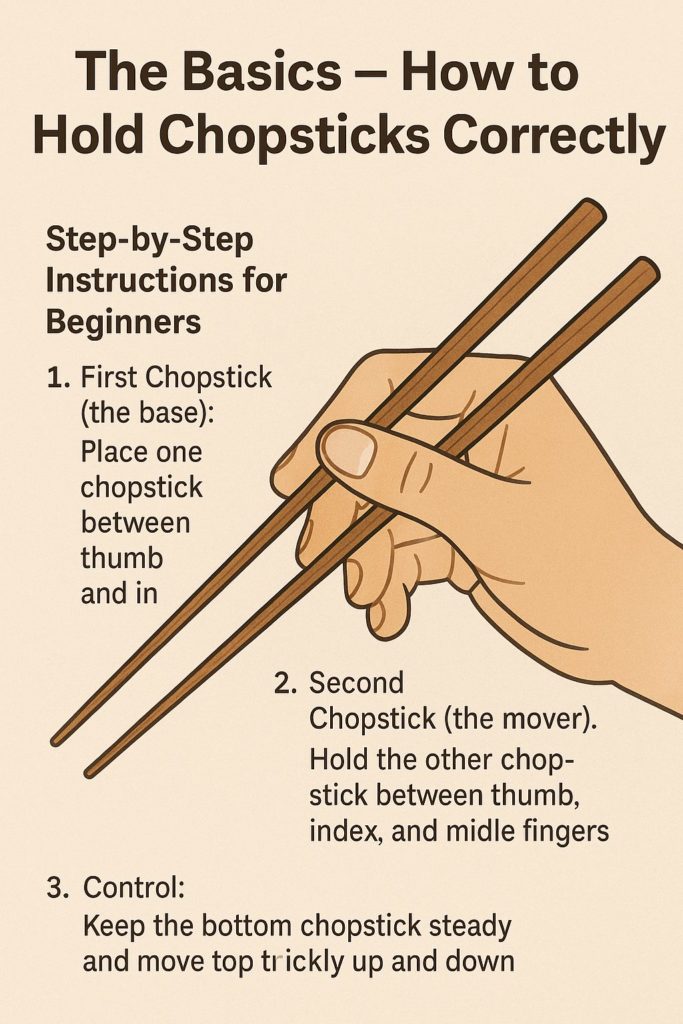
Step-by-Step Instructions for Beginners
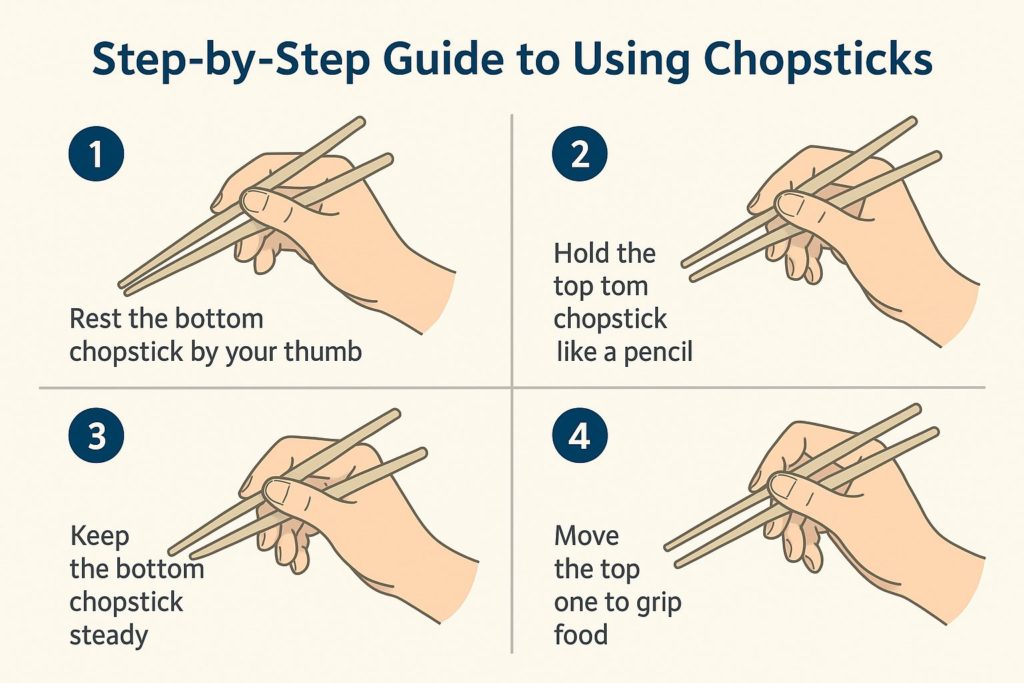
Learning to hold chopsticks starts with positioning your fingers correctly:
- First Chopstick (the base): Place one chopstick in the gap between your thumb and index finger, resting it gently on the side of your ring finger. This stick should stay stable and not move.
- Second Chopstick (the mover): Hold the other chopstick like a pencil between your thumb, index, and middle finger. This is the one that moves when you pick up food.
- Control: Keep the bottom chopstick steady while moving the top one up and down. With practice, both tips should meet smoothly to grip food.
Common Mistakes and How to Fix Them
- Crossed Chopsticks: If the tips cross, your grip may be too tight. Relax your fingers and adjust the angle.
- Both Sticks Moving: Remember, only the top chopstick should move. If both move, focus on stabilizing the lower one.
- Holding Too High or Low: Holding too close to the tips reduces control, while holding too high feels unstable. Aim for about one-third from the top.
Practice Exercises for Better Control
Start simple:
- Practice picking up larger objects like small pieces of bread or fruit.
- Once comfortable, move to smaller items such as beans, peanuts, or even grains of rice.
- For fun, try transferring items from one bowl to another—it’s a great way to improve speed and accuracy.
Mastering these basics will give you confidence before moving on to trickier foods like noodles or delicate sushi.
Mastering the Technique – From Rice to Noodles
How to Pick Up Different Types of Food
Once you are comfortable holding chopsticks, the next step is learning how to handle different foods:
- Rice: Scoop gently by bringing the tips of the chopsticks together and lifting small clusters instead of single grains.
- Vegetables: Grip from the sides, not from the top, to avoid crushing them.
- Sushi or Delicate Items: Apply light pressure with the tips so you don’t break the shape.
Tips for Handling Slippery or Small Items
Some foods are naturally more challenging:
- Noodles (like ramen or soba): Lift a small portion, then slurp quickly while guiding with your chopsticks. Don’t try to grab too much at once.
- Slippery Foods (like tofu): Use a scooping motion by supporting the piece from underneath rather than pinching too tightly.
- Small Items (like beans or peanuts): Practice patience—rest the item on one stick and gently trap it with the other.
Building Dexterity Through Daily Practice
Chopstick skills improve with consistency. Try these simple exercises:
- Eat one full meal a day using only chopsticks, even if it’s not an Asian dish.
- Challenge yourself with practice tasks, like moving marbles, coins, or candies between bowls.
- Over time, your grip will become more precise, and using chopsticks will feel natural.
Chopstick Etiquette in Japanese Dining
Do’s and Don’ts at the Table
Using chopsticks is not only about skill—it’s also about showing respect. Here are some key points:
- Do: Place chopsticks neatly on the chopstick rest (hashioki) when not in use.
- Do: Use both chopsticks together at all times; never use one as a fork.
- Don’t: Point at people or objects with chopsticks—it’s considered impolite.
- Don’t: Lick or suck on the ends of your chopsticks.
Cultural Taboos to Avoid (e.g., Sticking Chopsticks in Rice)
Certain actions with chopsticks are strongly avoided in Japan because they resemble funeral rituals:
- Sticking Chopsticks Upright in Rice: This resembles an offering to the dead and is seen as extremely disrespectful.
- Passing Food Chopstick-to-Chopstick: This mirrors the way bones are handled in cremation ceremonies. Always pass food using serving chopsticks or place it on a plate.
- Hovering Over Dishes (Mayoi-bashi): Avoid indecision by not moving your chopsticks back and forth above the food.
Respectful Ways to Use Chopsticks at Restaurants
When dining out, following proper etiquette enhances your experience and shows cultural appreciation:
- Use the opposite end of your chopsticks when taking food from shared plates.
- Place chopsticks across your bowl neatly if no rest is provided, never directly on the table.
- Handle chopsticks calmly and quietly, without making tapping or clicking sounds.
Tools and Tricks to Help You Learn Faster
Training Chopsticks for Beginners and Kids
If holding chopsticks feels difficult at first, training chopsticks can be a helpful starting point. These often come with rings, guides, or rubber bands to keep the sticks aligned, making it easier to learn the correct grip. Many are designed for children but are equally useful for adults who want extra support.
Creative Practice Ideas at Home
You don’t need special tools to improve your chopstick skills—everyday items work just fine. Try these fun exercises:
- Pick up small snacks like popcorn, nuts, or candies.
- Practice moving beans or marbles from one bowl to another.
- Challenge yourself by timing how many items you can transfer in one minute.
These exercises strengthen finger coordination and make actual dining smoother.
How to Transition from Training Chopsticks to Real Ones
Once you feel more confident, it’s time to move from training tools to regular chopsticks. Start with chopsticks that have non-slip tips or are made from wood or bamboo, as they offer more friction than smooth plastic or metal. Gradually, you’ll be able to handle any kind of chopsticks, whether at home, in a Japanese restaurant, or abroad.
Chopsticks Beyond Eating – History and Cultural Significance
Why Chopsticks Became Essential in Japan and Asia
Chopsticks have been used in Asia for more than 2,000 years. In Japan, their popularity grew during the Heian period, when rice became the staple food and communal dining was common. Chopsticks made it easy to share dishes, pick up small bites, and eat neatly without knives at the table. Over time, they became more than just tools—they became a symbol of harmony in eating.
Differences Between Japanese, Chinese, and Korean Chopsticks
Not all chopsticks are the same.
- Japanese chopsticks are typically shorter and tapered, making them perfect for handling rice and delicate foods like sushi.
- Chinese chopsticks are longer and thicker, designed for reaching into shared dishes and stir-fry pans.
- Korean chopsticks are often made of metal and paired with a spoon, reflecting unique dining traditions.
Learning these differences helps you appreciate the cultural diversity across Asia.
What Mastering Chopsticks Says About Cultural Respect
For visitors to Japan, using chopsticks correctly is more than just a skill—it’s a way of showing respect for the culture. Dining etiquette is highly valued in Japan, and making the effort to use chopsticks properly is seen as polite and appreciative. Mastering chopsticks allows you not only to enjoy Japanese food authentically but also to connect more deeply with the traditions behind the cuisine.