


Hyogo Prefecture, located in the Kansai region of Japan, is home to a rich and colorful way of speaking known as Hyogo Ben. While it shares some features with the well-known Kansai dialect, Hyogo Ben also has unique words, intonations, and expressions that set it apart. From Kobe’s urban style to the stronger tones of Harima and the local flavor of Awaji, this dialect reflects the diversity of the region. In this guide, we’ll explore what Hyogo Ben is, how it compares with standard Japanese and Kansai Ben, and introduce practical phrases you can use to connect with locals.
What Is Hyogo Ben?
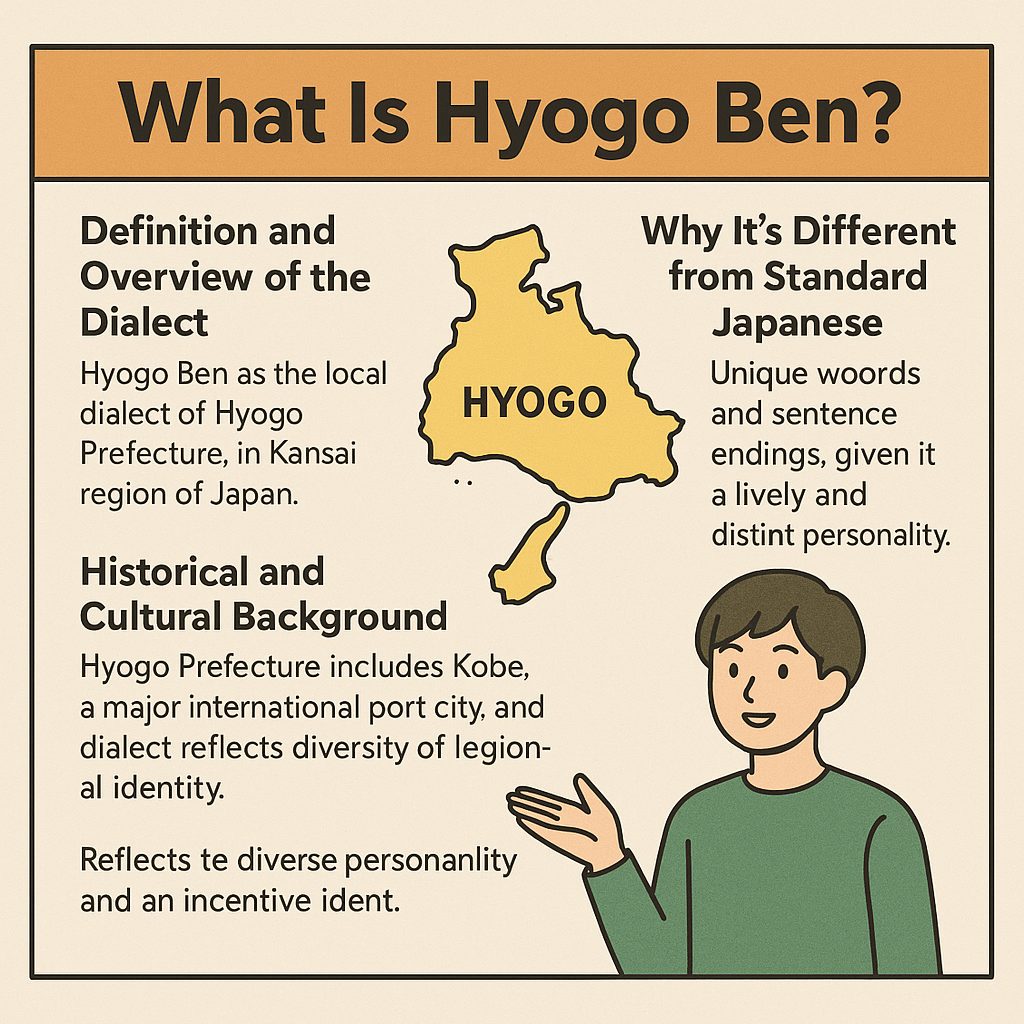
Definition and Overview of the Dialect
Hyogo Ben refers to the local dialect spoken in Hyogo Prefecture, located in the Kansai region of Japan. Like other regional dialects in Japan, it is more than just a variation in vocabulary — it includes differences in pronunciation, intonation, and expressions that reflect the culture and identity of the people living there. While it shares some similarities with the broader Kansai dialect, Hyogo Ben is distinctive enough to stand out.
Historical and Cultural Background
The development of Hyogo Ben is deeply connected to Hyogo’s history as a cultural crossroads. The prefecture includes Kobe, a major international port city, as well as historical regions like Harima, Tajima, and Awaji. Over centuries, interactions between merchants, travelers, and locals shaped the way people spoke. This created a dialect that is diverse, colorful, and rich in regional identity.
Why It’s Different from Standard Japanese
Hyogo Ben often uses words and sentence endings that are not found in standard Japanese. For example, some expressions may sound softer or more casual compared to the Tokyo dialect, while others can feel stronger or more direct. These unique features give Hyogo Ben a distinct personality, making conversations feel lively and expressive. For learners of Japanese, it’s a fascinating window into how language reflects local culture.
Hyogo Ben vs. Standard Japanese
Common Expressions and Their Standard Equivalents
Hyogo Ben has many unique expressions that differ from standard Japanese (hyōjungo). For example:
- “Honma” (ほんま) instead of “Hontō” (ほんとう) for “really.”
- “Ookini” (おおきに) instead of “Arigatō” (ありがとう) for “thank you.”
- “Nanbo?” (なんぼ?) instead of “Ikura desu ka?” (いくらですか?) for “How much?”
These variations make conversations sound warmer and more casual compared to the formal tone of standard Japanese.
Nuances in Tone and Emotion
Compared to Tokyo Japanese, Hyogo Ben often has a more rhythmic intonation and a stronger emotional expression. For example, questions might rise in pitch more dramatically, and casual phrases carry a sense of friendliness. This makes Hyogo Ben feel approachable and expressive, giving conversations a more personal touch.
Everyday Situations Where Differences Appear
You might notice Hyogo Ben in daily conversations at markets, restaurants, or when talking with friends. For instance, a shopkeeper in Kobe might say:
- “Nanbo?” instead of “Ikura desu ka?”
- “Honma ni yasui de!” instead of “Hontō ni yasui desu yo!” (“It’s really cheap!”)
These differences highlight not only vocabulary changes but also how people express politeness and emphasis in everyday life.
Hyogo Ben vs. Kansai Ben – Similarities and Differences
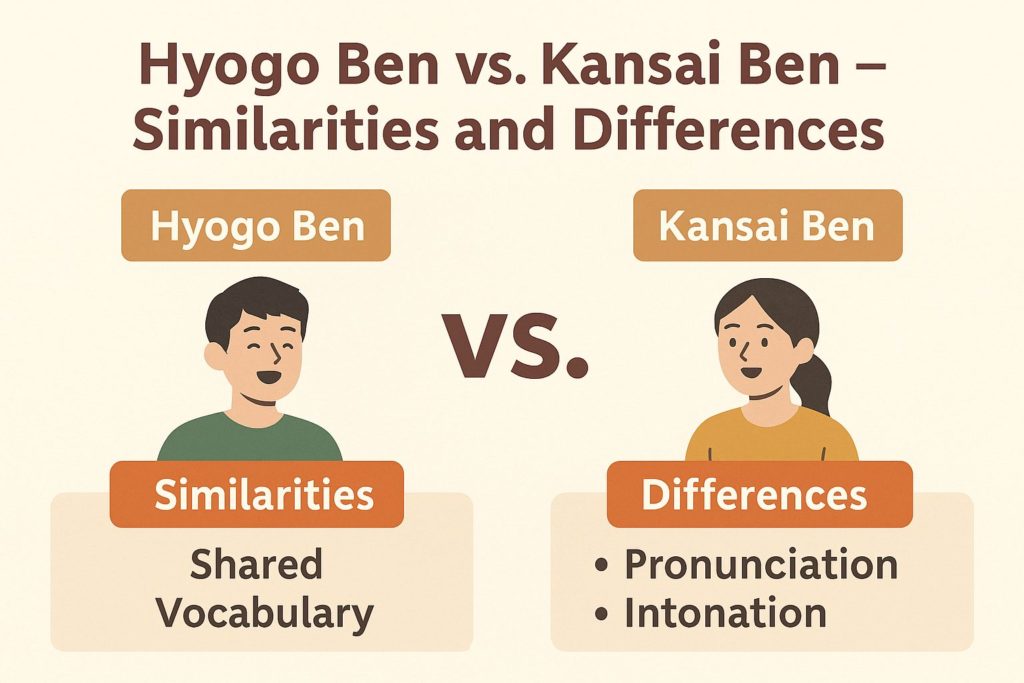
Shared Features with Osaka and Kyoto Dialects
Since Hyogo is part of the Kansai region, Hyogo Ben naturally shares many features with the broader Kansai Ben. Common elements include:
- Using “ya” instead of “da” for the verb “to be.”
- Ending sentences with “-hen” instead of “-nai” for negatives (e.g., ikanai → ikahen, “won’t go”).
- Frequent use of words like “honma” and “ookini,” which are widely recognized across Kansai.
These similarities often make Hyogo Ben familiar to people from Osaka or Kyoto.
Unique Phrases and Pronunciations in Hyogo
Despite these shared traits, Hyogo Ben also has its own unique flavor. For example, in the Harima (Banshu) area, people may use stronger-sounding words and a distinct intonation that feels more direct than Osaka Ben. Meanwhile, in Kobe, the dialect often sounds softer and has been influenced by the city’s international background. These differences set Hyogo Ben apart even within Kansai.
How People from Other Kansai Areas Perceive Hyogo Ben
To Osaka or Kyoto locals, Hyogo Ben can sometimes sound a little unusual or even “tough,” especially the speech from the Harima region. On the other hand, Kobe speech is often seen as stylish and urban. This mix of impressions reflects the diversity of Hyogo itself, making its dialect both recognizable as Kansai Ben and unique in its identity.
Regional Variations Within Hyogo Prefecture
Kobe Dialect and Its Urban Influence
Kobe, as Hyogo’s largest city and an international port, has a dialect that feels softer and more refined compared to other parts of the prefecture. Many people describe the Kobe dialect as closer to standard Japanese, with a touch of Kansai Ben. Because of Kobe’s cosmopolitan atmosphere, the local speech is often seen as stylish and modern, reflecting the city’s openness to outside influences.
Harima (Banshu) Dialect – Strong and Distinctive Expressions
The Harima region, also known as Banshu, is famous for its more forceful style of speaking. Locals often use words and intonations that can sound direct or even “tough” to outsiders. This distinctiveness has made Banshu-ben well known throughout Kansai, sometimes appearing in dramas or comedies when a strong Kansai flavor is needed.
Tajima and Awaji Variations – Local Flavors of Speech
In the northern Tajima region, the dialect has unique rhythms and expressions influenced by its rural culture and distance from urban centers. On Awaji Island, the speech carries elements of both Kansai and Shikoku dialects due to its geographical location. These variations show how Hyogo Ben is not a single style of speaking but a collection of diverse local voices shaped by history, geography, and culture.
Practical Phrases and Fun Expressions in Hyogo Ben
Greetings and Everyday Conversations
Here are some basic phrases you might hear in Hyogo:
- “Ookini” (おおきに) – Thank you.
- “Honma?” (ほんま?) – Really?
- “Meccha umai” (めっちゃうまい) – Super tasty.
These expressions are casual and friendly, often used among friends, family, or in daily shopping.
Slang, Humor, and Playful Phrases
Hyogo Ben, like other Kansai dialects, has a strong sense of humor built into its rhythm and choice of words. Some phrases sound more expressive than standard Japanese:
- “Akan” (あかん) – No good, it won’t work.
- “Nandeyanen!” (なんでやねん!) – “What are you talking about?!” (often used jokingly).
- “Chau chau” (ちゃうちゃう) – That’s wrong / not true.
These phrases are often used for comedic timing in conversations, making the dialect feel lively and fun.
How to Use Hyogo Ben Naturally in Communication
If you want to try using Hyogo Ben, start by adding simple words like “honma” or “akan” into your speech. Locals will usually smile when they hear visitors trying their dialect. However, keep in mind that some expressions may sound strong depending on the region, so it’s best to use them casually with friends or in light-hearted situations


