Miso soup is more than just a side dish in Japan—it’s a daily comfort food that embodies balance, warmth, and tradition. If you’ve searched for “miso soup just one cookbook,” chances are you’re looking for a reliable, easy-to-follow recipe from one of the most trusted Japanese cooking resources online. This guide walks you through everything you need to know: the types of miso, how to prepare dashi stock, step-by-step instructions, and tasty variations. Whether you’re new to Japanese cooking or simply want to bring authentic flavors to your table, this article will help you master the art of miso soup.
Introduction – Why Miso Soup Is Essential in Japanese Cooking
The Role of Miso Soup in Everyday Japanese Meals
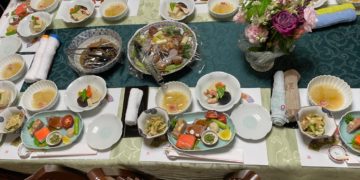
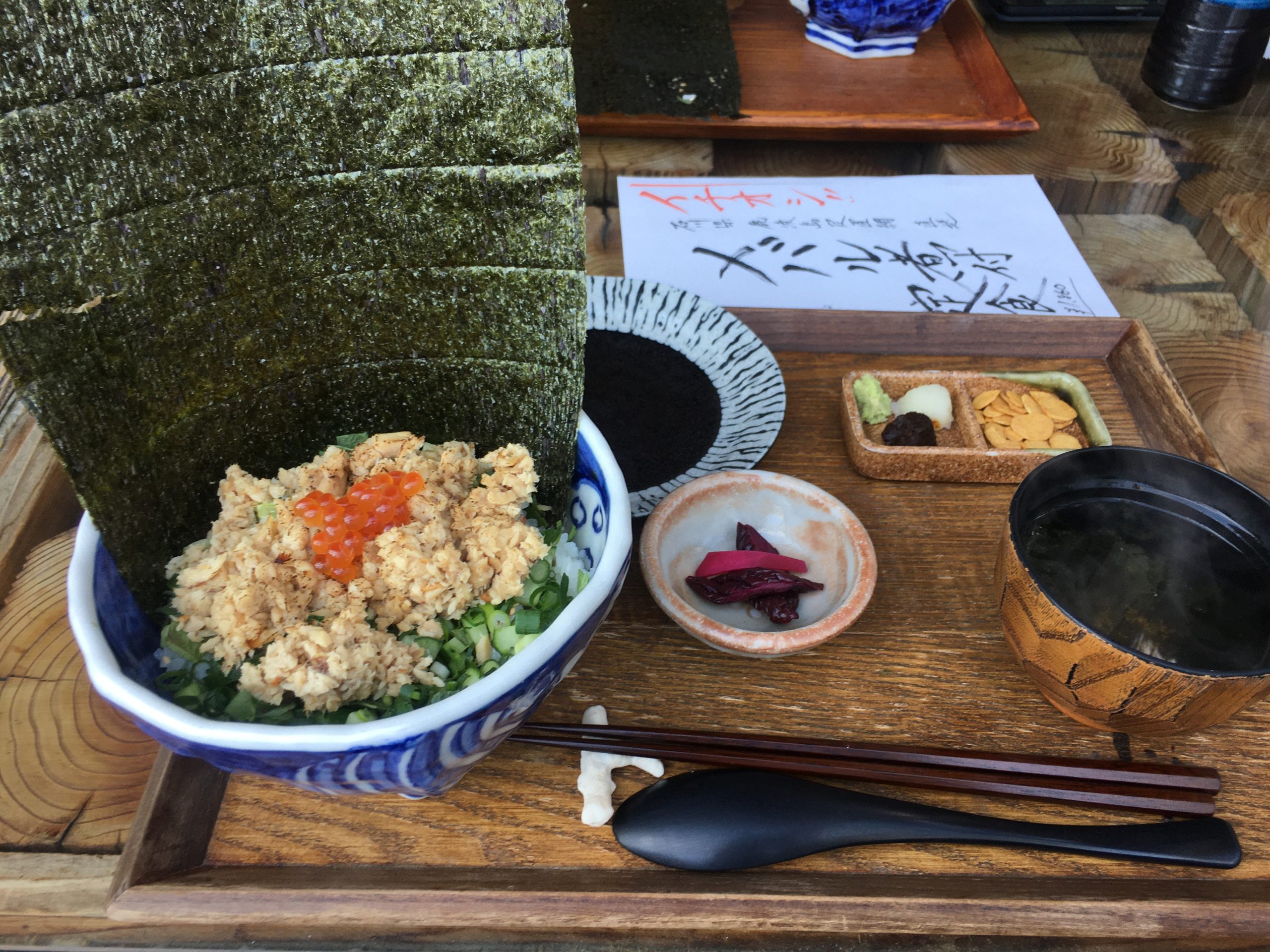
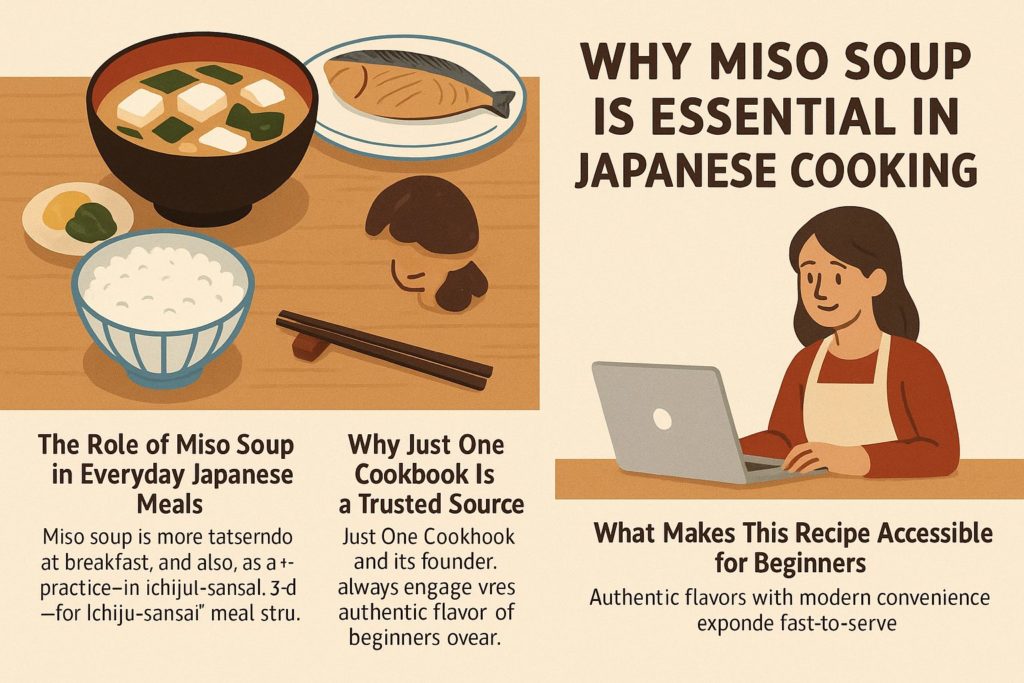
Miso soup (misoshiru) is one of the cornerstones of Japanese home cooking. It is served not only at breakfast but also alongside lunch and dinner, balancing the meal with warmth and umami. In a traditional Japanese set meal (ichiju-sansai, or “one soup, three dishes”), miso soup plays the role of grounding the flavors and providing nourishment. For many Japanese families, no day feels complete without a comforting bowl of miso soup.
Why Just One Cookbook Is a Trusted Source
When searching for reliable Japanese recipes in English, Just One Cookbook often comes up first. Run by Nami, a Japanese home cook based in the U.S., the website has gained a worldwide following for its clear instructions, beautiful visuals, and cultural context. For miso soup, her recipe combines authenticity with practicality, making it approachable for beginners while still respecting tradition.
What Makes This Recipe Accessible for Beginners
Many people hesitate to make miso soup because they worry about sourcing Japanese ingredients or mastering the dashi stock. Just One Cookbook simplifies this process by offering options—such as using dashi packets or store-bought broth—while also explaining traditional methods. This balance of authentic flavor and modern convenience makes it easy for anyone to try making miso soup at home, even outside of Japan.
Ingredients You Need for Authentic Miso Soup
Types of Miso – White, Red, and Mixed
Miso is a fermented soybean paste and the heart of miso soup. There are three main types:
- White miso (shiro miso): Mild, slightly sweet, and perfect for beginners.
- Red miso (aka miso): Stronger, saltier, and deeper in flavor.
- Mixed miso (awase miso): A blend of white and red miso, commonly used in Japanese homes.
For everyday cooking, awase miso is the most versatile, but you can experiment with different types to suit your taste.
Dashi Stock – Kombu, Bonito, and Easy Alternatives
Traditional miso soup starts with dashi stock, which gives the soup its umami depth. Common bases include:
- Kombu dashi: Made from dried kelp, mild and vegetarian-friendly.
- Bonito dashi: Made with dried bonito flakes (katsuobushi), offering a smoky, savory flavor.
- Awase dashi: A combination of kombu and bonito, often considered the most flavorful.
For busy cooks, dashi packets or instant dashi granules are practical alternatives. While the flavor may be lighter, they make miso soup accessible even outside Japan.
Common and Seasonal Ingredients – Tofu, Wakame, Vegetables
After preparing the dashi, you can add ingredients to create variety. Some of the most popular include:
- Tofu: Soft cubes that absorb the broth’s flavor.
- Wakame seaweed: Adds a subtle ocean taste and texture.
- Green onions: Provide freshness and balance.
- Seasonal vegetables: Such as daikon radish, mushrooms, spinach, or potatoes, depending on the season.
The beauty of miso soup lies in its flexibility—you can keep it simple with just tofu and wakame or make it hearty with several vegetables.
Step-by-Step Guide to Making Miso Soup
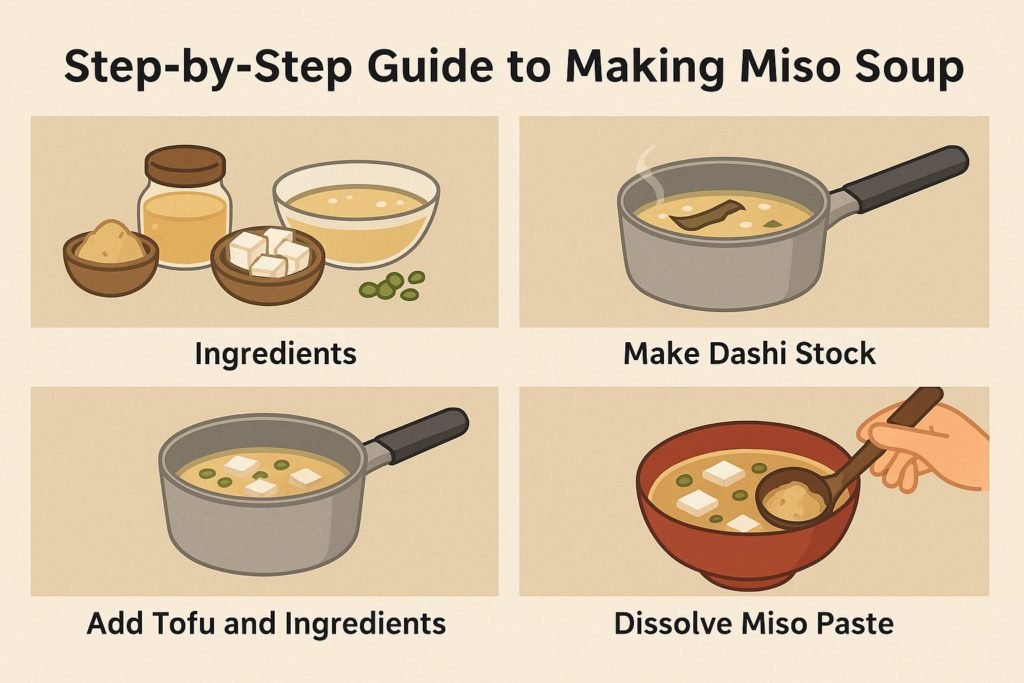
Preparing the Dashi (Traditional and Quick Methods)
The foundation of miso soup is dashi. For the traditional method, soak a piece of kombu in water, then heat it until just before boiling, remove the kombu, and add bonito flakes. Strain the liquid to create a clear, umami-rich broth. For a quick alternative, you can use dashi packets or instant dashi powder—simply dissolve in hot water according to the package directions. Both methods work, so choose based on your schedule.
Adding Ingredients at the Right Timing
Once the dashi is ready, add the solid ingredients. Firm vegetables like daikon, carrots, or potatoes should be simmered until tender. Softer items like tofu, wakame, and mushrooms are added near the end to preserve their texture and flavor. This layering technique ensures that every ingredient is cooked perfectly without becoming mushy.
How to Dissolve Miso Properly for Best Flavor
The final step is adding the miso paste. Turn off the heat or lower it to prevent boiling, as high heat can damage miso’s flavor and nutrients. Place the miso in a small ladle or strainer, dip it into the broth, and dissolve it gradually while stirring. Once the miso is fully incorporated, your soup is ready to serve. Remember: miso soup should never be boiled after adding miso, as this diminishes its taste.
Tips, Variations, and Health Benefits
Quick Shortcuts for Busy Weeknights
Making miso soup doesn’t always have to be time-consuming. If you’re short on time, keep instant dashi granules or dashi packets in your pantry. Pre-cut vegetables like frozen spinach or wakame can also save prep time. With these shortcuts, you can make a bowl of miso soup in under 10 minutes, making it easy to include in your daily meals.
Flavor Variations with Seasonal Ingredients
One of the joys of miso soup is its flexibility. You can adapt it to the season and to what you have on hand:
- Spring: Add bamboo shoots, spinach, or fresh greens.
- Summer: Light ingredients such as okra or chilled tofu pair well.
- Autumn: Mushrooms, sweet potatoes, or pumpkin give a hearty taste.
- Winter: Root vegetables like daikon and carrots add warmth and comfort.
Experimenting with different types of miso (white, red, or mixed) can also change the flavor profile, keeping miso soup exciting throughout the year.
Nutritional Benefits and How to Reduce Salt
Miso soup is not only delicious but also nutritious. Miso is rich in probiotics, vitamins, and minerals, while the dashi provides beneficial compounds from seaweed and bonito. Adding vegetables boosts fiber and vitamins, making the soup a well-rounded side dish. To reduce salt intake, consider using a smaller amount of miso or mixing in low-sodium varieties. Adding extra vegetables can also balance the flavors while keeping the soup healthy.
Beyond the Bowl – Miso Soup in Japanese Food Culture
Miso Soup as Part of a Traditional Breakfast
In Japan, miso soup is a central part of the traditional Japanese breakfast, often served with rice, grilled fish, and pickled vegetables. The warm broth provides balance to the meal and helps start the day with comfort and nourishment. Even today, many families enjoy miso soup at home in the morning, reflecting its deep cultural significance.
Pairing with Rice, Fish, and Side Dishes
Miso soup is also a staple in the ichiju-sansai style of dining, which means “one soup and three dishes.” It is typically paired with steamed rice, a protein dish (such as grilled fish or simmered tofu), and two vegetable sides. This balanced approach to meals highlights why miso soup is considered essential: it complements other dishes without overpowering them, creating harmony on the table.
Exploring More Recipes from Just One Cookbook
If miso soup sparks your interest in Japanese cooking, Just One Cookbook offers a wide range of recipes to explore. From sushi rolls and teriyaki chicken to simple vegetable side dishes, the site provides clear, authentic instructions designed for home cooks around the world. Learning miso soup can be the first step toward building your own repertoire of Japanese meals, helping you appreciate not only the flavors but also the traditions behind them.