You’re finally visiting Ise Jingu, Japan’s most sacred shrine. You’ve heard about the stunning architecture, the calming forests, and the powerful energy of this spiritual site. But you’re stuck. Where do you start? How do you collect a goshuin (御朱印)? Do you begin at the Inner Shrine or the Outer? And what if you do it wrong?
Ise Jingu is not like other shrines. It’s not just about praying or sightseeing. It’s a journey, with meaning in every step and order. Getting it wrong doesn’t just make the visit confusing—it might feel disrespectful. Many visitors unknowingly skip important steps, miss out on precious goshuin, or even offend the local custom.
On my first trip, I excitedly ran straight to the Inner Shrine. Only later did I learn I was supposed to start with the Outer Shrine—Geku. I felt embarrassed. But with a bit of local advice, I retraced my steps and did it right. That second visit? It felt magical, complete, and deeply moving.
Since then, I’ve helped many friends and travelers navigate Ise Jingu correctly. Once they understood the route and goshuin etiquette, their experience became unforgettable.
With years of travel experience and insights from shrine staff, this guide combines local wisdom with practical tips. You’ll know what to do, when to bow, and how to collect each goshuin properly.
Read on for a simple, respectful, and fulfilling way to enjoy Ise Jingu. This isn’t just another temple visit—it’s a memory in the making.
From Geku to Naiku: Recommended Route and Must-See Stops
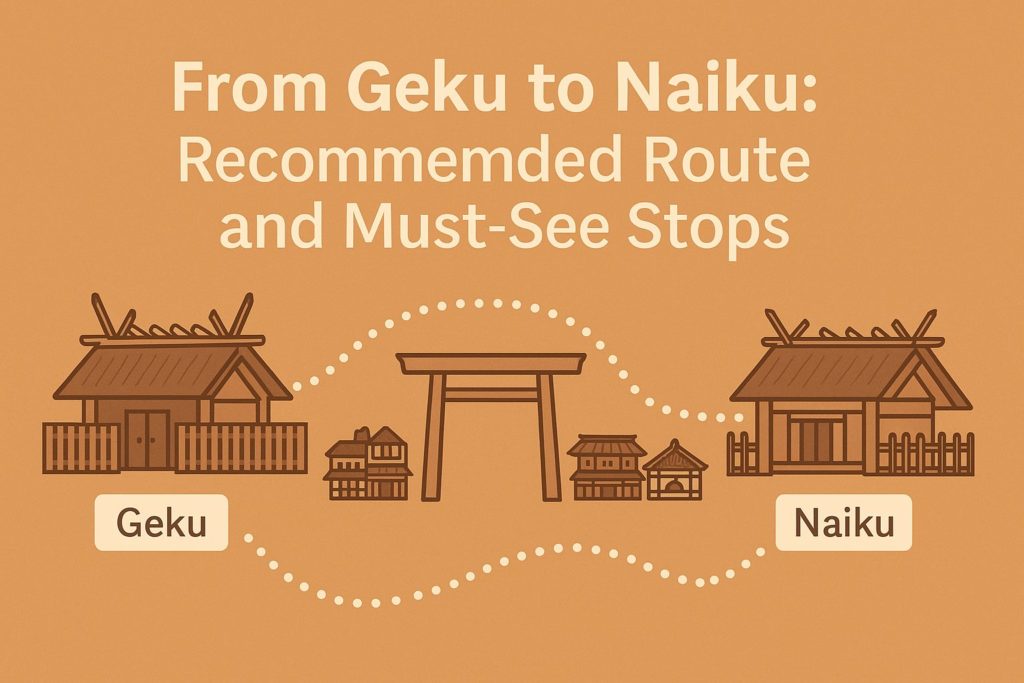
Starting your Ise Jingu journey at the Outer Shrine (Geku) before visiting the Inner Shrine (Naiku) is more than tradition—it reflects respect and the natural spiritual order of the site.
This sequence is deeply rooted in centuries-old Shinto practice. Geku is dedicated to Toyouke no Omikami, the goddess of food and industry who provides sustenance even to Amaterasu, the sun goddess enshrined at Naiku. Visiting Geku first symbolizes gratitude before seeking blessings. It also prepares your heart for the deeper experience that follows at Naiku.
Let’s look at the recommended route in detail:
🏁 Step 1: Start at Geku (Outer Shrine)
- Location: Near Iseshi Station
- Highlights: Goshoden (Main Hall), Kaguraden (Hall for Sacred Music), Goshuin desk
- Atmosphere: Serene, less crowded, peaceful beginning to your journey
- Tip: Visit early in the morning. The sunlight filtering through the tall cedar trees sets a calm tone.
🥾 Optional Stop: Sengukan Museum
- Why stop?: It explains the shrine’s unique rebuilding ceremony, Shikinen Sengu
- Benefit: You’ll better understand the shrine’s history and architecture
🛤 Travel from Geku to Naiku
- Distance: About 6 km (can be walked in 1.5–2 hours or reached via bus or taxi)
- Recommended transport: Bus from Geku-mae to Naiku-mae (15 minutes)
- En route attractions:
- Oharai-machi: Edo-style shopping street with souvenirs and snacks
- Okage Yokocho: A charming alley with local eats, sake tasting, and traditional crafts
🌅 Step 2: Arrive at Naiku (Inner Shrine)
- Location: Near Uji Bridge
- Highlights: Ujibashi, Sacred Forest, Goshoden, Kaguraden
- Spiritual Focus: Home of Amaterasu Omikami, the sun goddess
- Tip: Take your time. Walk slowly across the bridge, bow at the torii gate, and cleanse your hands at the chozuya (purification fountain).
📝 Goshuin Collection Points
- Geku: Stamp available at the shrine office after prayer
- Naiku: Also available at the office near the main hall
- Tip: Always ask politely and offer a small donation (typically 300–500 yen)
By beginning at Geku and moving mindfully toward Naiku, you align your journey with the natural and spiritual rhythm of Ise. It deepens your experience and brings a quiet sense of fulfillment. Walking this path isn’t just about moving your feet—it’s about moving your heart.
Many visitors say they feel a shift between Geku and Naiku. It’s not just the grandeur—it’s the feeling that you’re stepping closer to something deeply sacred. That’s the power of doing it right.
How to Collect Goshuin: Manners and Step-by-Step Guide
Collecting a goshuin (御朱印) is not just a souvenir—it’s a spiritual act that reflects respect, mindfulness, and cultural appreciation.
Goshuin are handwritten seals from the shrine, given only after a prayer. They are not commercial products. They symbolize your visit and your connection with the divine. Misunderstanding the process can come across as disrespectful or careless.
Let’s walk through how to receive a goshuin respectfully:
🪷 Step 1: Prepare Your Goshuin-cho
- What is it?: A goshuin-cho is a dedicated stamp book used for collecting seals from temples and shrines.
- Where to get it?: Buy one at a shrine or a stationery shop. Ise Jingu sells its own official versions.
- Tip: Use a blank page for each new stamp. Don’t tear out old ones or reuse pages.
🙏 Step 2: Offer a Prayer First
- Why?: The goshuin is a record of your prayer, not a product. Visiting just for the stamp is frowned upon.
- How?: Bow twice, clap twice, bow once. Make your wish or express thanks in silence.
✍️ Step 3: Approach the Goshuin Desk
- Where?: Often near the main hall or at a side office
- What to do:
- Greet the attendant softly (e.g., “Onegai shimasu”)
- Open your book to a blank page
- Hand it over with both hands
- Wait quietly while they write
- Donation: Typically 300–500 yen. Place it gently in the offering box or tray
⏳ Step 4: Receive with Respect
- No photos: Don’t take pictures of the person writing
- Be patient: It may take a few minutes—this is handwritten calligraphy
- Say thank you: A simple “arigatou gozaimasu” is enough
🛑 What NOT to Do
- ❌ Don’t rush or demand a stamp
- ❌ Don’t treat the goshuin as a collection game
- ❌ Don’t bring food, drinks, or noise to the area
The goshuin is a sacred memento. It holds your intention, your prayer, and a moment of quiet connection. Respect the space, the person, and the process.
On my last visit, I watched a young couple follow every step with grace. When the monk handed over their book, he smiled and said, “Your heart was very still.” That moment stayed with me. A goshuin isn’t just ink. It’s a reflection of your spirit.
Treat it with care, and you’ll carry a piece of Ise Jingu’s sacredness long after you leave.
Frequently Asked Questions: Avoiding Confusion About Goshuin and Routes

Many travelers have simple, honest questions about visiting Ise Jingu and collecting goshuin. Answering them clearly can ease anxiety and make the visit smoother and more meaningful.
Confusion about routes, rules, and expectations is natural—especially for first-time visitors or international travelers. Instead of guessing, knowing the answers helps avoid embarrassment and builds confidence.
❓Q1: Can I start at Naiku instead of Geku?
A: Technically yes—but traditionally, you should start at Geku. It shows respect and follows the ancient spiritual order. Many locals believe starting at Geku helps “prepare your heart” for Naiku.
❓Q2: Do I need to be religious to get a goshuin?
A: No. Anyone is welcome to receive a goshuin if done respectfully. It’s not about your beliefs—it’s about your behavior. Offer a short prayer and follow the manners.
❓Q3: What happens if I make a mistake?
A: Don’t worry. Most shrine staff are kind and understanding. As long as you’re respectful, a small misstep is okay. Apologize politely if unsure.
❓Q4: Are there English signs or staff?
A: Some signs are bilingual, but not all. Staff may speak limited English. Having key phrases ready (like “Goshuin onegai shimasu”) helps a lot. You can also carry a translation app.
❓Q5: Can I get a goshuin if I don’t have a stamp book?
A: Yes! Many shrines offer simple goshuin-cho for sale. Or, they may stamp on a sheet of washi paper. But a goshuin-cho makes a more respectful and lasting keepsake.
❓Q6: What if I only have 1–2 hours?
A: Focus on one shrine—either Geku or Naiku—and visit mindfully. If you’re short on time, Naiku is more iconic, but Geku is less crowded and just as sacred.
❓Q7: Can I bring kids?
A: Absolutely. Many families visit Ise Jingu together. Just remind children to walk calmly and speak quietly. They’ll enjoy the nature, bridges, and even goshuin as a memory.
❓Q8: Can I take photos?
A: Yes, but not everywhere. Avoid photography in front of the main hall and at the goshuin desk. Look for signs—or when in doubt, ask.
❓Q9: Is there a dress code?
A: No strict dress code, but respectful, modest clothing is best. No swimsuits, bare shoulders, or loud slogans.
❓Q10: Do I have to bow or clap exactly right?
A: Try your best, but don’t stress. Bow twice, clap twice, bow once. What matters most is sincerity. Even locals sometimes vary slightly.
Questions are welcome. They mean you care. At Ise Jingu, the heart behind your actions matters more than perfection. Learn what you can, ask with respect, and enjoy the journey without fear.
Every great spiritual journey starts with curiosity. Let these answers guide your steps with confidence and calm.
Conclusion: How to Deepen Your Ise Jingu Goshuin Journey
Visiting Ise Jingu is more than just a trip—it’s a spiritual journey steeped in centuries of tradition. The route you walk and the goshuin you collect help tell your own sacred story.
When you understand the meaning behind each step, your visit becomes more than sightseeing. It becomes a quiet dialogue with the gods, with nature, and with yourself. The correct order, respectful actions, and collected goshuin serve as personal reminders of reverence, peace, and intention.
Here’s a quick recap to guide your journey:
✅ Before You Go
- ☐ Bring a goshuin-cho (stamp book) or buy one at the shrine
- ☐ Wear comfortable shoes for walking between Geku and Naiku
- ☐ Prepare cash (some areas don’t accept cards)
🛤 The Proper Route
- ☐ Start at Geku (Outer Shrine), then go to Naiku (Inner Shrine)
- ☐ Take time at each stop to breathe, bow, and reflect
- ☐ Enjoy local food or omiyage along the way—part of the journey
📖 Goshuin Etiquette
- ☐ Offer prayer first before requesting a stamp
- ☐ Be polite and quiet at the goshuin desk
- ☐ Store your stamp book safely as a cherished souvenir
You don’t need to be perfect. You just need to be sincere. That sincerity is what makes your visit meaningful—and memorable.
I remember meeting a solo traveler from France. She was nervous, unsure if she was “doing it right.” But as she bowed slowly before receiving her goshuin, the priest gave her a warm smile. “心を込めれば、それで良い” (“If your heart is in it, that is enough”), he said. Tears welled up in her eyes.
That’s what Ise Jingu offers: a space for your heart.
So walk the path, offer your prayer, and collect your goshuin—not just as ink on paper, but as footprints in a sacred place. One that remembers you, just as you’ll remember it.
Safe travels. May your journey to Ise be full of peace, purpose, and quiet joy.
Step beyond the guidebook. Explore Japan’s best tours and activities with Rakuten Travel Experiences.