
“Ninja techniques look so cool, but what kinds of techniques actually exist?”
If you don’t clearly understand ninja techniques, several problems can happen. When you visit a museum or try a ninja experience, you may not fully understand the explanations. You may not be able to tell whether the techniques in your favorite games or anime are real or fictional. And if a foreign friend asks, “What kind of techniques can ninja use?” it can be hard to answer. It’s a waste to lose enjoyment just because of a lack of knowledge.
But don’t worry. By reading this article, all of your questions will be answered. From the basic categories of ninja techniques, to real techniques that were actually used, the differences between history and fiction like Naruto, and even how to experience ninjutsu today—everything is explained in simple English that even a 5th-grade student can understand.
This article is based on primary historical sources such as Bansenshukai, a famous ninja manual, as well as information from ninja museums in Iga and Koka. It provides accurate and reliable information and has helped answer questions for many people, including history fans, anime fans, cosplayers, and travelers.
In this article, you will learn:
- The basic categories of ninja techniques (ninjutsu, taijutsu, genjutsu)
- A full list of techniques, including the Five Elements techniques
- The differences between real ninjutsu and fictional ninjutsu
- How to experience and learn ninjutsu today
- Easy-to-understand answers to common questions
Now, let’s begin a journey into the world of ninja. By the time you finish reading, you’ll become a true “ninjutsu expert”!
What Are Ninja Techniques? Understand the Basic System

What Are Ninjutsu, Taijutsu, and Genjutsu? The Three Core Categories
Ninja techniques can be divided into three main categories: ninjutsu, taijutsu, and genjutsu. Understanding these three is the first step to learning ninja skills in a structured way.
Why do we divide them this way? Because each type has a completely different purpose and method. Ninja used tools, their bodies, and psychology. By combining these three, they could handle any situation.
1. Ninjutsu
Ninjutsu refers to techniques that use tools, nature, and chemical knowledge. It is similar to combining science and strategy. Examples include using smoke bombs to blind enemies, using poison to weaken them, and using fire for distraction. These techniques were written in secret manuals called jutsusho and passed down from master to student. The most famous manual is Bansenshukai (1676), which records hundreds of techniques.
2. Taijutsu
Taijutsu focuses on fighting without tools, using only the body. It is similar to judo, karate, or aikido, but more practical. Ninja focused on survival, not victory. They avoided direct fights and used techniques like escapes, joint locks, chokeholds, and strikes to weak points. They also trained in running silently (soho) and climbing quickly (choyakuho).
3. Genjutsu
Genjutsu focuses on controlling the enemy’s mind. It is similar to psychological warfare. Techniques include surprising enemies, spreading false information, and disguising oneself. Ninja used methods like distraction (saiminjutsu) and voice imitation (kowairo tsukai) to deceive others.
In summary, ninja combined these three types—tools, body, and psychology—to become highly effective spies.
How Many Ninja Techniques Exist? A Systematic Overview
Historical records such as Bansenshukai list hundreds of ninja techniques. However, we can organize them into about 18 main categories called the “18 Skills of the Ninja.”
This classification mattered because it worked like a standard curriculum. A full ninja had to master all of these skills.
The 18 Skills of the Ninja include:
- Ninjutsu (stealth techniques)
- Taijutsu (unarmed combat)
- Kenjutsu (sword fighting)
- Sojutsu (spear fighting)
- Naginatajutsu (polearm fighting)
- Suijutsu (water skills)
- Kajutsu (fire techniques)
- Bakujutsu (explosives)
- Hojutsu (firearms)
- Bajutsu (horse riding)
- Tenmonjutsu (weather and stars)
- Chirijutsu (geography and maps)
- Teisatsujutsu (reconnaissance)
- Hengejutsu (disguise)
- Ijutsu (medicine and poison)
- Jujutsu (mental techniques)
- Tonjutsu (escape techniques)
- Kojutsu (tool-making)
This shows that ninja were not just fighters. They were like special forces, scientists, doctors, and spies combined.
In summary, ninja techniques formed a complete professional system that included science, psychology, medicine, and engineering.
What Are the Five Escape Techniques?
The Five Escape Techniques use natural elements—fire, water, earth, wood, and metal—to escape or hide.
These techniques mattered because ninja focused on survival. Completing the mission and returning alive was more important than fighting.
Examples:
- Fire (Katon): Use fire and smoke to distract enemies.
- Water (Suiton): Hide underwater or escape through rivers.
- Earth (Doton): Use terrain or dig holes to hide.
- Wood (Mokuton): Hide in forests or climb trees.
- Metal (Kinton): Reflect light to blind enemies.
In summary, ninja used nature as a tool for survival in any environment.
How Ninja Techniques Connect to Modern Skills
Ninja techniques still exist today in different forms. Modern martial arts, survival skills, and even military training use similar ideas.
For example:
- Disguise → modern espionage
- Fire/explosives → military technology
- Weather and maps → navigation
- Medicine → toxicology and emergency care
- Movement skills → parkour and climbing
In summary, ninjutsu continues as practical knowledge even today.
Complete List of Ninja Techniques
Fire Techniques (Katon)
Fire techniques use flames, smoke, and explosions for attack or distraction. Ninja used them often, especially at night.
Examples include:
- Smoke bombs
- Fireballs (karyukyu)
- Signal fires (noroshi)
- Fire arrows
- Early grenades
These techniques worked like modern flashbangs or smoke grenades.
Water Techniques (Suiton)
Water techniques focus on escape and hiding.
Examples include:
- Floating and moving with rivers
- Breathing underwater using tubes
- Using tools like mizugumo
- Moving during rain to hide sound
Water helped ninja avoid tracking dogs and escape quickly.
Earth Techniques (Doton)
Earth techniques use terrain and camouflage.
Examples:
- Digging holes to hide
- Covering the body with mud
- Setting traps
- Throwing stones to distract
- Climbing cliffs
These techniques are similar to modern camouflage and survival training.
Wood and Grass Techniques
These techniques use forests and plants.
Examples:
- Climbing trees quickly
- Hiding in bamboo forests
- Blending into grass
- Using herbs and poison plants
- Moving with natural sounds
Ninja treated nature as an ally, not an obstacle.
Disguise Techniques (Henge no Jutsu)
Disguise was one of the most important ninja skills. Ninja used seven main disguises, such as monks, merchants, farmers, and performers.
This allowed them to enter any place and gather information.
Clone and Stealth Techniques
Ninja created the illusion of clones using movement, sound, and teamwork.
Examples:
- Throwing leaves to hide movement
- Moving fast to create afterimages
- Using sound to mislead enemies
- Staying still in darkness
- Team coordination to confuse enemies
These techniques relied on psychology, not magic.
Real vs Fictional Ninja Techniques
Real Ninja Techniques from Historical Records
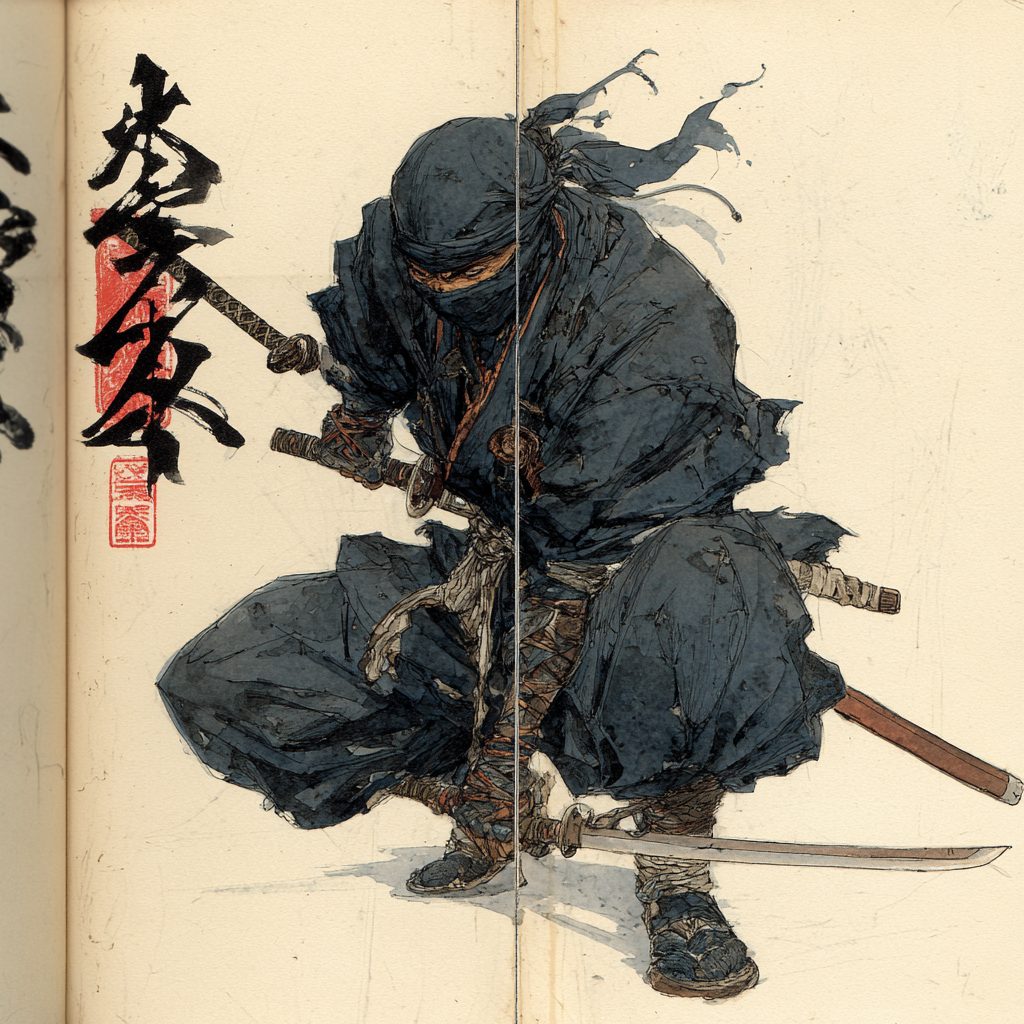
The book Bansenshukai explains real ninja skills. These include:
- Hiding in darkness
- Using sleeping drugs
- Training night vision
- Reading weather
Real ninja focused on intelligence and survival, not flashy action.
Differences from Naruto
In fiction like Naruto:
- Fire techniques become supernatural
- Clones become real copies
- Genjutsu controls the brain
In reality:
- Fire uses tools
- Clones use tricks
- Genjutsu uses psychology
Both share the same ideas but differ in execution.
How to Experience Ninja Techniques Today
Real Ninja Experiences in Iga and Koka
Iga (Mie) and Koka (Shiga) are famous ninja areas. You can:
- Visit ninja houses
- Throw shuriken
- Wear ninja outfits
These places offer real historical experiences.
Ninja Experiences in Tokyo and Kyoto
Cities like Tokyo and Kyoto also offer ninja activities:
- Shuriken throwing
- Ninja walking
- Sword practice
Many places support English, so tourists can easily join.
Learning Ninjutsu Today
Modern dojos still teach ninjutsu as martial arts. Students learn:
- Body control
- Survival skills
- Mental focus
This training focuses on real-world skills, not fantasy powers.
FAQ About Ninja Techniques
How Do You Say Ninja Techniques in English?
Useful terms include:
- Ninjutsu (stealth art)
- Taijutsu (combat skills)
- Genjutsu (illusion/psychology)
Example sentences:
- “Ninjutsu combines science and survival skills.”
- “Ninja used natural elements to escape.”
Can You Learn Ninja Techniques Today?
Yes, you can learn real ninjutsu skills such as:
- Movement and combat
- Survival and camouflage
- Focus and observation
But you cannot learn supernatural powers.
What Is the Strongest Ninja Technique?
The strongest technique depends on the situation. However, top skills include:
- Disguise
- Escape techniques
- Fire techniques
- Poison and medicine
- Information skills
Survival and mission success matter more than fighting.
Conclusion: The World of Ninja Techniques
In this article, we explored ninja techniques from five perspectives:
- Basic system
- Full list of techniques
- History vs fiction
- Modern experiences
- Common questions
Ninja techniques are not just history—they are practical knowledge that still applies today. They teach us how to survive, use nature, and think smart.
With this knowledge, try visiting a ninja museum, rewatching your favorite anime, or joining a ninja experience.
Now, you are a true “ninjutsu expert”!