When it comes to carrying or storing a kimono, the traditional furoshiki (wrapping cloth) is both practical and elegant. But many first-time users wonder: What size furoshiki is best for wrapping a kimono? The answer depends on the type of kimono, whether you want to include an obi or accessories, and how you plan to use it—storage at home or carrying it to an event. In this guide, we’ll explore the recommended furoshiki sizes, the difference between materials like cotton, polyester, and silk, and even share tips on how to fold and wrap properly. By the end, you’ll know exactly which furoshiki will keep your kimono safe, stylish, and ready for any occasion.
Why Furoshiki is Chosen for Wrapping Kimono
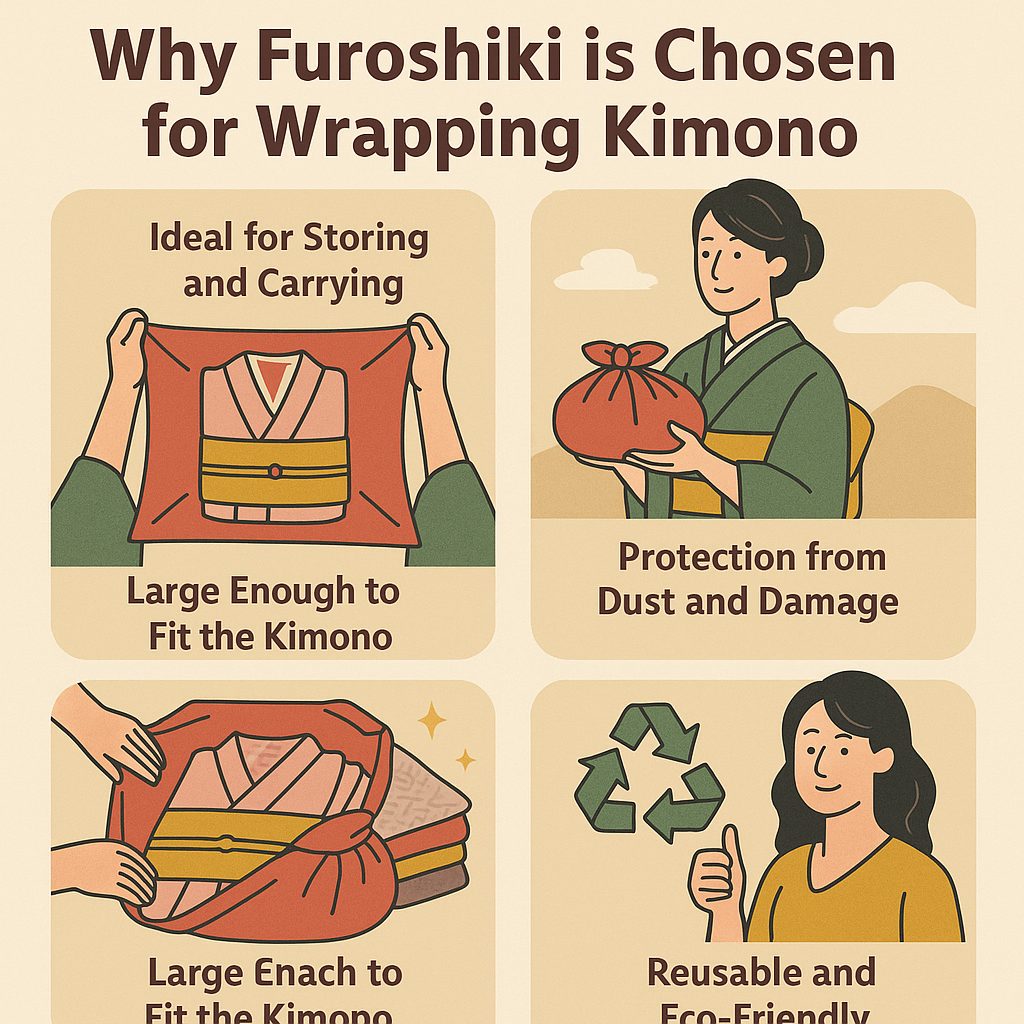
Protecting and Carrying Kimono with Ease
Furoshiki has long been valued in Japan as a versatile and practical way to protect kimono. The soft cloth cushions the delicate fabric, helping to prevent wrinkles, dust, and damage during storage or travel. Unlike stiff cases or bags, furoshiki adapts to the shape of the contents, making it easy to wrap and carry kimono of different types.
A Touch of Elegance and Cultural Tradition
Beyond functionality, using furoshiki adds a sense of grace and authenticity. Wrapping a kimono in a beautifully patterned cloth reflects Japanese aesthetics, where presentation is as important as practicality. For many, the act of using furoshiki is also a way to connect with cultural heritage, making the experience of wearing kimono more special and complete.
Flexible Alternative to Bags and Cases
Furoshiki offers a flexibility that other storage options cannot. It can be folded compactly when not in use, and the same cloth can serve different purposes—from wrapping clothes to carrying gifts or even functioning as an eco-friendly shopping bag. This adaptability makes it an essential tool not only for kimono owners but also for anyone who appreciates multifunctional items rooted in tradition.
Recommended Furoshiki Sizes for Wrapping Kimono
Standard Size (Approx. 105–118 cm)
For most types of kimono—such as komon (casual wear) or iromuji (plain colored kimono)—a furoshiki measuring around 105 cm to 118 cm is sufficient. This size provides enough cloth to cover the garment securely while still being manageable to fold and carry. It is the most common size recommended for single kimono storage or for bringing one kimono to a cultural event.
Larger Sizes for Formal Kimono and Obi
When wrapping more formal garments, such as furisode (long-sleeved kimono) or houmongi (visiting wear), a larger furoshiki is preferred. Sizes around 120 cm (two-shaku-four-sun, known as nishu-yohaba) or larger are ideal. This extra space allows you to wrap not only the kimono but also the obi (sash) and accessories together in one neat bundle, making it convenient for formal occasions and travel.
Compact Sizes for Yukata and Accessories
For summer yukata or smaller clothing items, a 90 cm furoshiki is usually enough. This size is lightweight, easy to fold, and perfect for casual outings such as festivals. It also works well for wrapping only accessories, such as obiage, obijime, or even footwear like zori. Having a smaller furoshiki on hand provides flexibility without being bulky.
Choosing by Material and Design
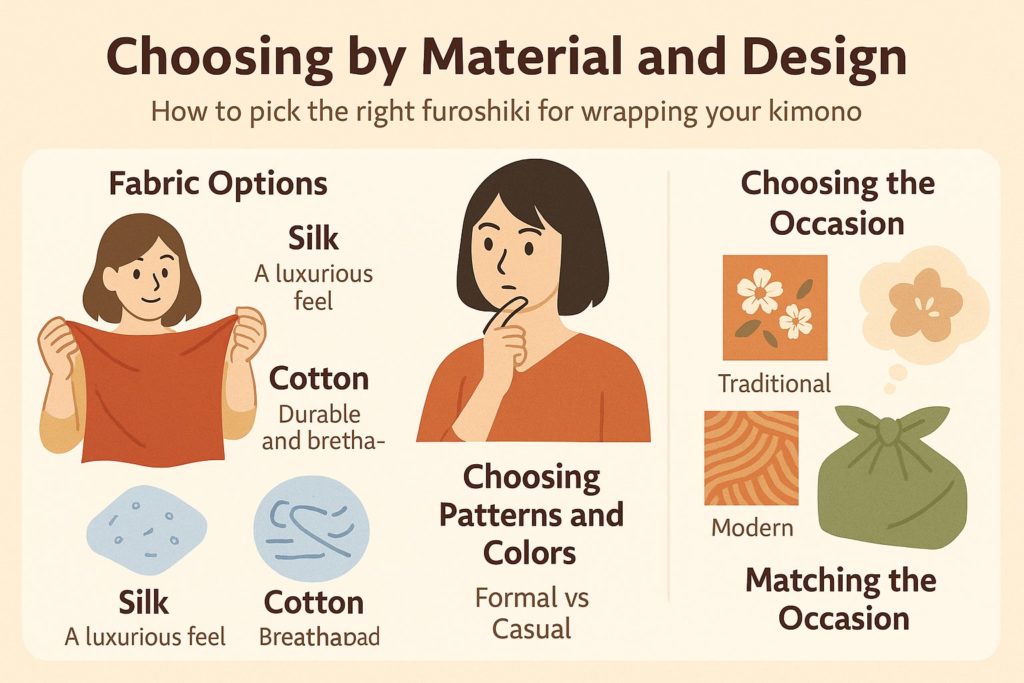
Practical Choices: Cotton and Polyester
For everyday use, cotton and polyester furoshiki are the most practical. They are lightweight, durable, and easy to wash, making them ideal for frequent wrapping and carrying of kimono. Polyester is particularly popular for travel, as it resists wrinkles and dries quickly. These materials are also more affordable, so they’re perfect for those who want functionality without worrying about damage.
Luxurious Appeal of Silk (Shōken)
For formal occasions, nothing matches the elegance of a silk furoshiki. Known in Japanese as shōken, silk cloths offer a smooth texture and a refined appearance that complements the grace of a kimono. They are often chosen when attending ceremonies, gifting kimono, or preserving special garments. While they require more careful handling and may not be washable at home, their beauty and prestige make them highly valued.
Choosing Patterns: Simple vs. Decorative
The design of a furoshiki also carries meaning. Plain or subdued colors are often chosen for formal occasions, allowing the kimono itself to stand out. In contrast, vivid patterns or seasonal motifs—such as cherry blossoms, cranes, or waves—add personality and are perfect for casual wear or gifting. Some people even match the furoshiki design with the kimono season, enhancing the harmony between the two. Ultimately, the right design balances practicality with personal expression.
Basic Folding and Wrapping Techniques
Tips for Wrapping Kimono Neatly
The key to wrapping a kimono with furoshiki is to protect its folds and prevent wrinkles. First, fold the kimono carefully in the traditional tatōshi style (accordion-like folds) to keep its shape. Place the folded kimono diagonally in the center of the furoshiki. Bring the opposite corners together gently and tie or tuck them securely. This diagonal method ensures even coverage without stressing the fabric.
Wrapping Kimono with Obi and Accessories
When wrapping multiple items such as kimono, obi, and accessories, choose a larger furoshiki (120 cm or more). Place the kimono first, then layer the obi and smaller items neatly on top. Use the extra length of the furoshiki to fold over and secure the bundle, making sure that nothing shifts inside. This method is popular for travel, as it keeps all the essentials in one tidy package.
Using Visual Guides and Practice
For beginners, wrapping a kimono may feel challenging at first. Fortunately, there are illustrated guides and instructional videos that demonstrate step-by-step techniques. Practicing with a smaller cloth before using a large furoshiki can also help build confidence. Over time, the process becomes intuitive, and many find the act of wrapping itself calming—almost like a ritual.
Practical Information – Where to Buy and How to Store
Where to Buy Furoshiki
Furoshiki can be purchased at department stores, kimono shops, and specialized craft stores across Japan. Major cities like Tokyo and Kyoto often have dedicated furoshiki sections, offering a wide range of sizes, materials, and designs. For convenience, many online shops also sell furoshiki, including traditional brands and modern reinterpretations. When buying online, check the listed size carefully to ensure it is suitable for wrapping kimono.
Long-Term Storage Tips
For long-term kimono storage, pairing furoshiki with tatōshi paper (traditional kimono wrapping paper) is recommended. The tatōshi keeps the folds neat, while the furoshiki adds an outer layer of protection from dust and light. Store the wrapped kimono in a cool, dry place away from direct sunlight to prevent fading and mildew. It’s also helpful to air out kimono and furoshiki every few months to maintain freshness.
Travel and Event Use
When traveling or attending cultural events, furoshiki is a lightweight and compact option compared to kimono bags. It can be folded flat when not in use, making it easy to carry as a spare. Some people also use furoshiki as a substitute bag—by tying knots at the corners, it transforms into a simple tote for carrying smaller items. This versatility makes it a practical companion not just for kimono enthusiasts but also for anyone who appreciates functional, eco-friendly design.