

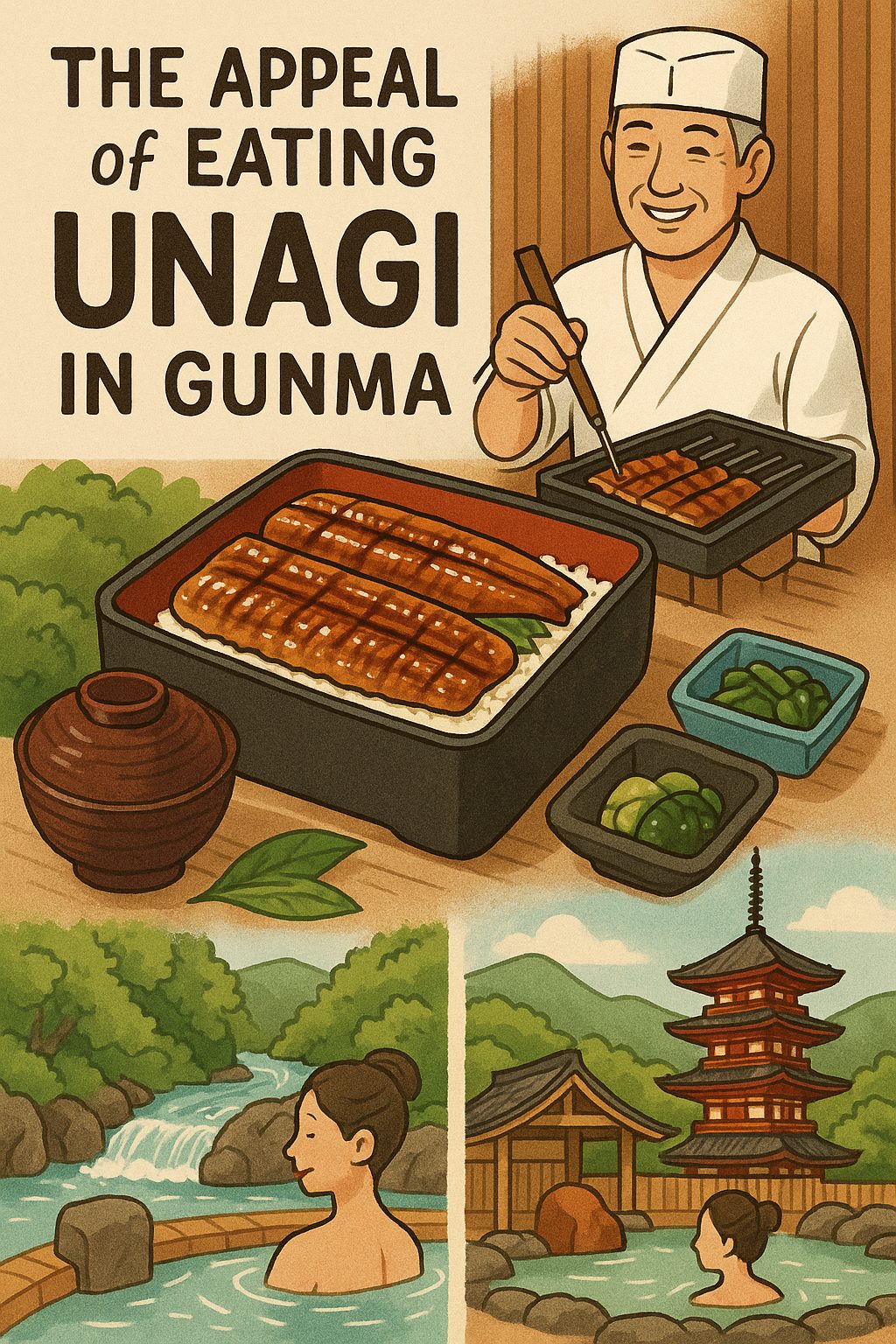
Gunma Prefecture, known for its hot springs and beautiful mountains, is also a hidden paradise for unagi (eel) lovers. From long-established restaurants with generations of history to local favorites tucked away near onsen towns, Gunma offers some of the most unforgettable eel dishes in Japan. Whether you’re craving crispy grilled kabayaki, tender white-grilled eel, or a hearty unajū set meal, Gunma’s unagi scene has something for every traveler. This guide introduces the most famous unagi spots, unique regional flavors, and tips for enjoying this beloved Japanese delicacy during your trip.
The Appeal of Eating Unagi in Gunma
Gunma’s Unagi Culture and History
Gunma Prefecture may be best known for its hot springs and mountains, but it also has a long tradition of serving unagi (eel). Many long-established restaurants in Takasaki, Maebashi, and along the Tone River have been preparing eel for generations, carefully preserving traditional methods of grilling over charcoal. The kabayaki style—where the eel is coated in a sweet soy-based sauce—is the most popular, but some restaurants also specialize in the delicate shiroyaki (white-grilled) style, which brings out the natural flavor of the eel. This deep-rooted food culture reflects Gunma’s connection to water, rivers, and regional culinary heritage.
Why Gunma’s Unagi Is Famous
Gunma is blessed with pure, high-quality water from its many rivers and mountain springs, which plays an important role in the flavor of both the eel and the accompanying dishes. Fresh local rice, vegetables, and soy sauce from the region also enhance the taste, creating a perfect harmony with unagi. Another reason for its fame is the strong link between food and tourism. Travelers visiting Gunma for hot springs in Kusatsu, Ikaho, or Minakami often pair their trip with a stop at a famous unagi restaurant, making it both a gourmet and cultural experience.
A Gourmet Experience with Sightseeing
Eating unagi in Gunma is not just about the dish itself—it’s about the overall travel experience. Many restaurants are located near famous sightseeing areas, allowing visitors to enjoy history, culture, and food together. For example, after exploring Ikaho Onsen’s stone steps or visiting a hot spring in Minakami, enjoying a freshly grilled unagi meal adds a special touch to the journey. The combination of warm hospitality, scenic surroundings, and rich culinary tradition makes Gunma’s unagi dining experience truly memorable.
Ranking of Gunma’s Renowned Unagi Restaurants
Long-Established Local Favorites (Maebashi, Takasaki, Isesaki Area)
- Yanai (Maebashi) is a storied restaurant over 150 years old, cherished by locals and known for its traditional eel dishes served in a refined kaiseki-style setting.
- Seafood Chaya Issen (near Takasaki Station) offers eel grilled to perfection and is popular among families for its accessible pricing and welcoming atmosphere.
- Unaki Maimon Yaki Issei (Isesaki) is a newer specialty venue that grills eel without steaming—giving it a crispy exterior and juicy interior—paired with a savory local sauce for a memorable taste.
Tourist-Friendly Picks (Ikaho & Kusatsu Onsen Area)
- Unagi River Fish Cuisine Uosei (Shibukawa/Ikaho area) is a delightful place to experience eel along with freshwater fish dishes. It’s located conveniently near onsen towns, making it perfect for a relaxing day trip.
Hidden Gems Praised for Value
- Uosei stands out not only for its quality unaju (eel over rice) but also for its cozy tatami rooms and even aquariums showcasing the freshness of the fish.
- Kawazakana Yamada (Tatebayashi) is a nostalgic gem offering eel alongside regional river fish cuisine. Beloved by locals, its atmosphere and taste evoke a sense of hometown comfort.
Varieties of Unagi Dishes to Enjoy in Gunma
Kabayaki, Shirayaki, and Hitsumabushi
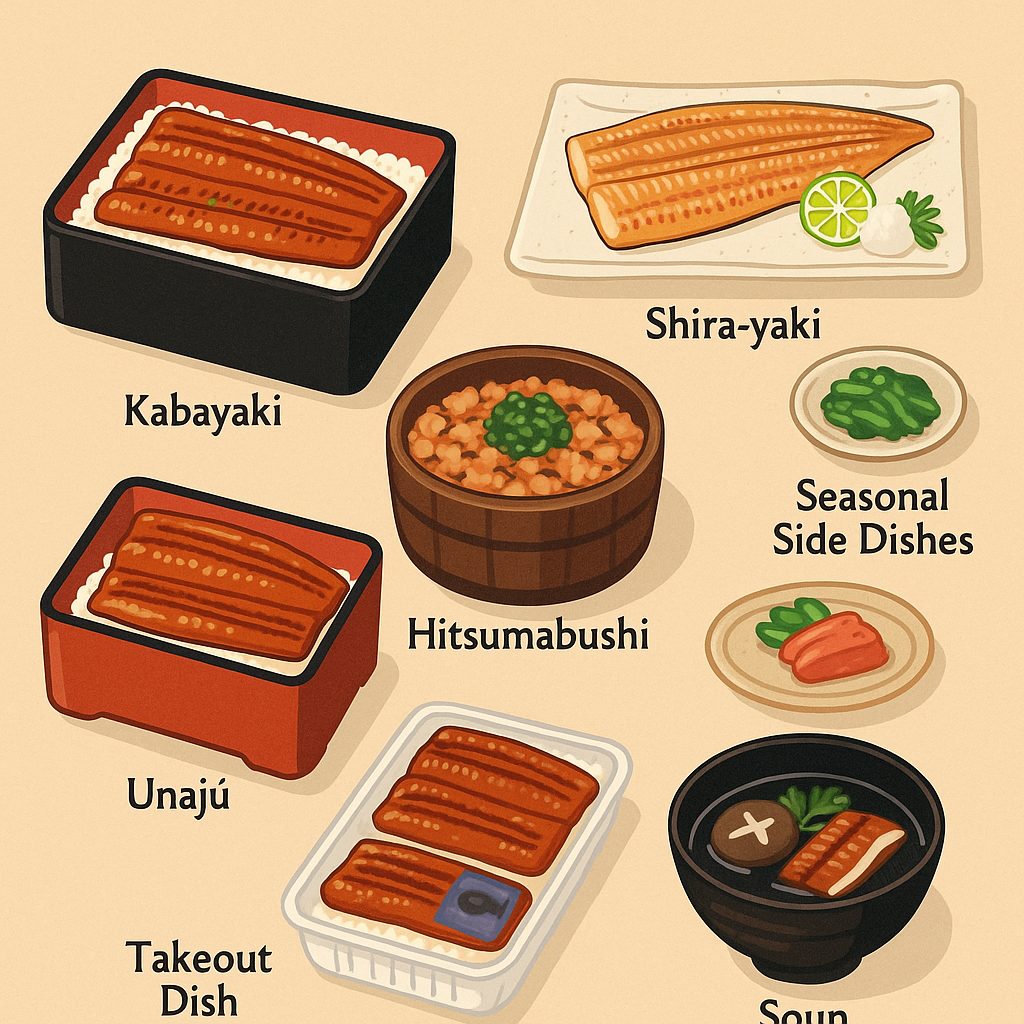
In Gunma, you can savor eel in different preparation styles, each offering a unique taste. Kabayaki is the most common, where the eel is filleted, grilled over charcoal, and coated with a sweet-savory soy-based sauce that gives it a glossy finish and rich flavor. Shirayaki is a simpler preparation—eel grilled without sauce, allowing diners to appreciate the natural aroma and delicate fat of the eel, often paired with wasabi and soy sauce for a refreshing balance. For those looking for variety in one dish, Hitsumabushi is a Nagoya-originated style also found in Gunma, where eel is served over rice in small portions and enjoyed three different ways: as-is, with condiments like green onions and seaweed, and finally as ochazuke with broth poured over.
Seasonal Side Dishes and Pairings
Eel meals in Gunma are often complemented by local seasonal ingredients. In the summer, fresh vegetables from the fertile Gunma plains—such as cucumber, eggplant, or edamame—are common accompaniments. In autumn and winter, heartier sides like simmered mountain vegetables or miso soup enhance the richness of the eel. Gunma is also famous for its clear spring water, which contributes not only to its high-quality unagi but also to excellent local sake. Pairing a glass of crisp sake or even craft beer with an eel dish creates a memorable dining experience.
Unajū, Set Meals, and Take-Out Options
For travelers and families, unagi restaurants in Gunma offer a range of dining options. The most classic is Unajū, where grilled eel is served over rice in a lacquered box, accompanied by pickles and soup. Set meals often include side dishes such as sashimi or tempura, making them perfect for tourists who want to sample multiple flavors. Many establishments also provide take-out menus, allowing visitors to bring unagi bento on train rides or picnics. This flexibility ensures that whether you are dining in a historic restaurant, relaxing at a hot spring inn, or simply passing through, you can still enjoy Gunma’s signature eel cuisine.
Enjoying Unagi Together with Gunma Travel
Pairing with Hot Spring Towns
One of the best ways to enjoy unagi in Gunma is to pair it with a visit to the prefecture’s famous onsen towns. After a long soak in the soothing waters of Ikaho Onsen or Kusatsu Onsen, a hearty unagi meal makes for the perfect reward. Ikaho, known for its stone steps lined with shops and traditional inns, has nearby unagi restaurants that make a natural stop for lunch or dinner. Kusatsu, famous for its large hot spring field “Yubatake,” offers not only therapeutic baths but also eateries serving freshly grilled eel, creating a balanced experience of relaxation and indulgence.
Sightseeing Spots + Unagi Model Course
For those who like to combine sightseeing with dining, Gunma offers many opportunities to pair scenic destinations with local unagi restaurants. For example, a day trip to Mount Haruna, with its tranquil lake and ropeway views, can be followed by a satisfying unagi lunch at a nearby family-run eatery. Similarly, exploring the hiking trails and panoramic vistas of Mount Akagi makes the perfect prelude to enjoying kabayaki or unajū at a traditional restaurant in Maebashi or Shibukawa. These combinations create memorable travel routes that satisfy both adventure seekers and food lovers.
Souvenirs and Take-Home Delights
Unagi in Gunma is not only for dining out—it can also be enjoyed back home. Many shops sell vacuum-packed eel fillets that retain their flavor and freshness, making them ideal souvenirs or gifts. In addition, unagi bento boxes are popular take-home options, often found at train stations or specialty shops, allowing travelers to relive their Gunma experience even on the journey home. For those who want to continue the flavor after returning from their trip, several stores also offer mail-order services, shipping regional eel specialties nationwide.
Practical Information for Enjoying Unagi in Gunma
How to Check Reservations and Avoid Crowds
Unagi restaurants in Gunma are often popular among both locals and tourists, which means long lines during weekends and lunch hours. To avoid waiting, it is recommended to make reservations in advance, especially at long-established restaurants or those near hot spring resorts. If reservations are not possible, aim for early lunch (11:00–11:30 AM) or late afternoon dining (around 2:00–3:00 PM) when crowds are lighter. Checking the restaurant’s official website or social media pages can also provide updates on peak times and special seasonal menus.
Access and Parking Information
Gunma is well connected by both rail and car, making unagi restaurants relatively easy to access. For those traveling by train, Maebashi, Takasaki, and Shibukawa stations are convenient hubs, with many restaurants located within walking distance or a short taxi ride. Travelers visiting hot spring towns like Ikaho or Kusatsu will find that local buses and shuttle services often stop near popular dining areas. For drivers, most unagi restaurants offer ample parking spaces, though it’s best to confirm beforehand, as smaller family-run shops may have limited spots.
Budget and Price Range
Unagi in Gunma caters to a wide range of budgets. At high-end traditional restaurants, a full unajū (grilled eel over rice in a lacquered box) may cost around 3,500–6,000 yen, offering premium quality and meticulous preparation. Mid-range restaurants and casual eateries often serve satisfying sets for 2,000–3,000 yen, making them accessible to most travelers. For those seeking a more affordable option, take-out bentos or smaller set meals can be found for around 1,500 yen, allowing visitors to enjoy authentic eel dishes without straining their budget.


