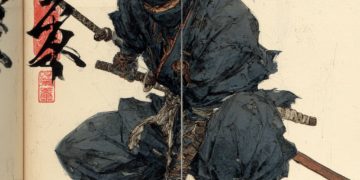

“Samurai look cool, but I don’t really understand the names of their clothes…”
Have you ever felt this way when watching historical dramas or looking at pictures of samurai in a history class? Kimono? Hakama? Armor? You may have heard these words before, but it’s hard to tell which is which. When you don’t understand, it can make things less fun—even when visiting museums or reading games and manga.
If you don’t clearly understand samurai clothing, you may run into problems like these: you don’t know what to buy for a cosplay, you can’t explain it well in class, and you can’t tell if your favorite game or manga character’s outfit is historically accurate. It’s a shame to lose enjoyment just because of a lack of knowledge, especially when you are interested in Japanese culture.
But don’t worry. By reading this article, all of your questions will be answered. From the basic names of samurai clothing, to how styles changed over time, differences by social rank, and even how to enjoy samurai fashion today—everything is explained in simple English that even a 5th-grade student can understand.
This article is based on reliable Japanese historical materials and museum information, so you can trust the accuracy. It has helped answer questions for many people, including fans of historical dramas, history lovers, cosplayers, and international travelers.
In this article, you will learn:
- The basic items and official names of samurai clothing
- How samurai styles changed across different periods
- The differences in clothing by rank, from shogun to foot soldiers
- How to experience and enjoy samurai style today
- Easy-to-understand answers to common questions
Now, let’s begin a journey into the world of samurai. By the time you finish reading, you’ll be a true “samurai fashion expert”!
What Is Samurai Clothing? Basic Items and Official Names
The 5 Core Items That Make Up the Samurai Style
Samurai clothing is made up of five main items. Just by learning these five, you can quickly understand the basics of samurai fashion.
Why five items? Because each piece has its own clear role. For example, the kimono is the base layer that covers the body, while the hakama is worn over it like pants. The haori is similar to a modern jacket. Each item has its own function and name.
Here is a simple explanation of the five key items:
1. Kimono / Kosode
The kimono is the base of samurai clothing. It is also called kosode, meaning “small sleeves.” The sleeves are shorter, making it easier to move. It looks similar to modern kimono, but samurai versions were often shorter for better mobility. Materials included linen, cotton, and silk. Higher-ranking samurai wore fine silk. Colors and patterns also showed status. For example, high-ranking figures like shoguns wore kimono with special family crests.
2. Hakama
Hakama are worn over the kimono and look like a mix of a skirt and pants. It was an important symbol of being a samurai. There are two main types: umanori hakama (divided, like pants, good for riding horses) and andon hakama (wide and skirt-like, used for formal wear). Common colors were calm tones like black, navy, and brown.
3. Haori
The haori is a jacket worn over the kimono. It started as battlefield clothing and later became formal wear in the Edo period. The back often has a family crest (kamon), showing the samurai’s affiliation. The length varied by era, from short to knee-length. It is tied in the front with decorative cords called haori-himo.
4. Obi
The obi is a belt used to secure the kimono and hakama. Samurai commonly used a stiff, wide belt called kaku-obi. This belt also held their swords, creating the iconic samurai style. The material and color of the obi also showed status.
5. Footwear (Tabi, Zori, Setta)
Footwear was also important. Tabi are split-toe socks, similar to modern socks but with a separate big toe. Zori are flat sandals, and setta are stronger versions with leather soles. Higher-ranking samurai wore higher-quality footwear.
In summary, these five items—kimono, hakama, haori, obi, and footwear—form the basic samurai style. Each piece has its own role, and together they create the complete look.
Official Names and English Terms
Samurai clothing includes many special terms. Learning the official names helps you understand history better.
It is also useful to learn the English names, because samurai culture is popular worldwide. Many games, movies, and resources use these terms in English.
Here are the main items:
Clothing:
- Kimono (着物)
- Kosode (小袖 / short-sleeved robe)
- Hakama (袴)
- Haori (羽織 / jacket)
- Jinbaori (陣羽織 / sleeveless coat)
- Kamishimo (裃 / formal outfit)
- Obi (帯 / sash belt)
- Kaku-obi (角帯 / stiff belt)
- Juban (襦袢 / under-kimono)
- Tabi (足袋 / split-toe socks)
Footwear:
- Zori (草履 / sandals)
- Setta (雪駄 / leather-soled sandals)
- Waraji (草鞋 / straw sandals)
- Pokkuri (木履 / wooden clogs)
Head and Accessories:
- Sakayaki (月代 / shaved hairstyle)
- Mage (髷 / topknot)
- Chonmage (丁髷 / samurai topknot)
- Kasa (笠 / hat)
- Zukin (頭巾 / hood)
Armor:
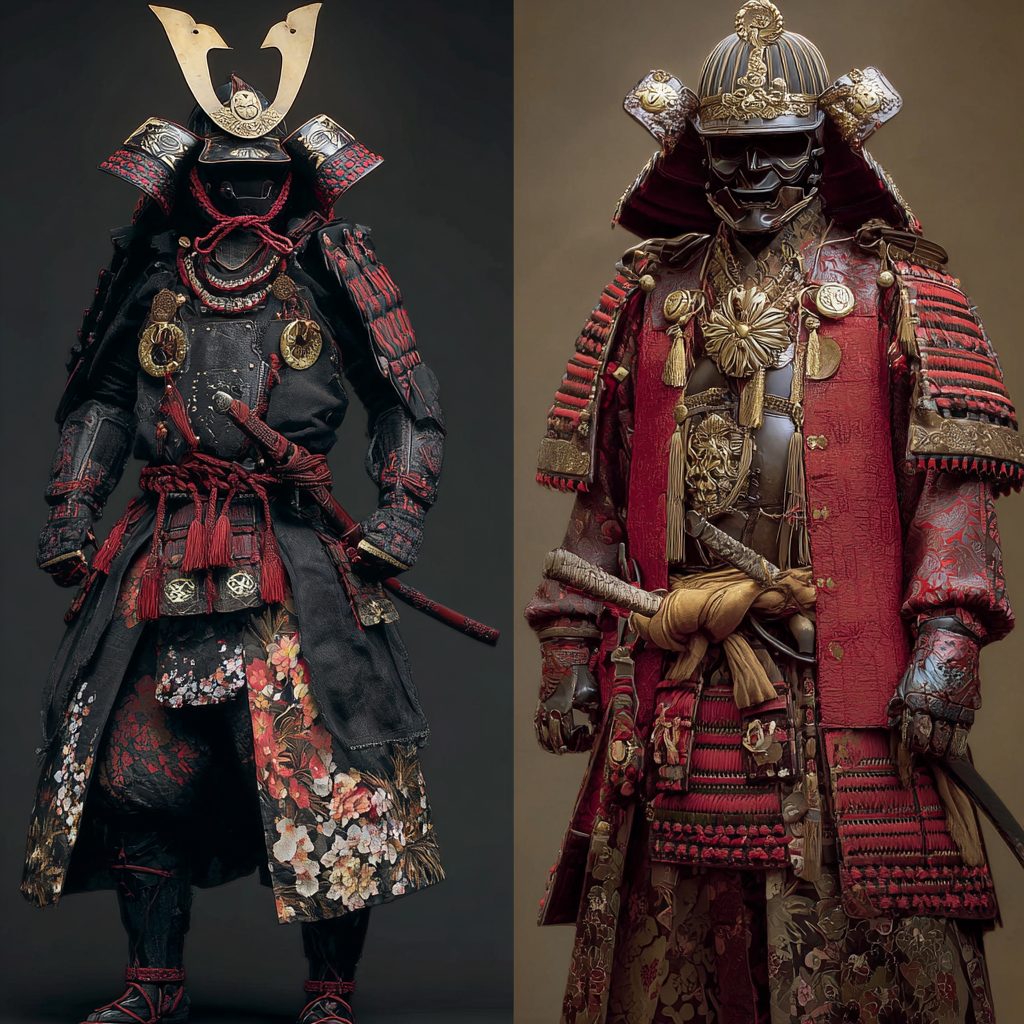
- Katchu (甲冑 / armor)
- Kabuto (兜 / helmet)
- Do (胴 / chest armor)
- Kote (籠手 / arm guards)
- Haidate (佩楯 / thigh guards)
- Suneate (臑当 / shin guards)
- Kusazuri (草摺 / skirt armor)
By learning these names, you can better understand museums, historical dramas, and books. Knowing both Japanese and English terms makes it easier to explore global content.
Differences Between Samurai, Bushi, Ninja, and Ronin
Samurai, bushi, ninja, and ronin all wore different clothing. They are often confused, but their roles and status led to clear differences in style.
The reason for these differences is their lifestyle and duties. Samurai served a lord and valued formality. Ninja needed to stay hidden, so their clothing was practical and not noticeable.
Samurai
Samurai were known for their strong sense of etiquette. In formal settings, they wore kamishimo, which includes a sleeveless top (kataginu) and hakama. In daily life, they wore kimono, hakama, and haori.
Bushi
Bushi is a broader term for warriors. In battle, they wore armor. In daily life, they wore clothing based on their rank, similar to samurai.
Ninja
Ninja did not always wear black outfits. That image comes from theater and later stories. In reality, they often disguised themselves as farmers or merchants, wearing plain and simple kimono to blend in.
Ronin
Ronin were samurai without a master. Their clothing was similar to samurai, but they could not wear haori with family crests. Many were poor, so their clothes were often worn and faded, which became a sign of their status.
In conclusion, although they may look similar, samurai, bushi, ninja, and ronin had clear differences in clothing.
Can You Tell Rank by Clothing? Rules by Social Class
In the Edo period, clothing clearly showed a samurai’s rank. Color, material, family crest, and even the type of obi all revealed a person’s status.
This was because the government created strict clothing rules. People were not allowed to wear clothes above their social rank. Clothing helped maintain order in society.
Here is a simple breakdown:
Shogun and Daimyo Class
They wore silk kimono and haori with family crests. They could use rich colors like gold, red, and purple. Their formal wear used the finest materials.
High-Ranking Samurai (Hatamoto)
They could wear silk, but overly luxurious designs were restricted. They could use family crests, but with limits.
Lower Samurai and Ashigaru
They mainly wore cotton or linen. Colors were simple and decorations were limited. Hakama were allowed, but made from rough materials.
Key Points to Identify Rank:
- Material: Silk > Cotton > Linen
- Color: Brighter colors = higher status
- Family crest: Shows family rank
- Swords: Carrying two swords was a samurai privilege
In summary, samurai clothing was not just fashion—it worked like a uniform that showed social status. By reading these details, people could immediately understand a person’s position in society.
Changes in Samurai Clothing by Era
Heian and Kamakura Periods | The Beginning of Samurai Clothing
The history of samurai clothing begins in the Heian period (794–1185). The styles created during this time became the foundation of later samurai fashion.
This is because the samurai class first appeared in society during this era. Until then, clothing was centered around aristocratic culture. However, a new, more practical style began to develop for warriors.
Heian Period Samurai Clothing
Samurai in the Heian period wore clothing called kariginu. This was originally worn by nobles during hunting and was designed for easy movement. They wore a belt around the waist and used mukabaki, leg coverings that protected their legs while riding horses. At this time, samurai were still strongly influenced by aristocratic culture, and this could be seen in their clothing.
Kamakura Period Samurai Clothing
In the Kamakura period (1185–1333), samurai became the center of political power, and their clothing developed further. A garment called hitatare became a standard outfit. It was a matching top-and-bottom set designed for practicality and ease of movement.
Armor also evolved greatly during this time. A type of armor called ō-yoroi (great armor) was developed. It was mainly worn by high-ranking samurai who fought on horseback. This armor was very heavy, sometimes weighing over 30 kilograms.
Main Items of This Era:
- Kariginu: Easy-to-move clothing from aristocratic origins
- Hitatare: A practical outfit developed for samurai
- Ō-yoroi: Large armor for mounted combat
- Mukabaki: Leg coverings for horseback riding
- Eboshi: A black hat worn for formal occasions
In summary, the Heian and Kamakura periods were the “starting point” of samurai clothing. While influenced by aristocratic culture, styles evolved to meet the practical needs of battle. These styles became the base for later samurai fashion.
Sengoku Period | Functional Armor for the Battlefield
The Sengoku period (1467–1615) was when samurai clothing changed the most. Functionality for winning battles became the top priority, and armor design evolved dramatically.
This happened because the way battles were fought changed. Earlier, samurai mainly fought one-on-one on horseback. But during the Sengoku period, large groups of foot soldiers (ashigaru) fought together. Armor had to adapt to this new style of warfare.
Tosei Gusoku (Modern Armor)
The most famous armor of this period is tosei gusoku. It replaced the heavy ō-yoroi with lighter, more flexible armor. It covered the whole body and included parts like the dō (chest armor), kabuto (helmet), kote (arm guards), haidate (thigh guards), and suneate (shin guards).
Creative Helmet Designs
Helmets became a way to show individuality. Unique helmets called kawari kabuto became popular, decorated with designs like deer antlers, suns, or dragons. Famous examples include Date Masamune with his crescent moon helmet and Honda Tadakatsu with deer antlers.
Jinbaori (Battle Surcoat)
A new garment called jinbaori appeared. It is a sleeveless coat worn over armor, similar to a vest. It was lightweight and also served as a fashion item on the battlefield. Leaders like Toyotomi Hideyoshi and Tokugawa Ieyasu wore stylish versions, sometimes made with tiger fur or decorated with gold.
Ashigaru Clothing
Foot soldiers wore simple armor called haramaki and hats called jingasa, made from bamboo or metal. Their clothing focused on mobility and practicality.
In summary, samurai clothing in the Sengoku period evolved greatly to focus on battlefield function. Items like tosei gusoku, unique helmets, and jinbaori are still well-known symbols of samurai today.
Edo Period | Refined Samurai Fashion in a Peaceful Era
The Edo period (1603–1868) was a peaceful time lasting about 260 years. Without constant war, samurai clothing shifted from functionality to etiquette and beauty.
This change happened because samurai roles changed. Instead of warriors, they became administrators and keepers of order. Their clothing reflected this new role.
Kamishimo (Formal Wear)
The most important formal outfit was kamishimo. It consists of kataginu (a sleeveless top with wide shoulders) and hakama. It was required for formal occasions and functioned like a modern suit. Its unique shape is still a symbol of Edo-period samurai.
Chonmage (Topknot Hairstyle)
The chonmage became a defining feature. The top of the head was shaved, and the remaining hair was tied into a knot. It originally helped keep helmets in place but later became a symbol of etiquette and style.
Two-Sword Style (Nihonzashi)
The biggest symbol of samurai was carrying two swords—a long sword and a short sword. This was a special privilege of the samurai class. There were strict rules about how to wear them, including placement and how to tie the belt.
Clothing Regulations
The government issued laws to limit luxury. However, samurai found creative ways to express style within these rules. For example, they wore simple outer colors but added detailed and beautiful designs inside, a style called tsū-gonomi (tasteful elegance).
In summary, the Edo period was the “completion stage” of samurai fashion. The three key symbols—kamishimo, chonmage, and two swords—defined the classic samurai image we see today.
Late Edo to Meiji Period | Western Influence and the End of Samurai Style
From the late Edo period (1850s) to the Meiji period (1868–1912), samurai clothing changed greatly due to Western influence. Eventually, the samurai style disappeared from society.
This happened because in 1876, the government issued a law banning the carrying of swords in public. Since swords were the main symbol of samurai, losing them meant losing their identity.
Mixed Japanese-Western Style
During the late Edo period, Western culture entered Japan. Samurai began combining kimono and hakama with Western coats and boots. Sakamoto Ryoma is a famous example of this style.
Haircut Order and the End of Chonmage
In 1871, the government encouraged people to cut their topknots and adopt Western hairstyles. Although not forced, many samurai followed this trend. The disappearance of the chonmage symbolized the end of the samurai class.
Sword Ban and Final End
The 1876 sword ban removed the last symbol of samurai. As a result, the samurai class effectively disappeared. Former samurai became ordinary citizens and began wearing Western-style clothing.
Legacy Today
Even though samurai style disappeared, its influence remains. Kimono and hakama are still worn at special events like coming-of-age ceremonies and graduations. Martial arts like kendo and kyudo still use clothing based on samurai styles.
In conclusion, the late Edo and Meiji periods marked the “end of samurai style.” At the same time, it was a turning point in Japanese clothing culture. The traditions of samurai fashion continue to live on in modern Japan.
Samurai Clothing by Rank and Role | A Detailed Comparison

Shogun and Daimyo | Formal Clothing That Showed Power
Shoguns and daimyo stood at the top of samurai society, so they wore clothing made from the finest materials and decorated with the most luxurious designs. Their clothing was a symbol of power. Just by looking at it, people could feel their authority.
Why was the clothing of shoguns and daimyo so special? Because clothing itself was a political message. Luxurious clothing was a clear visual way to show that a person held great power.
The Shogun’s Formal Wear
The highest-ranking formal wear of the shogun was called sokutai. This outfit originally came from the formal dress of Heian-period nobles. It used rich colors such as deep purple and black, and it was decorated with gold leaf, embroidery, and family crests.
Daimyo Clothing
The formal wear of daimyo was called daimon. It was based on the hitatare style and featured large family crests dyed into the fabric. The size, position, and number of these crests were strictly controlled, and changes were not allowed without permission. For everyday outings, daimyo usually wore high-quality silk kimono with haori and hakama.
Clothing for Sankin-kōtai
Daimyo had to follow the sankin-kōtai system, in which they traveled between Edo and their home domains every one or two years. The clothing worn during these journeys was especially strict. Even the clothing of their attendants was carefully regulated to show the rank and dignity of the procession.
In summary, the clothing of shoguns and daimyo was more than fashion. It was proof of power. The luxury, material, family crest, and colors all worked together as a system to clearly show a person’s social rank.
Senior Samurai and Karō | Clothing That Balanced Status and Practical Use
Senior samurai, such as karō (chief retainers), wore clothing that showed high status, almost like their lord’s clothing. At the same time, their clothing also needed to be practical enough for daily government work and administration.
Why did senior samurai clothing balance formality and function? Because they often appeared in official settings as representatives of their lord, but they also had to manage everyday duties. Their clothing needed to work well in both situations.
Wearing Kamishimo
The formal wear of senior samurai was kamishimo. Details such as the width of the shoulders on the kataginu, the material, and the design of the family crest were all carefully controlled by rank. The kataginu of senior samurai was made from linen or fine silk, and even the dyeing of the family crest required great skill.
Everyday Clothing
For daily work, they wore a more practical style of kimono and hakama instead of kamishimo. Their everyday clothing was usually made of high-quality silk with plain or simple patterns. They wore kaku-obi belts, and common colors were black, navy, brown, and gray.
How Swords Matched the Outfit
Senior samurai usually wore two swords, a long sword and a short sword. There were strict rules about the quality of the swords, the design of the scabbard, and even how the swords were placed in the belt. Matching the swords with the clothing was an important part of showing samurai dignity.
This rank’s clothing is probably the closest to the “classic samurai look” that people imagine today.
Ashigaru and Lower-Ranking Samurai | Simple but Functional Battle Wear
The clothing of ashigaru and lower-ranking samurai was much simpler and more modest than that of higher-ranking samurai. Still, it was highly practical and suited to real battle and daily work.
Why was lower-ranking samurai clothing so simple? Because of both economic limits and government clothing rules. Expensive silk and fancy decoration were forbidden, so affordable materials such as cotton and linen were used instead.
Ashigaru Clothing
The basic ashigaru style was a cotton kimono, simple hakama, and a basic body armor called haramaki. On the head, they wore jingasa, and on the feet they wore waraji straw sandals. This equipment was light and easy to move in, which made it suitable for group fighting.
Everyday Clothing of Lower Samurai
In peaceful times, lower-ranking samurai usually wore a plain cotton kimono with hakama. They had the right to wear haori, but not with expensive materials, so plain cotton haori were common. They also had the right to wear two swords, but the quality of their swords was lower and more modest than those of higher-ranking samurai.
The Spirit of “Bubaru”
Among lower-ranking samurai, it was considered a matter of pride to look proper even when poor. The word bubaru means to keep a samurai-like appearance even in hardship.
In summary, the clothing of ashigaru and lower-ranking samurai was modest, but it combined practicality with samurai pride. The differences in clothing by rank were large, but the spirit of “dressing like a samurai” was shared by all levels.
Rōnin | What Did a Masterless Samurai Wear?
The clothing of a masterless samurai, called a rōnin, kept the basic samurai style, but also reflected economic hardship and unstable social standing. This gave rōnin clothing a unique feeling.
Why was rōnin clothing so distinctive? Because rōnin still had samurai rights, such as carrying swords and wearing hakama, but they had no lord, no stable work, and no secure income. This contradiction could be seen in their clothing.
The Typical Rōnin Style
The common image of a rōnin is a worn kimono, hakama, a hat (kasa), and a sword at the waist. In historical dramas, rōnin almost always appear in this style. They often wore a hat to hide their identity, which added to their mysterious image.
Haori Without a Family Crest
Because rōnin had no lord, they could not wear haori with the family crest of a specific house. Instead, they wore plain haori without crests, or haori from which the crest had been removed. This showed that they no longer belonged to a lord.
Clothing of Famous Rōnin
The clothing of famous rōnin in history often reflected their personality and the time they lived in. Miyamoto Musashi is said to have preferred simple, dark-colored kimono. In the story of the Forty-Seven Rōnin, records describe in detail how the rōnin disguised themselves in plain clothing as part of their revenge plan.
In summary, rōnin clothing has a special presence because it stands between samurai pride and economic reality. This may be one reason why rōnin characters are so popular in historical dramas and games.
How to Experience and Use Samurai Clothing Today
Samurai Experience and Dressing Spots in Kyoto, Nikko, and Tokyo
There are many places across Japan where you can actually wear samurai clothing and enjoy the experience. Kyoto, Nikko, and Tokyo are especially popular areas for samurai experiences, where you can dress in authentic costumes, take photos, and walk around town.
Why are samurai experiences so popular? Because when you actually wear samurai clothing, you can enjoy a real sense of history that textbooks and games cannot fully give you. It is popular not only with international visitors, but also with Japanese people who want to enjoy something special and out of the ordinary.
Samurai Experience Spots in Kyoto
Kyoto is one of the best cities for samurai experiences because it is a major center of Japanese history and culture. There are many shops in the city that offer samurai and ninja experiences. You can wear authentic armor or samurai outfits and take photos in beautiful places such as the stone streets of Gion or the bamboo forest of Arashiyama. Popular areas include Higashiyama and Arashiyama. Some plans are simple dressing experiences, while others include sword lessons or tea ceremony experiences.
Samurai and Historical Drama Experiences in Nikko
Nikko is a historic town with many buildings from the Edo period. At Edo Wonderland Nikko Edomura, you can enjoy an Edo-period atmosphere all day long. There are many programs, such as photo sessions in authentic warrior clothing and live sword performances by trained instructors.
Dressing Experiences in Tokyo
In Tokyo, especially around Asakusa, there are many shops where you can try kimono and hakama dressing. You can choose from simple samurai-style hakama looks to more formal haori and hakama outfits. After dressing up, you can enjoy walking around and taking photos near Kaminarimon Gate and Senso-ji Temple.
Tips for Enjoying the Experience More
If you can ask questions like, “Is the hakama sitting in the right position?” or “Is this haori a jinbaori?” your experience will become much deeper and more meaningful.
In summary, a samurai experience is one of the best ways to turn knowledge into a real experience. If you join after learning the clothing terms from this article, it will become much more than just a souvenir photo.
How to Choose Samurai Costumes and Essential Items for Cosplay
To enjoy samurai cosplay or costume events, there are some essential items you should know first. If you choose them correctly based on your budget and purpose, you can create a much more complete samurai look.
Why is choosing the right items so important? Because the quality of a samurai style depends greatly on the combination of items and how they are worn. Even if you buy expensive clothing, it can still look “not quite right” if the styling or accessories are off.
Essential Item List for Samurai Cosplay
Level 1 (Basic):
- Kimono in black, navy, brown, or another plain or simple pattern
- Hakama, especially black or navy umanori hakama
- Black kaku-obi belt
- Replica swords (a long sword and short sword set)
- Tabi with zori or setta
Level 2 (Intermediate):
- All of the above
- Haori, ideally with a family crest
- Chonmage wig for more realism
- A sword bag designed to match the period
Level 3 (Advanced):
- Authentic kimono made of silk
- Custom-made haori with a family crest
- Realistic accessories and weapon displays
- A full set of small items based on historical research
Cosplay Points by Rank
If you want to portray a shogun or daimyo:
Luxurious materials, gold family crests, and purple or black kimono are key.
If you want to portray a ronin:
A worn kimono, a hat, and a plain haori without a crest are important points.
If you want to portray an ashigaru:
A simple cotton kimono, light chest armor like a haramaki, and a jingasa are the main points.
Where to Buy and Budget Guide
Authentic samurai cosplay costumes can be bought at period costume specialty shops in Tokyo, Osaka, and Kyoto, or through online stores. As a rough guide, a basic Level 1 set usually costs around 10,000 to 30,000 yen, while a Level 2 set often costs around 30,000 to 80,000 yen.
In summary, samurai cosplay can look very authentic if you choose the right items and wear them properly. It is best to start with the four basic items—kimono, hakama, kaku-obi, and replica sword—and then slowly add more pieces.
Accurate Clothing References for Illustrations, Novels, and Games
When drawing or writing samurai in illustrations, novels, or games, accurate clothing knowledge based on historical research can greatly affect the quality of the work. This knowledge helps you move from “kind of looks like a samurai” to “feels like a real samurai.”
Why is historical accuracy so important? Because history fans and period drama fans notice small mistakes very quickly. For example, if a Sengoku-period warrior is wearing Edo-period kamishimo, or if a Heian-period warrior has a chonmage hairstyle, people may feel the work is less trustworthy.
Key Points by Era
If you are depicting the Heian or Kamakura period:
- Warriors should wear hitatare or kariginu
- Armor should be in the ō-yoroi style
- The chonmage belongs to the Edo period, so it was not yet common
- The eboshi hat is an essential item
If you are depicting the Sengoku period:
- Armor should be tosei gusoku
- Use kawari kabuto to show character individuality
- Jinbaori is a standard item for Sengoku warlords
- Ashigaru should wear a haramaki and jingasa style
If you are depicting the Edo period:
- Formal wear should be kamishimo
- The chonmage is the standard hairstyle
- Wearing two swords is essential
- Clothing colors and patterns should reflect social rank
Recommended Reference Materials
- The armor collection of the Tokyo National Museum, which can also be viewed online
- History of Japanese Clothing published by Yoshikawa Kobunkan
- Exhibitions of swords and arms at the Japanese Sword Museum
- Armor displays at castle museums across Japan
Using This Knowledge in Game Design
Famous games such as Ghost of Tsushima, Nioh, and Sekiro are highly praised around the world partly because of their strong attention to historical details. By using the knowledge in this article when designing game costumes, you can create samurai characters that feel more real and attractive.
In summary, when drawing samurai for illustrations, novels, or games, accurate clothing knowledge that matches the era and rank gives your work strong believability. Please use what you learned in this article in your own creative projects.
Recommended Museums and Castles to See Real Samurai Clothing
At museums and castles across Japan, you can see real samurai clothing such as armor, kimono, and weapons. If you visit with the knowledge from this article, your understanding of the exhibits will become much deeper.
Why is it important to see the real thing? Because photos and short explanations cannot fully show the texture, size, and beauty of the materials. For example, the shine of gold leaf and the beauty of fine details in armor are things you can truly feel only when you see the real object in front of you.
Tokyo National Museum (Ueno, Tokyo)
This is Japan’s largest museum and holds a major collection of armor, swords, and weapons designated as National Treasures and Important Cultural Properties. The “Samurai and Armor” section in the main building is especially rich, with representative armor from the Heian period to the Edo period.
Japanese Sword Museum (Sumida, Tokyo)
This museum specializes in Japanese swords and related arms. You can see real collections of samurai swords, short swords, and long swords, and also learn in detail about the relationship between swords and samurai clothing.
Himeji Castle (Hyogo Prefecture)
This UNESCO World Heritage castle is the largest castle complex in Japan. Its exhibition rooms display authentic armor and weapons. The castle itself is also a masterpiece of samurai-era building technology, and visitors can feel what it was like to be in a real samurai space.
Osaka Castle Tower (Osaka Prefecture)
This castle is closely connected with Toyotomi Hideyoshi and Tokugawa Ieyasu. It has rich displays of armor, jinbaori, and weapons from the Sengoku and Edo periods. Its collection of unusual Sengoku helmets is especially impressive.
How to Prepare Before Visiting
If you review the knowledge in this article before visiting a museum, the exhibit explanations will be much easier to understand. In particular, if you remember these three points—names of each part, differences by era, and differences by rank—your visit will become much more rewarding.
In summary, visiting museums and castles is one of the best ways to turn your knowledge of samurai clothing into living knowledge. With the ideas from this article in mind, try going to see real samurai clothing and weapons for yourself.
Frequently Asked Questions About Samurai Clothing
Why Did Samurai Wear Hakama Over Kimono?
Samurai wore hakama over kimono for three main reasons: practicality, etiquette, and social status. Hakama were a symbol of the samurai class, and wearing only a kimono was not considered truly “samurai-like.”
First, samurai had a practical reason. Wearing hakama kept the kimono hem in place and made walking with swords easier. Second, from the viewpoint of etiquette, people saw hakama as a basic part of proper samurai formal wear. Third, in terms of social rank, the warrior class held the right to wear hakama, and ordinary people generally could not wear them.
To look more closely at the practical role of hakama:
They keep the kimono hem tucked in, so people can move quickly, run, and ride a horse more easily.
They prevent the kimono from falling out of place when someone carries a sword in the belt.
They support proper samurai manners, such as sitting formally and bowing.
Even today, people use hakama as training wear in martial arts such as kendo, kyudo, and aikido. This use shows that their practical function from the samurai era still continues today. People also choose hakama for university graduation ceremonies because they still represent formal clothing.
In summary, hakama played an important role for samurai.
What Is the Difference Between Katchū and Yoroi? Names of the Armor Parts
Katchū refers to the full set of armor, including both the body armor and the helmet. Yoroi, on the other hand, often refers only to the body armor itself. So, strictly speaking, these are not exactly the same word.
Why is it useful to know this difference? Because in museums and historical dramas, words like katchū, yoroi, and gusoku are often used together. If you understand each meaning correctly, you can understand explanations much more clearly.
Here is a simple list of the main armor parts:
Head
- Kabuto: the helmet that protects the head
- Menpō: a face guard
- Mabisashi: the visor part of the helmet
- Fukikaeshi: the side flaps on the helmet
Body
- Dō: the part that protects the chest and stomach
- Kusazuri: the hanging parts that protect the waist and thighs
- Sode: the parts that protect the shoulders and upper arms
Arms and Hands
- Kote: the parts that protect the whole arm
- Tekō: the part that protects the back of the hand
Waist and Legs
- Haidate: the part that protects the thighs
- Suneate: the part that protects the shins
Back
- Seita: the part that protects the back
- Sakaita: the upper back plate
In summary, samurai armor was a full-body protection system, carefully designed from head to toe. By learning the names of each part, visiting museums and thinking about armor in games and anime becomes much more fun.
Are Samurai Costumes in Anime and Games Different from Real History?
In most cases, they are not completely historical, but that is not a “mistake.” It is part of creative freedom.
Why do fictional costumes often differ from history? Because visual clarity in entertainment and historical accuracy do not always match. For example, the all-black ninja outfit is an easy way to show “this is a ninja,” but real ninja usually wore more ordinary and less noticeable colors.
Here are some examples:
Samurai-like characters in Demon Slayer
Tanjiro’s haori is different from a real Edo-period haori in design, but it still follows the basic form of a haori and adds an original design. His checkered pattern is also based on a pattern that was actually popular in the Edo period, so it does reflect a real historical feeling.
Ghost of Tsushima
The developers set Ghost of Tsushima in Kamakura-period Tsushima and built a strong reputation by researching armor and weapons in detail. At the same time, they added creative changes to make movement more exciting and the visuals more appealing as a game.
Rurouni Kenshin
The story takes place around the Bakumatsu and Meiji Restoration period, and the clothing clearly shows the mixed Japanese-Western style of that time. The creators design the swordsmen’s outfits based on real martial artists’ clothing and adjust them to express each character’s personality.
A good way to enjoy these differences is not to simply criticize them by saying, “This is not historical.” Instead, it is more interesting to ask which parts are based on history and which parts are original design choices. That helps you understand the work more deeply.
In summary, samurai costumes in anime and games are usually based on history, but they also include creative changes. If you know the real history first, it becomes more fun to see what is authentic and what is original.
Useful English Expressions About Samurai Clothing
If you know English expressions related to samurai clothing, they can help you explain samurai culture to foreign friends and travelers, gather information in English, and create content for an international audience.
Why is it useful to know these English expressions? Because samurai culture is popular around the world, and there are many articles, videos, and other resources about samurai in English. By knowing these expressions, you can access much more information.
Here are some useful examples:
Basic expressions
- “Samurai wore a kimono as the base layer of their outfit.”
- “The hakama is like a wide pair of trousers worn over the kimono.”
- “A haori is a hip-length jacket worn over the kimono and hakama.”
- “The chonmage is the iconic samurai topknot hairstyle.”
- “Samurai were allowed to carry two swords, called the daishō.”
Armor expressions
- “Katchū refers to the complete set of samurai armor.”
- “The kabuto is the samurai helmet.”
- “The dō is the chest and abdominal armor.”
Expressions about status
- “The kamishimo was the formal dress of Edo-period samurai.”
- “A samurai’s family crest, called a kamon, was displayed on the haori.”
- “The color and material of a samurai’s clothing indicated their rank.”
In summary, learning English expressions about samurai clothing can help you become someone who shares Japanese culture with the world. It is useful for explaining things to foreign friends, collecting information in English, and helping international visitors.
Conclusion: Samurai Clothing and Names — The More You Learn, the More Interesting the Warrior World Becomes
In this article, we have explored samurai clothing and its names from five main viewpoints.
1. Basic items and names
The five basic items—kimono, hakama, haori, obi, and footwear—form the foundation of samurai style. By learning the English terms as well, you can also use international sources of information.
2. Changes across time
By understanding the flow from the “beginning” in the Heian and Kamakura periods, to the “functional evolution” of the Sengoku period, to the “completed style” of the Edo period, and finally the “end” in the Bakumatsu and Meiji era, you can better see the historical meaning of samurai clothing.
3. Differences by rank and role
From shoguns and daimyo to ashigaru and rōnin, differences in clothing were not just fashion. They reflected the social system itself. By reading clothing carefully, you can understand a person’s position and even the way they lived.
4. How to use this knowledge today
There are many ways to use what you have learned today, such as samurai experiences, cosplay, creative projects, and museum visits. Because you have knowledge, these experiences become deeper and more enjoyable.
5. Answers to common questions
We covered important questions such as why samurai wore hakama, the names of armor parts, the difference between fiction and real history, and useful English expressions.
Samurai clothing is not only “the history of what people wore.” It is also a record of the times and of society.
A single kimono fabric or a single family crest design contains the values, social systems, and sense of beauty of its age. With the knowledge from this article, try visiting a museum, rewatching your favorite game or movie, or even trying samurai cosplay yourself. You will likely discover a new side of the samurai world that you have never noticed before.
Now, starting today, you are also a “samurai fashion expert”!