Traveling between Kyoto and Osaka is one of the most popular routes in Japan, and the Shinkansen offers the fastest and most comfortable way to make the journey. But how much does it actually cost? This guide explains the Kyoto to Osaka Shinkansen price, travel time, and the different ticket options available. We’ll also cover discounts, rail passes, and tips for buying tickets so you can choose the best option for your budget and schedule.
How Much Does the Shinkansen Cost from Kyoto to Osaka?
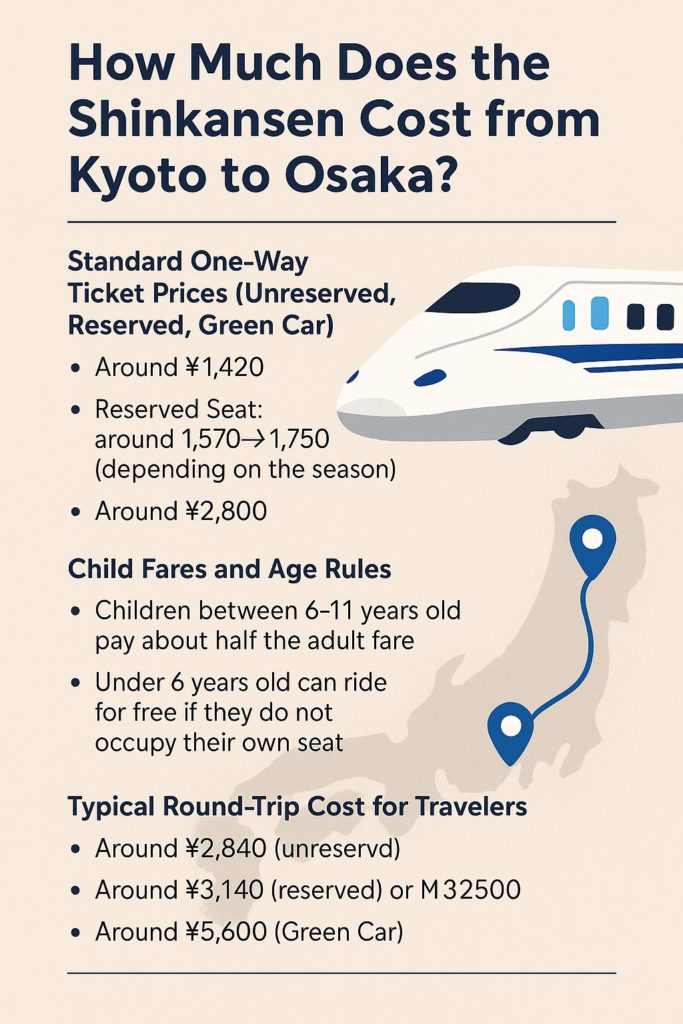
Standard One-Way Ticket Prices (Unreserved, Reserved, Green Car)
The Kyoto–Osaka route is one of the shortest Shinkansen trips in Japan, connecting Kyoto Station to Shin-Osaka Station in about 15 minutes. Ticket prices vary depending on seat type:
- Unreserved Seat: around ¥1,420
- Reserved Seat: around ¥1,570–¥1,750, depending on the season (regular, peak, or off-peak)
- Green Car (First Class): around ¥2,800
Since the travel time is very short, most passengers choose an unreserved seat, but reserved seating can be helpful during busy travel seasons like Golden Week or cherry blossom season.
Child Fares and Age Rules
Children between 6 and 11 years old pay about half the adult fare, while those under 6 years old can ride for free if they do not occupy their own seat. If you are traveling with kids, reserving seats can make the ride more comfortable and stress-free.
Typical Round-Trip Cost for Travelers
For a simple round trip between Kyoto and Osaka, expect to pay around:
- ¥2,840 (unreserved)
- ¥3,140–¥3,500 (reserved)
- ¥5,600 (Green Car)
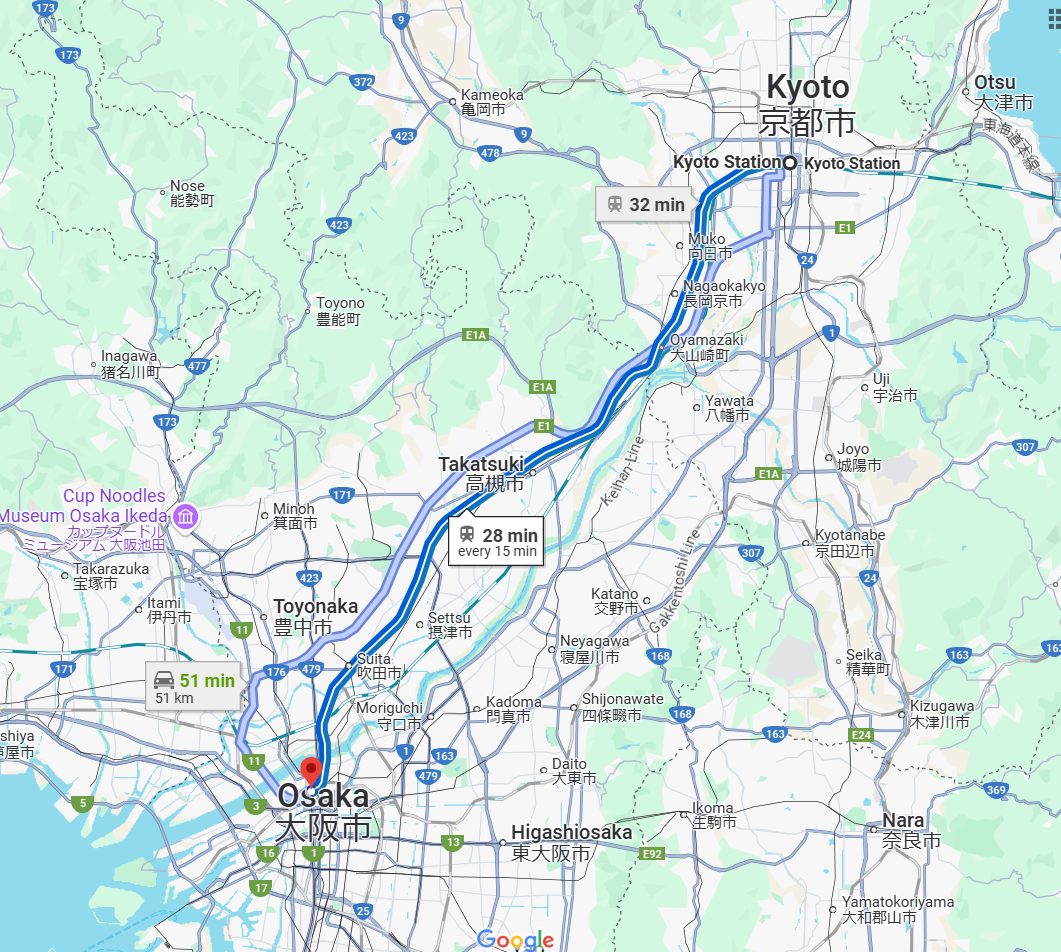
While the Shinkansen is more expensive than local JR trains (which cost about ¥570 one way but take 30 minutes), many travelers prefer the speed, comfort, and reliability of Japan’s bullet train system.
Travel Time and Why Choose the Shinkansen
Journey Duration – Kyoto to Shin-Osaka in Minutes
The Kyoto–Osaka Shinkansen route is one of the shortest bullet train trips in Japan. The journey between Kyoto Station and Shin-Osaka Station takes just 12 to 15 minutes on the Tokaido Shinkansen. This makes it one of the fastest ways to travel between the two cities, perfect for day trips or quick transfers to connect with other long-distance trains.
Comparing Shinkansen with Local JR Trains and Limited Express
If budget is your main concern, you may consider local JR trains, which cost around ¥570 one way and take 25–30 minutes. Limited Express services, such as the Thunderbird (when operating between the cities), are slightly faster but still longer than the Shinkansen. While these options are cheaper, they can be crowded during rush hours, and you may need to stand. The Shinkansen offers more comfort, guaranteed seating (with reservation), and less travel stress.
When It’s Worth Paying Extra for Speed and Comfort
Although the Shinkansen is more expensive than local trains, many travelers find the extra cost worthwhile. The short ride is smooth, reliable, and stress-free, especially if you are carrying luggage or traveling with children. It is also ideal if you are connecting from Kyoto or Osaka to other destinations like Tokyo, Hiroshima, or Fukuoka, as you can transfer seamlessly at Shin-Osaka Station.
Ticket Options and Money-Saving Tips
Unreserved vs. Reserved Seats – Which to Choose?
For the short Kyoto–Osaka journey, many travelers choose unreserved seats, which are the cheapest option. You simply line up at the platform for the next train. However, during peak seasons such as cherry blossom or New Year holidays, reserved seats are recommended to guarantee a spot, especially if you are traveling with luggage or children. The price difference is small, so reserved seating often provides peace of mind.
Green Car – Is It Worth the Upgrade?
Green Car seats are Japan’s equivalent of first class, with wider seats, more legroom, and a quieter atmosphere. On a journey as short as 15 minutes, however, most travelers find the upgrade unnecessary. Green Cars are best if you want to enjoy a more relaxed experience while connecting to longer-distance Shinkansen trips.
Discount Options – e-Tickets, EX Reservations, Early Bird Specials
There are several ways to save money on Shinkansen tickets:
- E-Tickets (Smart EX App): Offers slightly discounted fares and allows easy booking with credit cards.
- EX Reservations (EX-IC Card): Available to foreign residents and frequent travelers, with lower fares and flexibility.
- Early Bird Specials (Hayatoku Tickets): Limited-time offers that can reduce prices if you book in advance.
While discounts are not huge compared to longer Shinkansen journeys, they can still make travel more convenient and affordable.
Can You Use a Rail Pass for Kyoto–Osaka?
Japan Rail Pass (JR Pass) Coverage
Yes, the Japan Rail Pass (JR Pass) fully covers the Shinkansen between Kyoto and Shin-Osaka. However, it is important to note that the pass does not cover Nozomi trains, which are the fastest services on the Tokaido Shinkansen. Instead, you will need to take the slightly slower Hikari or Kodama services, which still complete the trip in about 15 minutes.
Regional Passes – Kansai Area and Kansai Wide Pass
For travelers focusing on the Kansai region, JR West offers convenient regional rail passes. The Kansai Area Pass and Kansai Wide Pass both cover the Kyoto–Osaka route, sometimes including other destinations such as Nara, Kobe, Himeji, or even Okayama depending on the pass. These are ideal if you plan multiple day trips within the Kansai region.
Which Pass Offers the Best Value for Short Trips
If you are only traveling between Kyoto and Osaka once, a regular ticket is cheaper than buying a pass. However, if your itinerary includes multiple journeys in the Kansai region—or you are traveling onwards to Hiroshima, Kanazawa, or beyond—the regional passes or JR Pass provide excellent value. Always compare the total cost of your planned trips before deciding whether a pass is worthwhile.
How to Buy Shinkansen Tickets Easily
Buying at Ticket Machines and JR Counters
At both Kyoto Station and Shin-Osaka Station, you will find ticket machines and JR ticket counters (called Midori no Madoguchi). Machines usually have an English-language option, making it simple to select your route, seat type, and pay with cash or credit card. For travelers who prefer face-to-face service, staff at JR counters can answer questions and help with seat reservations.
Online and App Reservations for Travelers
Japan Railways also provides online booking platforms. The Smart EX app allows you to reserve tickets in English using a credit card, while the JR West Online Reservation Service covers many regional trains. Tickets can be collected at the station or used directly with an IC card. Booking online is especially useful during busy seasons, when trains can sell out quickly.
Tips for Avoiding Crowds and Securing a Seat
If you want to avoid long lines at stations, try to purchase your ticket in advance through an app or machine. For short trips like Kyoto–Osaka, unreserved seats are often available, but during peak travel times (holidays, weekends, cherry blossom season), booking a reserved seat guarantees a smoother journey. Arriving a little early also gives you more options for luggage storage and seat selection.