

Aomori, the northernmost prefecture of Japan’s Honshu Island, offers a perfect blend of breathtaking nature, rich cultural heritage, and unforgettable flavors. In just four days, you can stroll through historic castle towns, cruise along crystal-clear lakes, trek lush forest trails, and immerse yourself in vibrant local traditions. From the charm of Aomori City’s waterfront to the peaceful beauty of Lake Towada and the dramatic coastline of the Shimokita Peninsula, this itinerary ensures you experience the very best the region has to offer—without the stress of planning. Whether you’re drawn by seasonal festivals, fresh seafood, or hidden hot springs, Aomori invites you to slow down, savor, and discover its authentic soul.
The Appeal and Overview of a 3-Night, 4-Day Trip to Aomori

Why You Should Visit Aomori (Nature, Culture, Cuisine)
Aomori Prefecture, located at the northernmost tip of Japan’s main island Honshu, offers a unique blend of breathtaking nature, deep-rooted traditions, and exceptional local cuisine. The UNESCO World Heritage Site Shirakami Sanchi invites you to wander through untouched beech forests, while the vibrant Nebuta Festival fills summer nights with giant illuminated floats, rhythmic chants, and infectious energy. With coastlines along both the Sea of Japan and the Pacific Ocean, Aomori boasts diverse seascapes and some of the freshest seafood in Japan—think scallops, tuna, and sea urchin. Add in Aomori’s famous apples and hearty regional dishes, and you have a destination that appeals to all senses.
Seasonal Highlights and the Best Times to Visit
Each season in Aomori offers something unique. Spring brings the spectacular cherry blossoms of Hirosaki Park, one of Japan’s most famous sakura spots. Summer is festival season, with the Nebuta Festival and coastal activities adding vibrancy. Autumn paints Oirase Gorge and Lake Towada in warm shades of red and gold, perfect for scenic drives or hikes. Winter transforms the landscape into a snow-covered wonderland, ideal for soaking in hot springs at Sukayu Onsen or enjoying skiing and snowshoeing around Mount Hakkoda. Your choice of season will define the type of experiences and scenery you’ll enjoy.
Key Tips for Planning Your Itinerary
Because Aomori is geographically vast, efficient travel planning is crucial for making the most of your 3-night, 4-day trip. While public transport connects major towns and attractions, certain locations like Shirakami Sanchi or the Shimokita Peninsula are easier to reach by rental car. Choosing where to stay is equally important—opt for city bases like Aomori or Hirosaki for urban convenience, and stay closer to rural attractions like Lake Towada for nature immersion. Always check travel times in advance to minimize long transit hours, and consider grouping attractions geographically to create a smooth, enjoyable route.
Day 1: Exploring Aomori City and Surroundings
Classic Sights Around Aomori Station (Nebuta Museum Wa Rasse, A-FACTORY)
Begin your journey in the heart of Aomori City at Nebuta Museum Wa Rasse, where the vibrant history of the Nebuta Festival comes alive through illuminated floats, traditional music, and hands-on exhibits. Just a short walk away, A-FACTORY offers a stylish marketplace filled with local products, including Aomori’s famous apple-based treats, craft cider, and artisanal snacks—perfect for sampling or picking up souvenirs. Both spots are conveniently located by the station, making them an easy starting point for your trip.
History and Hot Springs at Sannai-Maruyama Site and Asamushi Onsen
Next, travel back in time at the Sannai-Maruyama Archaeological Site, one of Japan’s largest and most important Jomon period settlements. Wander through reconstructed pit dwellings, see original artifacts, and learn about life over 5,000 years ago. In the afternoon, unwind at Asamushi Onsen, a coastal hot spring resort facing Mutsu Bay. Here, you can soak in mineral-rich waters while gazing out at serene ocean views—an ideal way to refresh after sightseeing.
Evening Seafood Dinner at a Local Izakaya
As night falls, immerse yourself in Aomori’s culinary scene at a traditional izakaya. Many specialize in freshly caught seafood, from buttery scallops and rich sea urchin to premium tuna landed at Oma. Pair your meal with local sake or craft beer for an authentic taste of the region. The warm, casual atmosphere of an izakaya also offers a perfect opportunity to chat with locals and learn more about Aomori’s culture.
Day 2: Hirosaki City and the Tsugaru Area
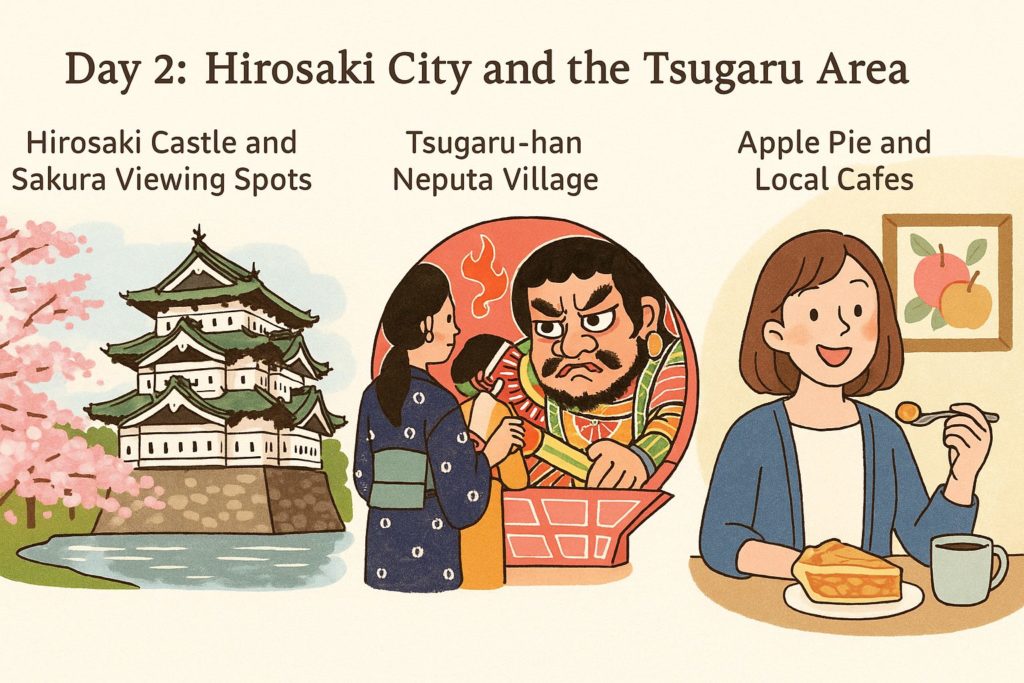
Hirosaki Castle and Cherry Blossom Viewing (Seasonal Highlights)
Start your second day at Hirosaki Castle, a historic fortress surrounded by one of Japan’s most beautiful parks. In spring, the grounds burst into color with over 2,600 cherry trees, creating postcard-perfect scenes with the castle’s elegant white walls and Mt. Iwaki in the background. In summer, lush greenery and lotus flowers in the moat provide a serene backdrop. Autumn brings vibrant maple and ginkgo leaves, while winter transforms the castle into a magical snow-covered landmark. No matter the season, Hirosaki Castle offers a blend of history, architecture, and natural beauty worth exploring.
Experiencing Traditional Culture at Tsugaru-han Neputa Village
Just a short distance away, visit Tsugaru-han Neputa Village, an interactive cultural facility where you can experience the traditions of the Tsugaru region. See the massive fan-shaped neputa floats used in Hirosaki’s summer festival, watch live performances of Tsugaru shamisen (a three-stringed instrument known for its powerful, percussive style), and try hands-on crafts like painting your own neputa lantern. This stop offers a deeper understanding of the artistry and pride behind the region’s unique cultural heritage.
Apple Pie and Local Café Break
Hirosaki is often called the “Apple Capital of Japan,” producing high-quality varieties thanks to the region’s climate and fertile soil. Take a well-deserved break at one of the city’s many apple-themed cafés or bakeries. From classic apple pie with flaky crusts to modern interpretations paired with ice cream or caramel sauce, the options are endless. Many cafés also feature charming interiors, making them a cozy spot to rest, recharge, and enjoy the sweet flavors of Tsugaru apples before continuing your journey.
Day 3: Lake Towada and Oirase Gorge
Lake Towada Cruise and Lakeside Walk
Begin your third day with a visit to Lake Towada, a breathtaking caldera lake that straddles the border between Aomori and Akita prefectures. Known for its crystal-clear waters and ever-changing seasonal scenery, it’s especially stunning in autumn, when fiery red and golden leaves frame the blue water. Take a sightseeing cruise to enjoy panoramic views of the surrounding mountains from the water, or opt for a leisurely lakeside stroll along well-maintained walking paths. The peaceful atmosphere and crisp highland air make it a perfect place to slow down and soak in nature’s beauty.
Trekking Routes in Oirase Gorge
From Lake Towada, follow the Oirase Stream, one of Japan’s most scenic river valleys. The gorge stretches for about 14 kilometers, lined with moss-covered rocks, cascading waterfalls, and lush forest. Popular spots include Choshi Otaki Waterfall, Ashura Rapids, and the tranquil shaded paths along the stream. The route can be enjoyed as a full-day hike or explored in shorter segments using local bus services. In spring and summer, the greenery feels fresh and vibrant, while autumn transforms the gorge into a tunnel of fiery foliage—making it one of the top seasonal destinations in Japan.
Ending the Day in Towada City with Art and Local Eats
Return to Towada City to round off your day with a mix of culture and casual dining. The Towada Art Center is a must-visit, showcasing contemporary art installations in unique, open-concept spaces. After your cultural stop, dive into B-grade gourmet like barayaki—a sizzling dish of beef and onions in a savory sauce, served with rice. If time allows, pick up local souvenirs such as Lake Towada-themed sweets or apple-based products before heading back to your accommodation.
Day 4: Shimokita Peninsula or Hachinohe Sightseeing
The Osorezan and Hotokegaura Route on the Shimokita Peninsula
If you choose to explore the Shimokita Peninsula, start with a visit to Osorezan (Mount Osore), one of Japan’s three most sacred sites. Known for its otherworldly volcanic landscape, steaming vents, and sulfurous hot springs, it offers a deeply spiritual atmosphere. Afterward, head to Hotokegaura, a dramatic coastal area featuring towering white rock formations sculpted by the wind and waves. The contrast between the blue sea and the white cliffs makes it a photographer’s dream. The peninsula is less crowded than other tourist spots, giving you a more serene, off-the-beaten-path experience.
Hachinohe Morning Market and Sanriku Coast Drive
Alternatively, you can head to Hachinohe for a lively morning at the Hachinohe Morning Market (held on weekends and certain weekdays), where you can sample freshly caught seafood, grilled squid, and seasonal produce. From there, take a scenic Sanriku Coast drive, stopping at viewpoints and fishing villages along the rugged shoreline. The area is famous for its fresh sea urchin, mackerel, and seasonal sashimi—perfect for a memorable lunch stop before your journey back.
Souvenir Shopping and Airport Access Before Departure
On your final day, leave time for souvenir shopping. Popular Aomori specialties include apple-based sweets, nebuta festival-themed crafts, and regional sake. For those flying out, Aomori Airport is easily accessible from both Aomori City and Hachinohe by bus or car, with direct flights to Tokyo, Osaka, and Sapporo. If you’re traveling by train, the Shinkansen from Shin-Aomori Station will take you to Tokyo in just over three hours. Planning your last day with both sightseeing and travel logistics in mind ensures a smooth and satisfying end to your trip.


