Many visitors rush through Kyoto, missing hidden gems in favor of famous names like Kinkaku-ji or Fushimi Inari.
If you love calm places, old temples, and rich stories, Ninnaji and its gate are perfect for you.
This article will walk you through everything you need to know about the Niomon Gate at Ninnaji.
By the end, you won’t just see a wooden gate—you’ll understand its spirit, history, and beauty.
I used to walk past it without noticing. But once I learned what it meant, I stopped, bowed, and took it all in.
Let’s begin our journey through this powerful piece of Kyoto’s story.
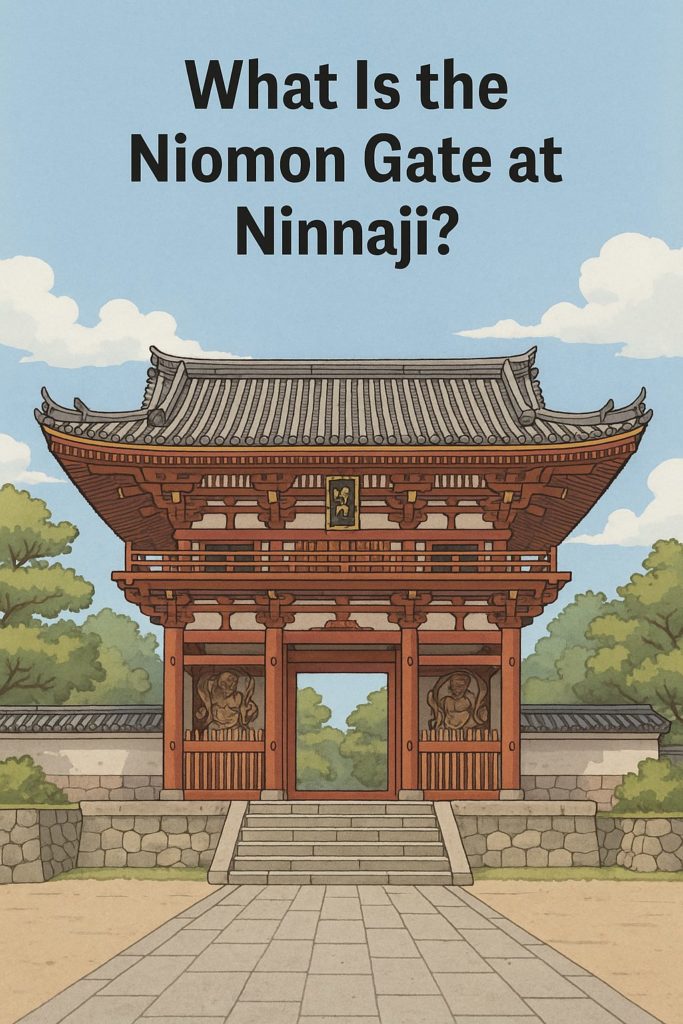
What Is the Niomon Gate at Ninnaji?
A Gate That Guards a Temple
The Niomon Gate is not just a doorway—it’s the guardian of the sacred temple grounds.
This gate serves both a physical and spiritual role. It marks the boundary between the outside world and a peaceful, sacred place. In ancient times, gates like this were believed to protect the temple from evil spirits and unclean thoughts. Stepping through the gate is like stepping into a different mindset.
Think of it like turning off your phone before entering a quiet movie theater. You prepare yourself to focus, to appreciate, and to show respect. In the same way, walking through the Niomon Gate prepares your heart and mind for what’s to come.
This gate is not just wood and tile—it’s the first step into a deeper experience.
Who Are the Fierce Statues Inside?
Inside the gate, you’ll meet two large, powerful statues called Nio guardians.
These statues are protectors. One has its mouth open (Agyo) and the other has it closed (Ungyo). Together, they represent the beginning and end of all things. Their fierce faces are meant to scare off evil. But don’t worry—they’re not scary to kind people.
I once saw a child look up at Agyo and whisper, “He looks angry, but I think he’s nice.” That’s the perfect way to understand them—they’re like strong friends who watch over you.
These statues show strength, but they protect peace.
Why This Gate Is More Than Just an Entrance
The Niomon Gate is a National Important Cultural Property of Japan.
This means the Japanese government has recognized it as something worth protecting forever. It has deep historical value, and its design and craftsmanship are examples of ancient Japanese architecture. Built in the 1600s, it’s stood through wars, earthquakes, and time itself.
Imagine something built today still being admired in 400 years. That’s how special this gate is. And it’s still used every day by monks, locals, and travelers alike.
The Niomon Gate is not just a photo spot—it’s a living part of Japanese history.
A Quick Look at Ninnaji Temple’s History
Built by an Emperor, Loved by Locals
Ninnaji Temple was founded by Emperor Uda in the year 888.
As one of the few temples founded by an emperor himself, Ninnaji holds a unique place in Japanese history. It was created as a head temple of the Omuro school of the Shingon sect of Buddhism. For many years, it was led by imperial princes, which made it a rare spiritual and cultural site connected directly to the royal family.
Imagine a place built by royalty that still stands today. When you visit Ninnaji, you’re literally walking through halls touched by emperors and monks for over 1,000 years.
This isn’t just a temple—it’s a royal legacy.
From Heian Period to Today
Ninnaji has survived fires, wars, and natural disasters.
Originally built in the Heian period, Ninnaji was destroyed in the Onin War (15th century) and rebuilt in the 1600s. Even after such destruction, its reconstruction preserved the spirit and architecture of the original. The temple today is a blend of resilience and tradition, showcasing Japanese history through its buildings, gardens, and artifacts.
It’s like a phoenix rising from the ashes—rebuilt but still deeply tied to its origins.
Ninnaji is not just old; it’s a story of survival and honor.
World Heritage Status and Cultural Meaning
Ninnaji is a UNESCO World Heritage Site.
This designation means the temple is recognized for its outstanding value to humanity. Along with other sites in Kyoto, Ninnaji helps tell the story of Japan’s ancient capital. The site is well-preserved and remains active in religious and cultural life.
Visiting Ninnaji is like stepping into a live museum—a place where history is not frozen but still breathing.
Ninnaji matters globally, not just locally.
Architectural Highlights of the Niomon Gate
Traditional Japanese Design
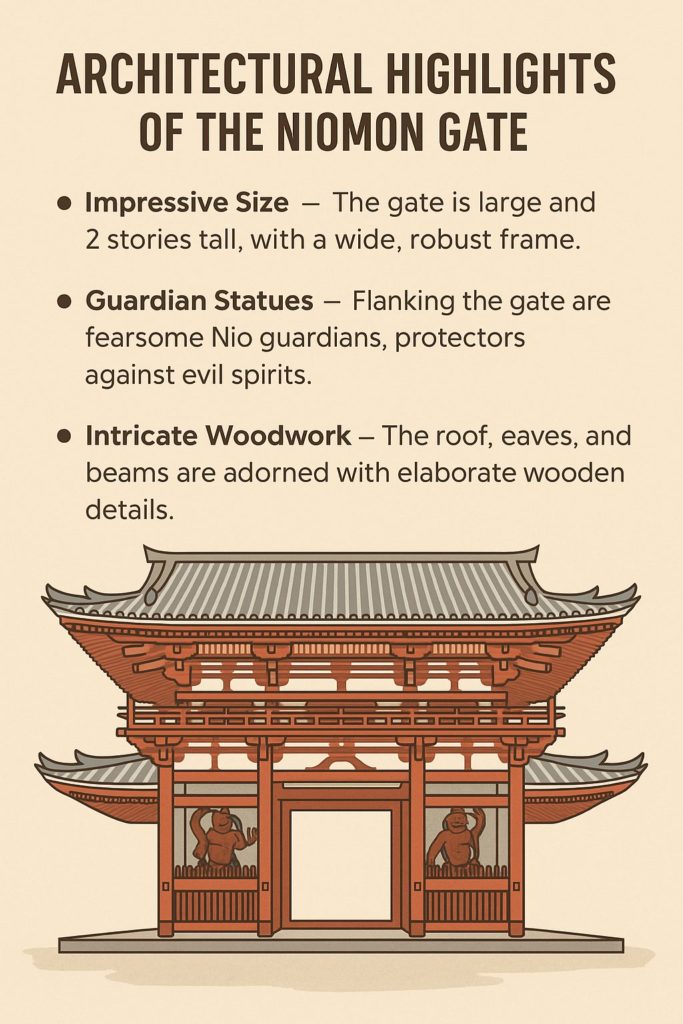
The Niomon Gate showcases classic Japanese temple architecture.
The structure features a gabled roof with curved eaves, wooden beams intricately joined without nails, and a balanced symmetry that reflects harmony and order. This design not only adds beauty but also reflects Buddhist ideals of peace and balance.
Think of the roof as a gentle wave, curling at the edges—soft and graceful. Each wooden part is carefully carved, placed, and fitted. This ancient method, called “kumiki,” has been used for centuries in Japan.
Every curve and joint has meaning—this gate is art you walk through.
Materials That Withstand Time
The gate is built to last with natural, strong materials.
Using hinoki (Japanese cypress), the gate resists weather and insects. It also smells wonderful! Hinoki has been used in temples and shrines for ages because it gets stronger with time and gives off a calming scent.
I once visited on a rainy day—the wood gave off a soft, warm smell that made me stop and smile. You don’t get that with concrete or plastic.
The materials of the gate aren’t just strong—they’re alive with tradition.
Symbolism in the Structure
The gate’s design tells stories beyond what you see.
The Nio statues inside protect the temple, the roof points to heaven, and the entire shape is meant to invite good and block evil. The gate faces south, which is considered the lucky direction in feng shui. Everything is done with purpose.
Even the colors—reds and dark browns—are chosen to bring strength and grounding energy.
The gate is more than beautiful—it speaks to your spirit.
When to Visit: Cherry Blossoms, Quiet Mornings, and Seasonal Beauty
Why Spring Is the Most Magical Time
Spring, especially early April, is the most beautiful time to visit Ninnaji’s Niomon Gate.
Ninnaji is famous for its Omuro-zakura, a special variety of cherry blossoms that bloom later than most in Kyoto. These blossoms are shorter and create a gentle, fluffy sea of pink that perfectly frames the Niomon Gate. The combination of historic architecture and seasonal nature is breathtaking. Unlike more crowded sakura spots in Kyoto, Ninnaji offers a quieter, more reflective experience during hanami (flower-viewing) season.
I visited during Omuro-zakura bloom last year. As the sun set, pink petals danced in the wind around the Niomon Gate like snowflakes. A woman nearby whispered, “It’s like a dream I never want to end.” That moment made me realize why locals treasure this time so much.
If you love cherry blossoms, early April is when the Niomon Gate becomes a storybook scene.
Why Mornings Offer the Most Peaceful Experience
Visiting in the early morning gives you the calmest, clearest view of the Niomon Gate.
Ninnaji opens at 9:00 a.m., but if you arrive right at opening time, the temple grounds are quiet, the air is fresh, and the morning light glows softly on the gate’s wooden surface. With fewer tourists around, you can really hear the wind through the trees, the distant ring of a bell, and the whisper of your own breath. This kind of silence brings deep peace.
I once stood alone at the Niomon Gate at 9:10 a.m. I could hear my footsteps on the stone path. A monk sweeping leaves looked up, nodded, and smiled. That kind of human connection in a quiet moment is priceless—and only possible early in the day.
For mindfulness and serenity, go in the morning when the temple awakens.
What Other Seasons Offer (And What to Watch Out For)
Every season at Ninnaji gives you a different kind of beauty—but each has its pros and cons.
- Summer: The greenery is lush, and cicadas sing. But it can be hot and humid. Bring a hat and water.
- Autumn: Late November brings stunning maple colors. The red leaves contrast beautifully with the gate’s dark wood. But crowds are heavier, especially on weekends.
- Winter: Snow sometimes dusts the rooftops, turning the Niomon Gate into a peaceful, quiet winter postcard. However, cold winds can make the visit short unless you’re bundled up.
In December, I visited during a surprise snowfall. The gate wore a crown of white, and the only sound was crunching snow under my boots. It felt like I had stepped into a time long gone.
No matter when you visit, the gate will speak to you differently—just be ready for what each season brings.
Best Days and Times for Photos (Without the Crowds)
If you want great photos, timing matters as much as the season.
Weekdays, especially Tuesday or Wednesday mornings, tend to have the fewest visitors. If you go right at 9:00 a.m., you’ll avoid tour groups and school trips. Cloudy days also help soften shadows, making it easier to capture the details of the Niomon Gate’s woodwork. Avoid major holidays like Golden Week (late April–early May) or Obon (mid-August) unless you’re okay with crowds.
A friend of mine arrived on a Tuesday morning at 8:50 and waited at the gate. She was the first inside and got a stunning shot of the gate with nobody in it—just soft clouds and the quiet frame of ancient architecture.
For postcard-worthy shots, aim for weekday mornings with soft light.
Visiting During Special Events
Visiting during temple events gives you a richer experience—but requires planning.
Ninnaji sometimes holds ritual ceremonies, Buddhist lectures, and illumination events. These give you a deeper understanding of temple life and history. However, they may involve restricted areas or more foot traffic. It’s best to check the temple’s official website or local tourism sites in advance.
During a spring ritual, I heard monks chanting as I stood before the Niomon Gate. It added spiritual depth to the already serene setting. A local told me, “This is the sound of Kyoto’s heart.”
Events add magic—but check dates and plan ahead.
How to Make the Most of Your Visit: Tips from Locals

Take Your Time—Don’t Rush Past the Gate
Slowing down lets you feel the history.
Many visitors snap a photo and rush in, missing the quiet presence of the gate. Locals know this gate deserves your full attention. Standing in front of it, breathing in, and just being still helps you tune into its meaning.
I once saw a local woman close her eyes in front of the gate for nearly a minute. She later said, “This is my way of arriving—not just with my body, but with my heart.”
Pause, breathe, and give the gate your full presence.
Visit Early or Off-Season
Avoid the crowds to connect more deeply.
Locals often visit during off-peak times—weekday mornings or the colder months. This way, you can experience the Niomon Gate in quiet solitude, just like monks and pilgrims did for centuries.
One winter morning, a Kyoto friend brought me here just after a light snow. There was no one else around. The stillness made the gate’s age and strength even more powerful.
Find peace by following the quiet paths.
Learn a Little Before You Go
Understanding enriches your visit.
Reading a bit about the gate’s history and meaning helps you see more than just wood and statues. Knowing about the Nio guardians, the architectural style, and its symbolism adds layers to your experience.
A traveler once told me, “I didn’t know anything before. But now that I’ve read about it, I want to go back and see it all over again with new eyes.”
A little knowledge turns sightseeing into soul-seeing.
Use All Your Senses
Don’t just look—listen, smell, and feel.
The Niomon Gate is more than a visual landmark. Hear the wooden creak under your feet. Smell the old cypress. Feel the texture of the stone steps. Locals often experience places with their whole being.
A Kyoto guide once asked me to walk barefoot on the temple’s smooth stones. “Feel the coolness,” she said. “It’s like time touching your feet.”
Let your senses guide you into the past.
Respect the Space
Honor the place like the locals do.
For many people, the Niomon Gate isn’t just a tourist spot—it’s sacred. Bowing slightly before passing through, speaking softly, and moving gently are ways to show respect.
I’ve seen elderly locals stop and bow, even if just passing on a walk. One told me, “I greet it like an old friend.”
Treat the gate like a host you admire.
Step beyond the guidebook. Explore Japan’s best tours and activities with Rakuten Travel Experiences.